
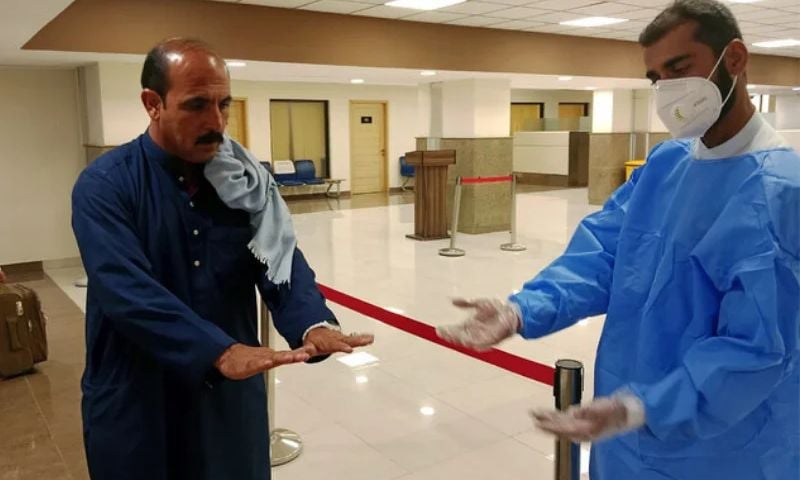



ISLAMABAD: Pakistan’s health authorities said the overall risk of a Nipah virus outbreak in the country remains low, while acknowledging that it cannot be entirely ruled out due to the presence of animal reservoirs.
The assessment came a day after Pakistan ordered enhanced health surveillance at airports and land border crossings amid regional alerts over the highly fatal Nipah virus, including suspected cases reported in India’s West Bengal state.
Health officials said the risk to Pakistan remains low but warned that vigilance is essential.
An advisory issued by the health ministry’s Border Health Services warned of the potential for cross-border transmission and called for strict screening of inbound travellers.
Enhanced measures now include thermal screening and travel history assessments, especially for passengers arriving from high-risk regions, although officials noted there are no direct flights from areas that have recently reported cases.
Health Secretary Hamed Yaqoob Shaikh told an official meeting on Thursday that no Nipah virus infections had been detected in Pakistan so far in either humans or animals. However, he said ecological conditions in neighbouring countries made continued surveillance and preparedness essential.
Officials reviewed readiness across federal health institutions, disease surveillance systems, border health services, and major hospitals in Islamabad.
Hospital administrators confirmed that designated isolation facilities were available and trained staff were prepared to manage suspected cases under national guidelines.
Nipah is a zoonotic virus transmitted to humans from fruit bats and pigs, which serve as its natural reservoirs. While fruit bats are present in Pakistan, particularly in northern and forested regions, officials said there is no scientific evidence of active Nipah virus circulation or spillover into humans in the country.
Health experts warned that Nipah is among the world’s deadliest infectious diseases, with past outbreaks showing case fatality rates ranging from 40 to 75 percent.
The virus can cause severe respiratory illness and encephalitis, or brain inflammation. There is currently no approved vaccine or specific antiviral treatment, though several candidates are under development.
Authorities urged calm but advised the public to take precautionary measures, including washing fruits thoroughly, avoiding fallen or partially eaten fruit, and refraining from unsafe food-handling practices that could increase exposure to animal secretions.
Officials also stressed the need for stronger public awareness campaigns ahead of the Islamic fasting month of Ramazan.
Nipah is classified by the World Health Organisation as a priority pathogen because of its high fatality rate and potential to trigger fast-moving outbreaks.
First identified during an outbreak among pig farmers in Malaysia in 1998, the virus has since caused sporadic infections across South and Southeast Asia.
India’s southern state of Kerala is considered among the world’s most at-risk regions, while West Bengal has recently reported its first suspected cases in nearly two decades.