


Key Points
- Textile industry submits unified budget proposals for FY27
- Exporters seek tax reforms, lower energy costs and easier refunds
- Finance minister pushes wider digital monitoring across the textile sector
- Government vows continued consultations with the business community
ISLAMABAD: Pakistan’s textile industry has urged the government to introduce tax reforms, lower energy costs, and improve export facilitation measures in the upcoming federal budget.
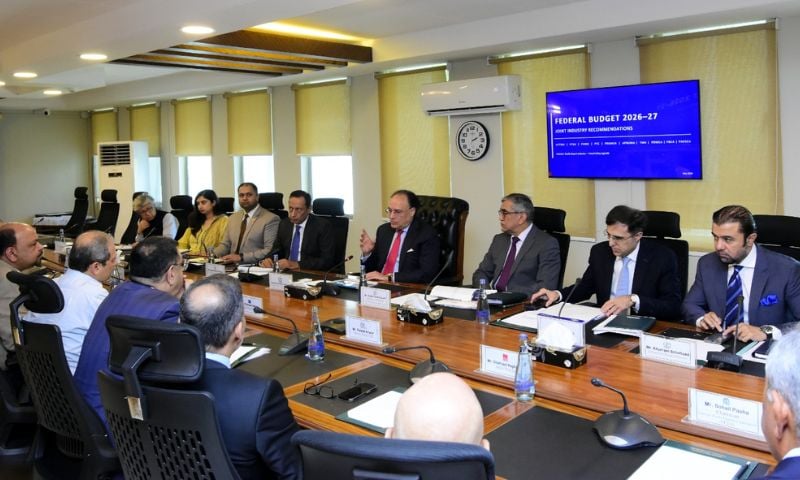
Leading exporters and industry representatives presented their budget proposals to Finance Minister Senator Muhammad Aurangzeb during a consultative meeting.
During the meeting in Islamabad, textile sector representatives presented a joint set of proposals for the 2026-27 budget aimed at improving industrial competitiveness, boosting exports and attracting investment amid growing regional competition.
Industry leaders said the textile sector, Pakistan’s largest export industry, requires a stable business-friendly policy environment to sustain growth, expand value-added manufacturing and strengthen integration into global supply chains.
The delegation called for taxation reforms, affordable energy pricing, faster refund mechanisms, improved liquidity support and measures to reduce the compliance burden on exporters.
Representatives also stressed the need for industrial modernisation, technological upgrades and stronger support for small and medium-sized enterprises to improve productivity and export performance.
Aurangzeb said the government would continue engaging with the private sector through the Finance Ministry’s Tax Policy Office to institutionalise year-round consultations rather than limiting discussions to the pre-budget period.
The finance minister also discussed the government’s ongoing push for digital monitoring systems to improve transparency, documentation and tax compliance across key sectors of the economy.
He said digital monitoring mechanisms had already been introduced in sectors including sugar, cement, beverages and tobacco, adding that the initiative was being implemented uniformly across industries.
Aurangzeb invited textile manufacturers to cooperate in the gradual rollout of similar digital monitoring systems within the textile sector. Officials said pilot initiatives and consultations with some textile units had already begun.
Textile sector representatives acknowledged the importance of transparency and documentation but stressed that implementation should consider the industry’s operational complexities and supply chain structure.
The finance minister assured participants that the industry’s proposals would be reviewed during the finalisation of the federal budget for FY27.
The meeting was attended by representatives from major textile bodies, including the All Pakistan Textile Mills Association, the Pakistan Hosiery Manufacturers and Exporters Association and Pakistan Readymade Garments Manufacturers and Exporters Association.