


ISLAMABAD: Pakistan on Thursday stressed the importance of sustained dialogue and diplomatic engagement amid rising tensions between Iran and the United States.
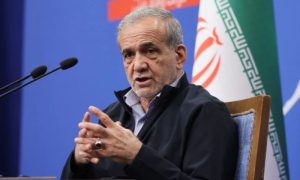
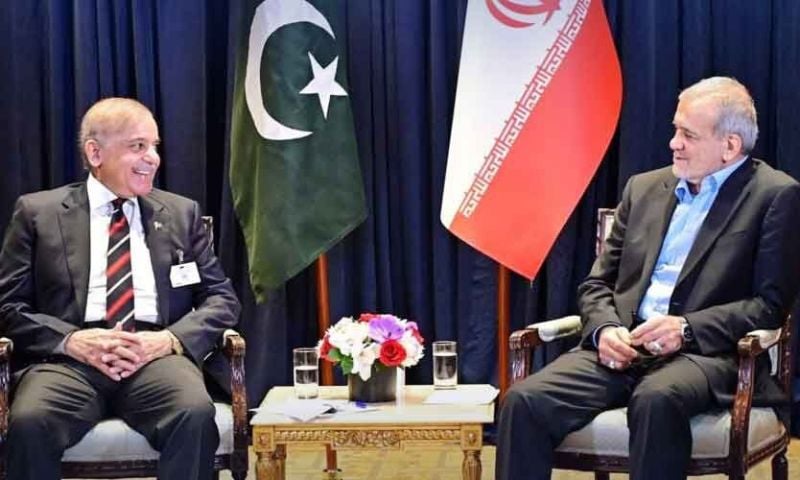
Pakistan’s Prime Minister Shehbaz Sharif held a telephone conversation with Dr. Masoud Pezeshkian, President of Iran, the Prime Minister’s Office Media Wing said.
The two leaders exchanged views on the evolving regional situation. Prime Minister Shehbaz Sharif underscored the importance of sustained dialogue and diplomatic engagement for promoting peace, security, and development in the region, it said.
Reflecting the close ties between Pakistan and Iran, rooted in shared history, culture, and faith, both sides reaffirmed their commitment to maintain regular high-level engagements and consultations through bilateral institutional mechanisms to further strengthen cooperation across the full spectrum of bilateral relations.
Spoke with my brother President Dr. Masoud Pezeshkian of Iran today.
We exchanged views on the evolving regional situation and agreed that sustained dialogue and diplomatic engagement are vital for peace, security, and development in our region.
We also reaffirmed our…
— Shehbaz Sharif (@CMShehbaz) January 29, 2026
Earlier, Pakistan’s Deputy Prime Minister and Foreign Minister Ishaq Dar held a telephone conversation with Iranian Foreign Minister Abbas Araghchi and underscored the importance of “dialogue and diplomacy” amid rising tensions between Iran and the United States.
According to a statement from the Ministry of Foreign Affairs (MoFA). During the phone conversation, Deputy PM Dar expressed concern over the evolving regional situation, the Foreign Office said.
Deputy Prime Minister Dar “underscored that dialogue and diplomacy remain the only viable way forward,” the Ministry of Foreign Affairs said, adding that both sides agreed to remain in close contact.
DPM/FM Senator Mohammad Ishaq Dar @MIshqqDar50 spoke today with Iranian FM Abbas Araghchi @Araghchi.
DPM/FM expressed concern over the evolving regional situation, and underscored that dialogue & diplomacy remain the only viable way forward. Both leaders agreed to remain in… pic.twitter.com/nyOebU0Yxm
— Ministry of Foreign Affairs – Pakistan (@ForeignOfficePk) January 29, 2026
The two leaders had already spoken on Saturday, when Dar received a call from Araghchi while on a visit to Dubai.
Pakistan’s position at the UN
According to Pakistan’s Foreign Office, Araghchi thanked Dar for Pakistan’s strong support at the United Nations Human Rights Council (UNHRC) in Geneva, including its call for a vote and its decision to vote against a resolution concerning Iran.
Last week, the United Nations Human Rights Council adopted a resolution to extend the mandate of the Independent International Fact-Finding Mission on Iran for two years. Pakistan was among seven countries that voted against the resolution, alongside India and China.
ALSO READ: Pakistan Stresses ‘Dialogue & Diplomacy’ as Iran–US Tensions Escalate
The Foreign Ministry added that the two top diplomats exchanged views on regional and international developments, while Araghchi conveyed “deep appreciation” for Prime Minister Shehbaz Sharif, the Pakistani government and the people.
Iran–US war of words
On Wednesday, US President Donald Trump urged Iran to negotiate over its nuclear programme or face what he described as “far worse” attacks.
In a series of social media posts, Trump called on Tehran to “come to the table” and agree to a deal that would permanently bar it from acquiring nuclear weapons.
“The next attack will be far worse. Don’t make that happen again,” Trump wrote, saying a powerful US naval force was moving towards Iran.
Meanwhile, US officials confirmed that a strike group led by the aircraft carrier USS Abraham Lincoln had arrived in the Middle East waters as part of an expanded American military presence.
Iran rejects talks under threat
Iranian officials swiftly rejected Trump’s warnings, saying negotiations could not take place under the threat of force and vowing retaliation against any attack.
Ali Shamkhani, an adviser to Supreme Leader Ayatollah Ali Khamenei, said any US military action would result in Iran targeting American interests, Israel and their supporters.
Foreign Minister Araghchi said Iran’s armed forces were ready to respond “immediately and powerfully” to any aggression.
However, he insisted Iran remained open to a fair nuclear agreement, provided it was reached without coercion and respected Tehran’s right to peaceful nuclear technology.
“One cannot speak of talks in an atmosphere of threats,” Araghchi said in televised remarks, adding that he had not been in contact with US special envoy Steve Witkoff in recent days.
Regional concern
The standoff has triggered concern among regional and international actors. Turkiye’s Foreign Minister Hakan Fidan on Wednesday urged Washington to start nuclear talks with Iran, warning that renewed conflict would destabilise the region.
“It’s wrong to attack Iran. It’s wrong to start the war again,” Fidan said in an interview, calling for a step-by-step approach beginning with the nuclear issue.
NATO member Turkiye, which shares a long border with Iran, has repeatedly opposed military action.
President Recep Tayyip Erdogan has warned that escalation could plunge the region into chaos.