


KEY POINTS
- Pakistan recognises Iran’s right of peaceful nuclear programme.
- Assassination of Iran’s Supreme Leader a violation of International law.
- Pakistan assures Iran on behalf of Saudi Arabia that it’s soil will not be used to attack Iran.
- 792 Pakistan citizens have already been evacuated from Iran.
- Joint session of Parliament tomorrow about Pakistan’s Middle East policy
ISLAMABAD: Pakistan’s Deputy Prime Minister and Foreign Minister Ishaq Dar on Tuesday said Islamabad is playing a critical diplomatic role between Saudi Arabia and Iran to de-escalate conflict, adding that both countries have appreciated Pakistan’s role.
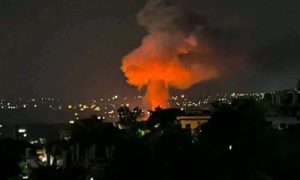
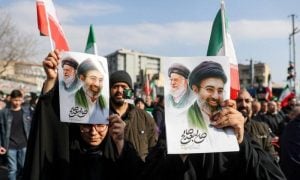
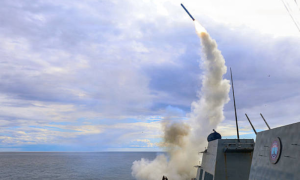
Tensions across the Gulf surged on Saturday after coordinated strikes by the United States and Israel on Iran, which also killed Supreme Leader Ayatollah Ali Khamenei.
In response, Iran launched attacks on American military installations in several Gulf countries, including the United Arab Emirates, Bahrain, Qatar, Kuwait and Jordan, drawing swift condemnation from their governments.
Saudi Arabia also reported strikes in Riyadh and the Eastern Province, stating that its air defences successfully intercepted the incoming attacks.
All flight operations to Middle Eastern destinations have been temporarily suspended, with the exception of Oman, as authorities continue to review the evolving regional security situation.
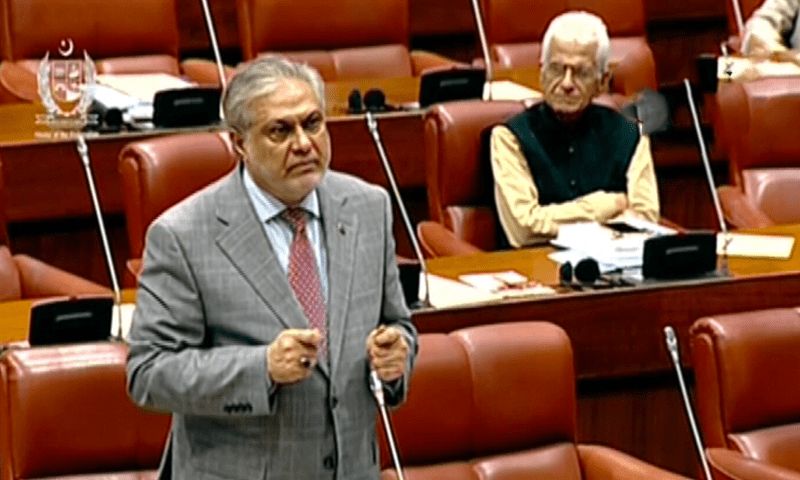
“I held a meeting with US Secretary of State Marco Rubio and disclosed that Iran had agreed not to build nuclear weapons, but the US wanted Iran’s entire nuclear programme to be completely dismantled,” Ishaq Dar said while briefing the Senate.
Describing Iran as a brotherly and neighbouring state, Dar said Pakistan had launched extensive diplomatic efforts to help defuse tensions.
He added that Islamabad had also pursued back-channel engagement aimed at promoting dialogue, and that Iran’s leadership was fully aware of these initiatives.
Pakistan, he said, supported Iran’s right to pursue nuclear energy for peaceful purposes and had previously used its presidency of the United Nations Security Council to convene discussions on the issue.
Dar likened the latest escalation to a similar episode last June.
He recalled that when Chief of Defence Force and Chief of Army Staff Field Marshal Syed Asim Munir was returning from the United States via the United Kingdom, he was invited by Iranian Foreign Minister Abbas Araqchi to meetings in Istanbul, where diplomatic solutions were urged.
He described the killing of Ayatollah Khamenei as a violation of international law.
He said the conflict had widened to include strikes in Gulf states and Iranian attacks on US bases, with airports reportedly hit in some areas.
Stressing that Pakistan must avoid being pulled into the confrontation, Dar said Islamabad condemned the attack within 15 minutes despite significant resistance and pressure.
He added that while Pakistan would have preferred a joint stance with Gulf countries had they not been targeted, it chose to act independently and responsibly.
A high-level meeting chaired by the prime minister decided that diplomatic engagement to lower tensions would continue, he said.
He confirmed that Pakistan maintains a strategic agreement with Saudi Arabia and remains in close contact with Tehran.
On regional security assurances, Dar said Iran had sought guarantees that neighbouring territories would not be used against it.
Pakistan conveyed such assurances and facilitated similar commitments from Saudi Arabia.
He observed that comparatively fewer incidents were reported in Saudi Arabia and Oman.
Dar also noted Pakistan’s Strategic Mutual Defence Agreement with Saudi Arabia, saying Pakistan told Iran to “please keep that in mind”.
Providing an update on Pakistani nationals in Iran, Dar informed the Senate that around 35,000 Pakistanis were currently there.
The Taftan-Zahedan border crossing remains operational, he said, and 792 citizens have already been evacuated.
While airspace closures have disrupted flights, road routes remain open for returnees.
He described the situation as extremely challenging, with the region facing a conflict-like atmosphere, and reiterated that the government remains fully engaged in diplomatic efforts.
Opposition and parliamentary leaders, he added, would receive a comprehensive briefing, while operational matters related to Afghanistan would be addressed separately.
Ishaq Dar informed the house that an in-camera briefing will be given to the parliamentary leaders and opposition leaders of both the National Assembly and the Senate tomorrow regarding the Middle East situation.
He said the issue of Afghanistan will also be discussed in the briefing. He said these are challenging times as there is a situation of conflict in the region.