


Key Points
- High-level committee to meet daily on fuel stocks and prices
- Government cites risks from Strait of Hormuz and Bab al-Mandeb tensions
- Authorities say national petroleum stocks remain stable
ISLAMABAD: Pakistan’s government has intensified oversight of the country’s energy market as regional conflict fuels volatility in global oil supply routes and prices, raising concerns over potential spillover effects on everyday life, given its reliance on imported fuel.
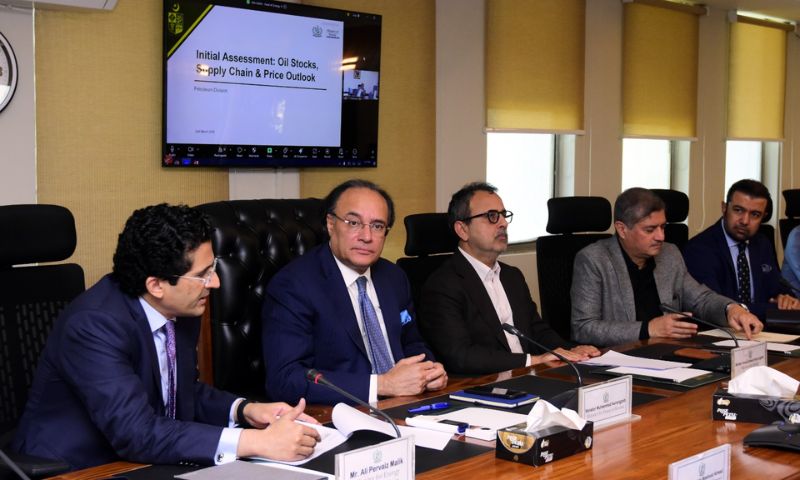
A high-level Cabinet Committee chaired by Finance Minister Senator Muhammad Aurangzeb met at the Finance Division and decided to convene daily to monitor petroleum stocks, international price movements, foreign exchange exposure and shipment flows.
During the meeting, the Finance Minister cautioned that “closure of the Strait of Hormuz and tensions around the Strait of Bab al-Mandeb are major challenges for global energy security.
If the situation persists, it may have implications for Pakistan’s energy supply chain.”
He said national stocks of petroleum products are at comfortable levels and stressed that there is no immediate supply stress.
“Maintaining market confidence and orderly conditions remains essential,” he said, adding that any unavoidable pricing adjustments arising from international market movements would be handled through established and transparent mechanisms to prevent abrupt shocks.
The Committee reviewed global oil benchmarks, freight and insurance costs, alternate sourcing options, and contingency plans to ensure uninterrupted domestic availability.
LNG and LPG shipment schedules, terminal operations and demand management options were also examined.
ALSO READ: Oil Prices Spike amid Strait of Hormu
Global energy markets have reacted sharply to the widening regional conflict, with fears of disruption to key maritime corridors that carry a significant share of the world’s oil and gas supplies.
Rising fuel costs in many countries have already translated into higher transport fares, food prices and electricity tariffs, underscoring the direct impact of geopolitical instability on households and businesses.
The Finance Minister directed relevant authorities to validate stock positions, closely track shipments and strengthen coordination to ensure preparedness under different scenarios.