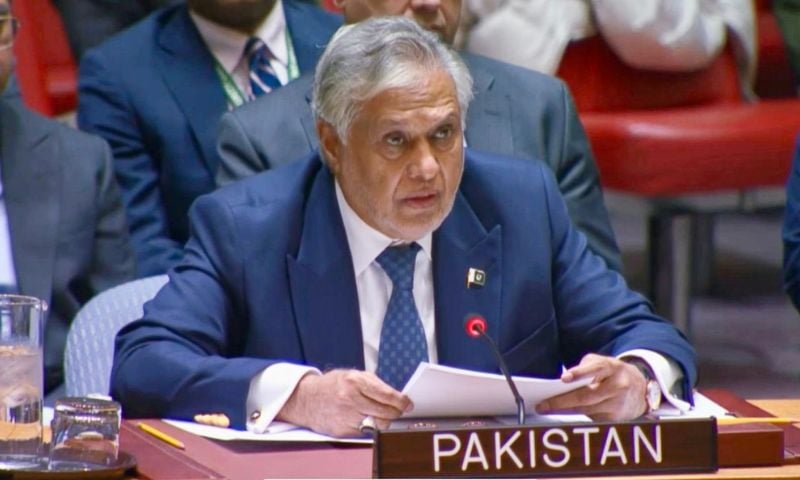



NEW YORK: Pakistan’s Deputy Prime Minister and Foreign Minister Mohammad Ishaq Dar has condemned Israel’s recent decision to expand control over the West Bank, urging the international community to demand an immediate halt and reversal of all illegal measures.
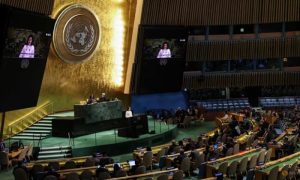
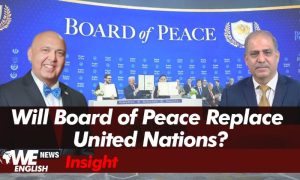
Speaking at a high-level UN Security Council briefing on Palestine in New York, Dar expressed hope that the Board of Peace—operating under the framework of UN Security Council Resolution 2803—would pave the way for concrete steps toward a permanent ceasefire, scaled-up humanitarian assistance, and the reconstruction of Gaza.
The Deputy Prime Minister strongly denounced Israel’s continued ceasefire violations, illegal settlement activities, and attempts to alter the status of the Occupied Palestinian Territory. He called for decisive international action to uphold international law.
Reaffirming Pakistan’s longstanding position, Dar underscored the need for a credible, time-bound political process leading to the realisation of the Palestinian people’s right to self-determination.
He reiterated support for an independent, sovereign, and contiguous State of Palestine based on the pre-1967 borders, with Al-Quds Al-Sharif as its capital—in line with international legitimacy and relevant UN resolutions.
This month, Israel’s cabinet approved a series of new measures that strengthen administrative and legal control over portions of the West Bank.
The measures include facilitating land purchases by Israeli settlers and reclassifying certain areas as “state land.”
Critics, including Palestinian authorities and numerous international observers, argue that these actions accelerate settlement expansion and further jeopardise the prospects for a viable two-state solution.
Meanwhile, Pakistan, which does not recognise Israel and has consistently advocated Palestinian statehood, recently joined a multilateral diplomatic framework aimed at promoting stability in Gaza.
The initiative follows the latest conflict and subsequent ceasefire efforts, signalling Pakistan’s continued engagement in regional efforts to support peace and humanitarian relief.