Key Points
- Finance Minister Muhammad Aurangzeb discusses aircraft financing with the US Export-Import Bank
- Talks cover refinery upgrades and the Reko Diq mining project
- Pakistan highlights digital payments, virtual assets and skills development
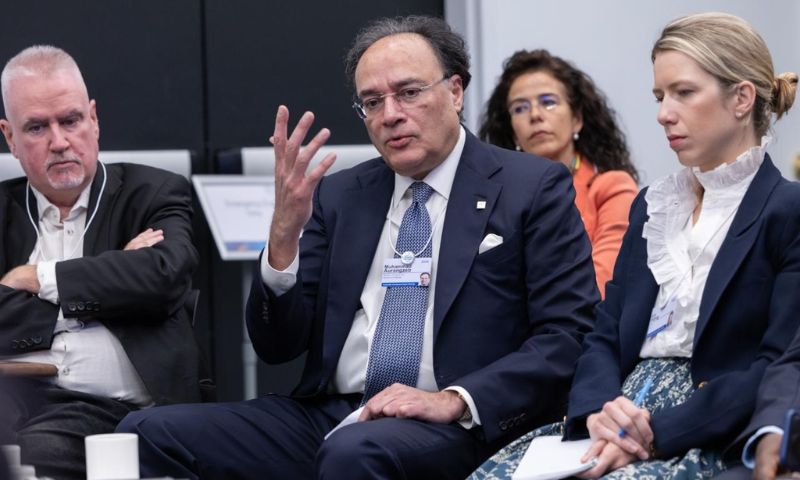
ISLAMABAD: Pakistan has sought financing support from the United States for aircraft procurement, refinery upgrades and the Reko Diq mining project as Finance Minister Muhammad Aurangzeb held talks with the US Export-Import Bank in New York.
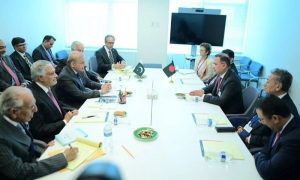
Aurangzeb met US Export-Import Bank Chairman John Jovanovich on the third day of his visit to New York. The Finance Minister is in the US attending the 81st session of the United Nations General Assembly with Prime Minister Shehbaz Sharif.
Reko Diq, Aviation and Refinery Upgrades Discussed as Finance Minister Meets US EXIM Bank Chairman
Federal Minister for Finance and Revenue, Senator Muhammad Aurangzeb, met with the Chair of the US Export-Import Bank, Mr. John Jovanovich, during his visit to New York to attend… pic.twitter.com/83cKiJJVkb
— Ministry of Finance, Government of Pakistan (@Financegovpk) September 24, 2026
His talks with senior US officials focused on possible financing for Pakistan International Airlines’ (PIA) fleet renewal, including the procurement of Boeing 787 Dreamliner aircraft and engines.
Aurangzeb also sought support for spare parts to bring grounded Boeing 777 aircraft back into service.
Both sides agreed to continue work on a broader cooperation framework while prioritising specific transactions, including possible financing for aircraft pre-delivery payments.
Refinery modernisation was identified as another potential area for support from the US Export-Import Bank.
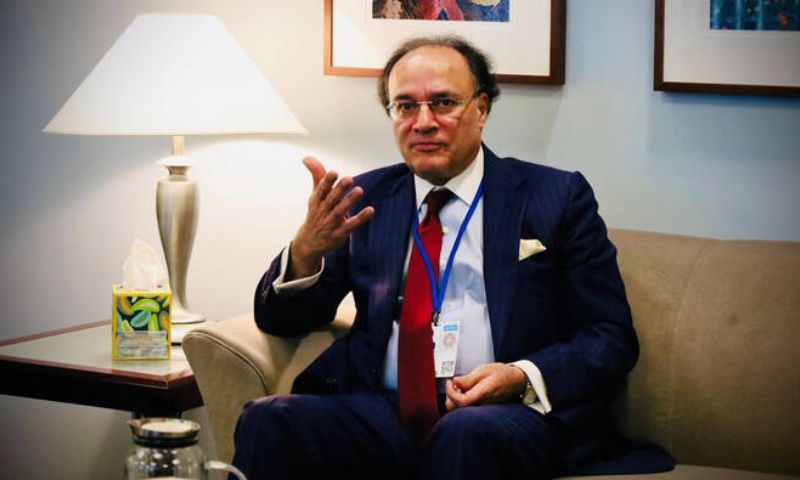
The finance minister also discussed the Reko Diq mining project, stressing its importance to Pakistan’s future exports and the economic cost of delays.
He welcomed the US Export-Import Bank’s continued commitment to the project.
The meeting was part of Pakistan’s efforts to mobilise foreign financing for major infrastructure, transport and natural-resource projects.
Pakistan’s government expedited efforts to revive inclusive growth, shifting from economic stabilisation to investment-led growth.
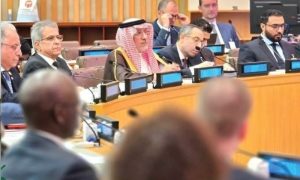
Separately, Aurangzeb participated in the Digital Cooperation Organisation High-Level Ministerial Dialogue, where he described digital transformation as an important part of Pakistan’s transition towards sustainable economic growth.
Pakistan’s digital infrastructure
He highlighted the development of digital public infrastructure and cashless payments. He stressed the need for skill development to help freelancers and other digital workers move into higher-value services.
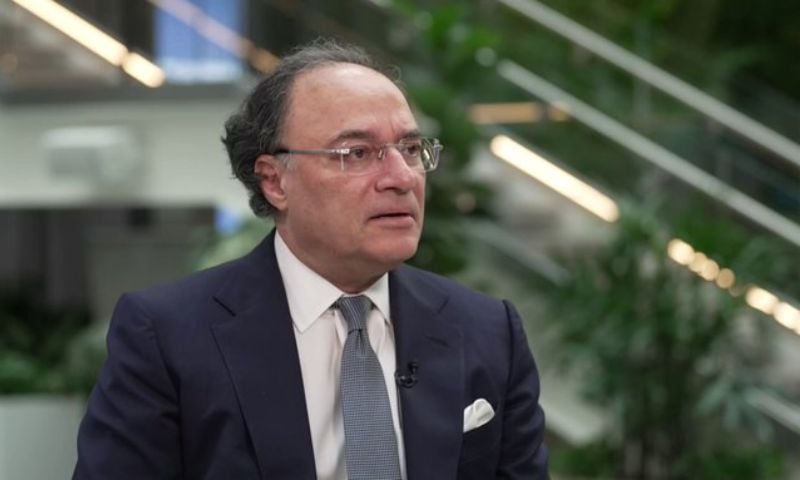
On virtual assets, Aurangzeb outlined his economic team’s work on legislation, oversight and licensing.
READ ALSO: 24% Increase in Foreign Direct Investment in Pakistan
He said their potential uses extended beyond cryptocurrency, including lower-cost remittances and possible tokenisation of public debt and real estate.
He called for closer cooperation among member states to share successful approaches and attract investment into the digital economy.
The engagements reflected the government’s efforts to combine digital transformation with foreign investment and financing for aviation, refining and mining, attract stronger investor participation in economic development, and cooperate with international partners.
Pakistan’s net foreign direct investment (FDI) rose 24 per cent year-on-year to $495 million in the first two months of fiscal year 2026-27, according to State Bank of Pakistan data.
FDI reached $316 million in August, up 80 per cent from $175 million a year earlier and 77 per cent from $179 million in July.
Power and financial businesses recorded the highest FDI inflows in August, while China, Canada and the United Arab Emirates were the major net contributors, according to Topline Securities.
Financial services attracted $147 million in FDI in July-August, compared with $113 million in the same period a year earlier. The power sector received $145 million, down from $157 million a year earlier.
China remained the largest source of FDI, with Chinese firms investing $176 million during the first two months, up from $121 million a year earlier. Investment from the UAE also improved to $58 million from $35 million.
Pakistan’s investment scenario improves
The overall foreign investment picture also improved during the period. Total foreign investment reached $562 million in July-August, compared with $312 million a year earlier.
Foreign private investment rose to $493 million from $324 million, while portfolio investment outflows fell sharply to $1.7 million from $74.8 million.
Foreign public investment also turned positive, recording an inflow of $69.4 million compared with an outflow of $11.8 million a year earlier.
The increase reinforces Pakistan’s efforts to attract foreign capital to support economic growth and investment in key sectors. The government has highlighted fiscal consolidation, structural reforms, privatisation and measures to improve the business environment as part of efforts to attract international investors.