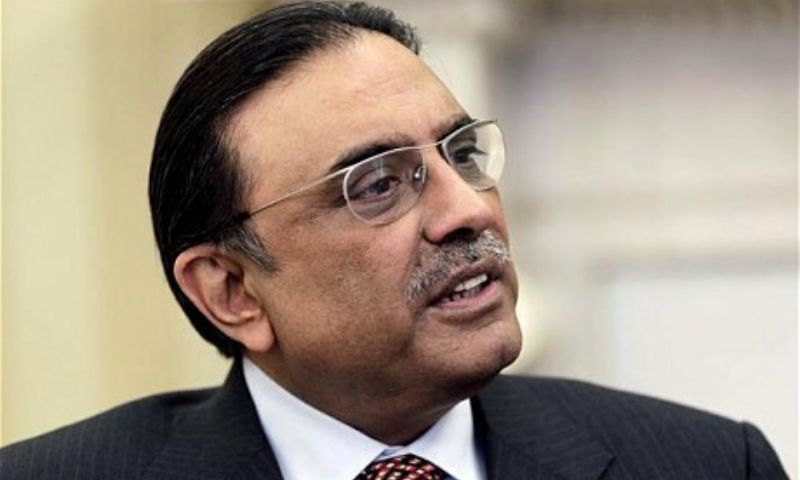



ISLAMABAD: President Asif Ali Zardari said on Thursday that lasting peace in South Asia would remain unattainable unless the long-running Kashmir dispute between India and Pakistan was resolved, urging the international community to move beyond expressions of concern and press India to halt alleged human rights violations in the territory.
In a statement issued on Kashmir Solidarity Day, Zardari said recent military tensions underscored the risks posed by the unresolved conflict, warning that instability in Kashmir threatened the wider region.
“India’s dangerous military escalation in May 2025 is a stark reminder that durable peace in South Asia is not possible until the core dispute of Jammu and Kashmir is resolved,” he said.
The president called on world powers to take concrete steps to address the situation in Indian Illegally Occupied Jammu and Kashmir (IIOJK), including ensuring accountability and access for independent observers.
“I urge the international community to go beyond mere expressions of concern, persuade India to stop human rights violations, allow unhindered access to international human rights observers, and grant the Kashmiri people their promised right to self-determination,” Zardari said.
He said Pakistanis around the world observe Kashmir Solidarity Day to reaffirm their “unwavering moral, diplomatic and political support” for Kashmiris and their right to self-determination in line with relevant United Nations Security Council resolutions.
Zardari recalled that the formal observance of the day began 36 years ago, in 1989, following what he described as the historic Kashmiri struggle, on the initiative of former prime minister Benazir Bhutto, adding that the movement for rights and dignity continued.
“For nearly eight decades, the brave people of Kashmir have stood firm against illegal Indian occupation and have rendered countless sacrifices,” he said, paying tribute to their “resolve, courage and steadfastness”.
The president said the situation in IIOJK remained a matter of grave concern for the global conscience, accusing India of intensifying efforts to consolidate its control following what he termed the illegal and unilateral actions of August 5, 2019.
He cited restrictions on media, the arrest of Kashmiri leaders, and attempts to alter the region’s demographic balance as part of what he described as systematic measures to weaken Kashmiris on their own land.
Zardari also accused Indian forces of continuing serious human rights violations, referring to recent international reports highlighting an increase in arbitrary detentions, collective punishments, and the demolition of homes as a form of reprisal.
Ongoing restrictions on digital freedoms, including the suspension of thousands of social media accounts, were described as attempts to suppress information from the region.
The president further criticised what he called the profiling of mosques and mosque administrations in IIOJK, saying such actions were aimed at obstructing the religious rights of the Muslim-majority population.
“These measures form part of a broader pattern of religious discrimination driven by extremist Hindutva ideology,” he said, adding that Kashmiris had an inalienable right to practise their religion without fear, coercion, or discrimination.
Zardari concluded by reiterating that the resolution of the Kashmir dispute in accordance with UN resolutions and the aspirations of the Kashmiri people remained essential for peace and stability in South Asia.