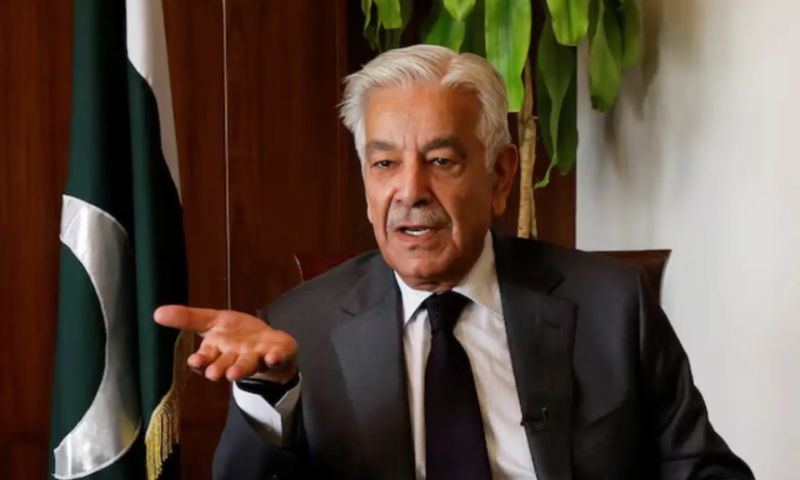



ISLAMABAD: Pakistan’s Defence Minister Khawaja Asif said on Wednesday that Afghanistan’s Taliban regime’s decision to reduce trade with Pakistan could prove a “blessing in disguise,” as it might help curb cross-border terrorism and improve border management.
The comments came after the Taliban’s interim Deputy Prime Minister for Economic Affairs, Mullah Abdul Ghani Baradar, urged Afghan traders to reduce their dependence on Pakistan and explore alternative trade routes.
Speaking to a local TV channel, Geo News, Defence Minister Asif said Afghanistan was free to trade wherever it found cheaper or more convenient routes, such as through Iran, Turkiye, Turkmenistan, or India.
“This is Afghanistan’s internal matter. They can trade wherever they find cheaper routes,” Asif said. “In fact, this should be taken as a relief for us,” he added.
Khawaja Asif said that the decision would cause no economic harm to Pakistan and could instead bring security benefits. “Reduced cross-border traffic will help curb terrorism and improve border management,” he said.
The minister noted that a large volume of Afghan cargo currently booked through Karachi Port passes into Afghanistan via Pakistan. If that trade declines, he said, it could reduce terrorist infiltration and smuggling across the border.
Taliban urges traders to limit trade with Pakistan
Earlier in Kabul, Mullah Baradar told Afghan business leaders that Pakistan’s repeated border closures had caused severe financial losses.
“To safeguard our economic interests, Afghan traders should minimise trade with Pakistan and seek alternative transit routes,” Baradar said at a press conference.
He said Afghanistan “must shift imports, including pharmaceuticals, to other countries” and advised traders to close their bank accounts in Pakistan.
Trade between Pakistan and Afghanistan has been suspended for more than a month due to an increase in terrorism incidents. Hundreds of trucks remain stranded at border crossings as Pakistan demand the Taliban regime in Kabul to act against terrorist sanctuaries in Afghanistan. However, the Taliban regime has so far failed to take serious action against the terrorist groups operating from Afghan soil.
Pakistan shut the Torkham and Chaman borders on 12 October after Taliban forces and affiliated terrorist groups launched unprovoked attacks on Pakistani military posts along the frontier.
The clashes killed at least 200 Taliban and allied terrorists, according to the Inter-Services Public Relations (ISPR).
Pakistan later carried out precision strikes inside Afghanistan, targeting terrorist hideouts in Kandahar province and Kabul.
A 48-hour ceasefire was announced on 15 October at Kabul’s request, mediated by Turkiye and Qatar. However, subsequent peace talks collapsed.
Economic impact and reactions
Pakistan remains one of Afghanistan’s largest trading partners, with annual trade previously exceeding US$1.5 billion.
Khan Jan Alokozai of the Pakistan–Afghanistan Joint Chamber of Commerce told BBC Urdu that trade through Pakistan was “easier, cheaper, and faster.”
“If a truck leaves Lahore in the morning, it reaches Jalalabad by evening,” he said. “Alternative routes through China or Central Asia would take longer and cost more.”
Former Pakistan Chamber of Commerce president Faiz Muhammad warned that both sides would suffer losses.
“Pakistan exports cement, rice, medicines, vegetables, and poultry to Afghanistan, while Afghanistan exports fruits and vegetables to Pakistan. Every segment involved in this trade benefits,” he said.
Mujeeb Shinwari, a leader of the Customs Clearing Agents Association at Torkham, said Afghanistan would face more difficulties than Pakistan.
“Iran is under international sanctions, and Central Asian routes are far and expensive. That could lead to inflation or shortages inside Afghanistan,” he said.
Former Balochistan minister Jan Achakzai said on X that the Taliban’s move could actually benefit Pakistan. “It will stop smuggling through Pakistan, prevent dollar outflows via the hawala system, and curb the movement of terrorists,” he wrote.
Cross-border terrorism
Analysts said that lower Afghan transit trade could help Pakistan curb illicit financial flows and cross-border militancy.
They noted that Pakistan has already begun using the China–Kyrgyzstan–Uzbekistan corridor to reach Central Asia, reducing its dependence on Afghan routes.
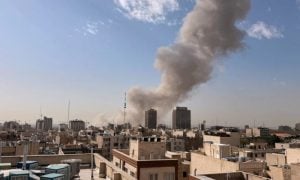
Pakistan’s Deputy Prime Minister and Foreign Minister Ishaq Dar condemned recent terrorist attacks in Islamabad and Wana that killed at least 12 people.
“These cowardly acts reaffirm our conviction that dialogue, understanding, and partnership are the only sustainable path to peace,” Dar said at the Inter-Parliamentary Speakers’ Conference in Islamabad.
Earlier this week, Pakistan’s envoy to the United Nations, Ambassador Asim Iftikhar Ahmad, warned that advanced weapons left in Afghanistan were reaching terrorist groups operating from Afghan territory.
He told the UN Security Council that weapons seized along the border were traced to foreign stockpiles.
“Terrorist entities, including ISIL-K, TTP, the BLA, and Majeed Brigade, have used these weapons against Pakistani civilians and law enforcement agencies,” he said.
The envoy called for global action to prevent terrorists’ access to such weapons and urged the Taliban to fulfil their international obligations.