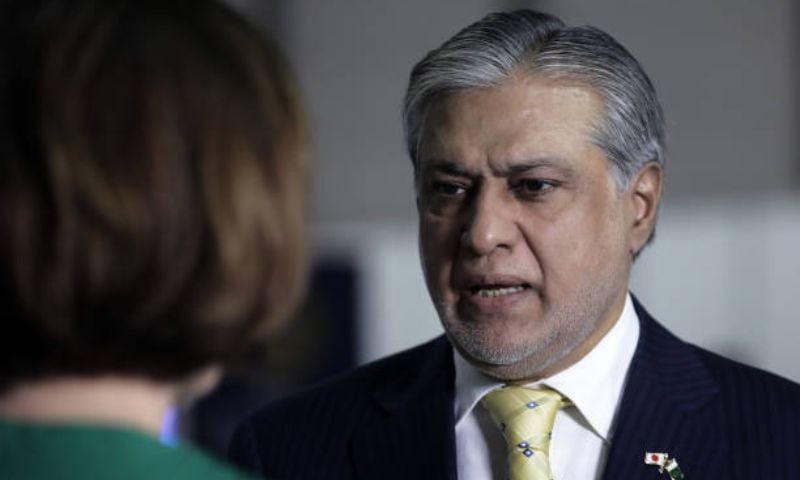



ISLAMABAD: Pakistan’s Deputy Prime Minister Ishaq Dar said the country’s Strategic Mutual Defense Agreement with Saudi Arabia marks a significant step in deepening security cooperation and reflects Islamabad’s broader push to strengthen partnerships across the Middle East.
He said engagement with Arab and Islamic nations remains central to Pakistan’s foreign policy as the country seeks to navigate shifting geopolitical dynamics.
Signed on September 17, 2025, the agreement states that any aggression against one country will be treated as an attack on both, formalizing decades of military cooperation and reinforcing joint deterrence.
The two countries also approved an economic cooperation framework in October 2025 aimed at boosting trade and investment, underscoring efforts to expand ties beyond defense.
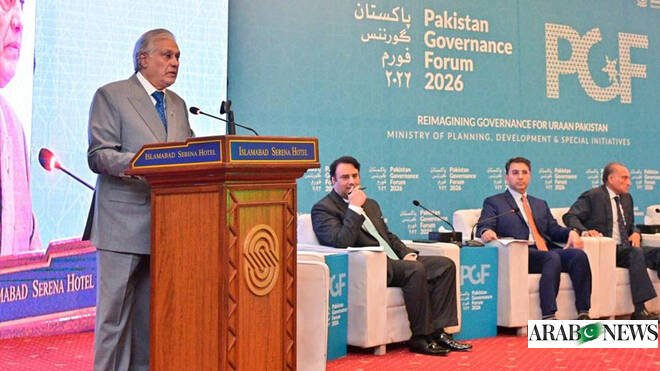
Speaking at the Pakistan Governance Forum 2026 in Islamabad, Deputy Prime Minister Ishaq Dar described the pact as a landmark step that elevates bilateral relations and enhances strategic coordination in the region.
Dar highlighted strengthened relations with other Middle Eastern countries, including the UAE, Qatar, Jordan, Oman, Egypt, and Bahrain, resulting in concrete agreements in investment, agriculture, infrastructure, and energy.
He noted that Pakistan continues to broaden partnerships across Asia, Latin America, and Africa. Recent visits by leaders from Kazakhstan, Uzbekistan, and Kyrgyzstan reflect a shared desire to enhance regional cooperation.
In South Asia, Dar said Islamabad has transformed friendly ties with Bangladesh into a substantive partnership and launched a trilateral mechanism with China and Bangladesh to deepen regional cooperation.
Dar reaffirmed Pakistan’s “all-weather” partnership with China, highlighting the second phase of the China-Pakistan Economic Corridor, while also noting efforts to strengthen relations with the United States in trade, technology, investment, and regional stability.
He said Pakistan’s balanced diplomatic approach enables it to navigate complex global dynamics while safeguarding national interests.