


ISLAMABAD: Pakistan has said it will not join the Abraham Accords, rejecting speculation that its recent participation in the Gaza Board of Peace signals any shift in its long-standing position on the Palestinian issue.
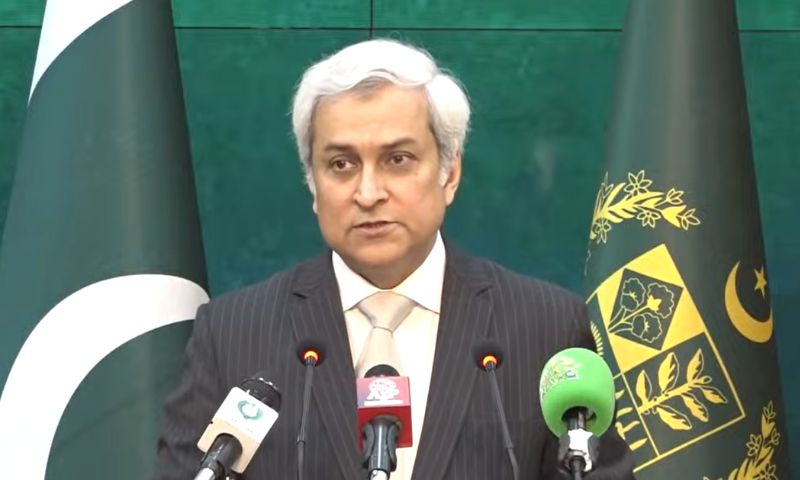
Addressing a weekly press briefing, Foreign Office spokesperson Tahir Andrabi said Pakistan’s policy remained unchanged and categorically ruled out becoming a party to the US-brokered normalisation framework.
“It is a misconception that joining the Board of Peace is in any way connected to the Abraham Accords, or any sidetrack to this issue,” Andrabi said. “Pakistan’s positions remain unchanged, and we will not become a party to the Abraham Accord.”
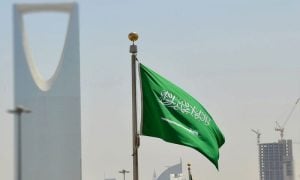
Pakistan joined the Board of Peace alongside seven other Muslim countries — Saudi Arabia, Türkiye, Egypt, Jordan, the UAE, Indonesia, and Qatar — bringing the total membership to eight countries.
The UN-mandated initiative was formed in 2025 under Security Council Resolution 2803 to help consolidate a ceasefire in Gaza, support reconstruction, and advance a political process based on Palestinian self-determination. The Board is designed to complement the United Nations framework rather than replace it.
Andrabi said that Pakistan’s engagement with the Gaza Board of Peace should not be viewed as a substitute for, or a deviation from, the United Nations-led process on Palestine, adding that the initiative operates under a specific mandate authorised by a UN Security Council resolution.
He said Pakistan had joined the Board of Peace “in good faith” alongside seven other Muslim countries — Saudi Arabia, Türkiye, Egypt, Jordan, the United Arab Emirates, Indonesia, and Qatar — as part of a collective effort aimed at ending the war in Gaza and advancing a lasting political settlement.
According to the spokesperson, Islamabad’s objectives within the initiative are threefold: to help consolidate and sustain the ceasefire in Gaza, support reconstruction efforts, and advance a just and durable peace based on the Palestinian people’s right to self-determination.
“Pakistan joining the Board of Peace should be seen in the continuum of the initiative by these eight countries to promote peace in Gaza, leading towards a lasting solution to the Palestinian question,” Andrabi said.
He said the initiative had emerged against the backdrop of what he described as unprecedented suffering and destruction in Gaza, noting that diplomatic deadlock at the UN Security Council and multiple international legal and political interventions had failed to halt the Israeli military campaign.
Andrabi also clarified that Pakistan had not taken any decision to join a proposed International Stabilization Force, stressing that membership of the Board of Peace did not imply any troop contribution or military role.
“The Board of Peace is intended to complement, not undermine, the UN system,” he said, adding that Pakistan’s decision to join followed consultations with all relevant stakeholders and completion of procedural requirements under government rules.
On the Gaza Board of Peace, Andrabi said Pakistan hoped the framework would translate diplomatic engagement into concrete outcomes, including a permanent ceasefire, expanded humanitarian assistance, and the early reconstruction of Gaza.
He added that any political process must be credible, time-bound, and consistent with international law and UN resolutions, culminating in an independent, sovereign, and contiguous Palestinian state based on pre-1967 borders, with Al-Quds Al-Sharif as its capital.
Pakistan’s membership of the Board of Peace is initially for three years, he said, adding that representation would depend on the level at which meetings are held, ranging from summit-level to ministerial engagements.