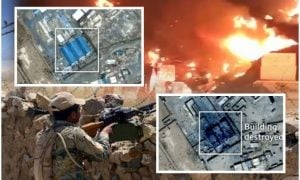



ISLAMABAD: Pakistan launched large-scale cross-border counterstrikes into Afghanistan early Friday, killing 133 Taliban fighters, wounding more than 200, destroying 27 border posts, and capturing nine others in what officials described as a decisive response to unprovoked attacks along the Pakistan–Afghanistan frontier.
The operation — named Operation Ghazab Lil Haq — also targeted and neutralised two Taliban corps headquarters, multiple brigade and battalion command centres, sector headquarters, ammunition depots, logistics bases, and more than 80 tanks, artillery pieces and armoured vehicles, according to Pakistan’s Information Minister Attaullah Tarar.
More than 80 tanks, artillery systems, and armoured vehicles were also destroyed, dealing what officials called a significant blow to Taliban military capability.
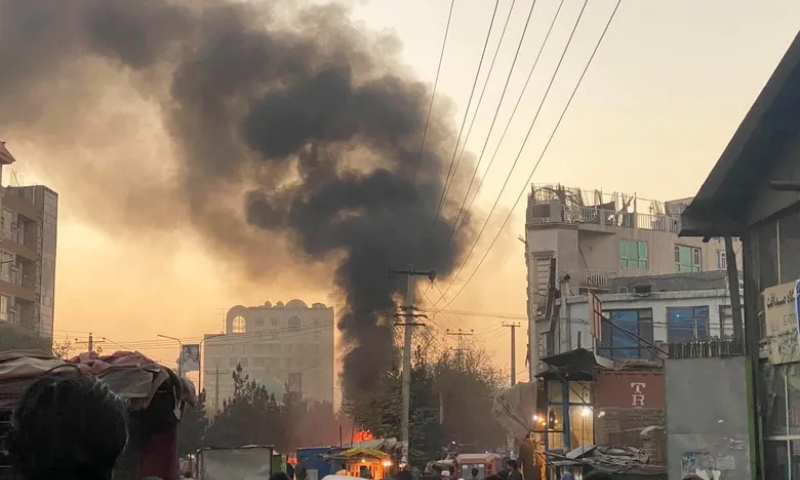
Taliban government spokesperson Zabiullah Mujahid acknowledged on X that airstrikes had taken place in Kabul, Kandahar, and Paktika.
The Pakistan Army is continuing “effective and decisive operations” in response to unprovoked aggression by the Afghan Taliban along the Pakistan-Afghanistan border, security sources said.
They added Afghan Taliban posts and camps have suffered heavy damage during the ongoing operations.
Security forces have completely destroyed an Afghan checkpoint near the Mohmand sector, security sources report.
Pakistan’s armed forces are determined to ensure national security and deliver a forceful response to unprovoked aggression, according to security sources.
Pakistani security forces are complying with international laws and targeting only Afghan military installations, security sources said.
In a retaliatory operation by the Pakistan Air Force, an arms depot and the ABF Battalion Headquarters in Laghman province, as well as a brigade in Nangarhar, were completely destroyed, security sources said.
Pakistan’s armed forces continue to carry out a robust response against the unprovoked aggression by the Afghan Taliban, according to security sources.
They added that the Afghan Taliban’s Shipola camp was also badly damaged as a result of Pakistan Army’s effective action.
Security forces have also destroyed a major ammunition depot and petroleum (POL) reserves in Afghanistan.
According to the sources, Pakistani forces are targeting Afghan Taliban hideouts and military installations, inflicting heavy losses on their forces through a strong and forceful response.
🚨🚨 پاک افغان بارڈر/فائرنگ اپڈیٹ/ شپولا کیمپ
پاک فوج کی افغان طالبان کی جانب سے بلااشتعال جارحیت کیخلاف موثر اور فیصلہ کن کارروائیاں جاری، سیکیورٹی ذرائع
پاک فوج کی مؤثر کاروائی کے دوران افغان طالبان کی پوسٹوں اور کیمپس کو شدید نقصان کا سامنا، سیکیورٹی ذرائع
پاک فوج کی… pic.twitter.com/yCz3IOCnhd
— PTV News (@PTVNewsOfficial) February 27, 2026
According to security sources, Pakistan’s armed forces have destroyed a Taliban logistics base and a corps headquarters in Kandahar province as part of ongoing operations launched in response to what officials described as unprovoked aggression by the Afghan Taliban regime.
Security officials added that multiple key Taliban posts along the Pakistan-Afghanistan border have also been destroyed.
Security forces targeted Taliban positions using artillery and quadcopter strikes in a coordinated and precise response.
Sources said that following Pakistan’s decisive action, Afghan Taliban forces raised white flags at several posts.
Officials emphasized that Pakistan’s armed forces remain unwavering in their resolve to defend the country’s borders and respond firmly to any aggression.
Islamabad said the operation underscores Pakistan’s resolve to defend its sovereignty and respond firmly to any aggression originating from across the border.
Afghanistan’s Taliban government spokesperson, Zabiullah Mujahid, acknowledged in a post on X that airstrikes had taken place in Kabul, Kandahar, and Paktika.
Officials in Islamabad described the military action as a precise and proportionate response aimed at dismantling infrastructure used to launch attacks against Pakistan along the Pakistan–Afghanistan border.
The latest escalation follows repeated tensions along the frontier, with Pakistan maintaining that it will take all necessary measures to defend its sovereignty and territorial integrity against cross-border aggression.
Pakistani authorities stated that operations were ongoing and described the strikes as targeted and defensive measures aimed at protecting the country’s territorial integrity and preventing further cross-border attacks.
Minister Tarar said that Pakistan’s military destroyed three brigade headquarters, three battalion headquarters, two sector headquarters, two ammunition depots, a logistics base, and more than 80 tanks, artillery guns, and armoured personnel carriers of the Afghan Taliban.
The minister emphasised that Pakistan’s armed forces continue to operate with full capability and professionalism to safeguard national security, defend territorial integrity, and respond decisively to any aggression.
آپریشن غضب للحق، صبح 3:40، 27 فروری 2026
▫️ افغان طالبان رجیم کے 133 کارندے ہلاک ہونے کی تصدیق، 200 سے زائد زخمی۔ کابل، پکتیا اور قندھار میں افغان طالبان کے دفاعی اہداف کو نشانہ بنایا گیا، جس میں مزید ہلاکتوں کا امکان ہے۔
▫️ افغان طالبان رجیم کی 27 پوسٹیں تباہ، 9 پوسٹوں پر قبضہ…— Attaullah Tarar (@TararAttaullah) February 26, 2026
Pakistan Air Force strikes key Taliban military installations
Pakistani forces carried out precision airstrikes against major Afghan Taliban military facilities in Kabul, Kandahar, and Paktia early on Friday, security sources said.
During the operations, the Pakistan Air Force destroyed two brigade headquarters in Kabul.
In Kandahar, a corps headquarters and a brigade headquarters were eliminated, along with an ammunition depot and a logistics base.
In Paktia, a corps headquarters was also destroyed, underscoring Pakistan’s continued retaliatory campaign as part of Operation Ghazab Lil Haq against cross-border Taliban aggression.
Meanwhile, Pakistan’s state broadcaster PTV News reported that the country’s armed forces have carried out air strikes and targeted Afghan Taliban’s important military installations in Kabul, Kandahar and Paktika.
In those strikes, two brigade headquarters have been destroyed in Kabul while one corp headquarter and one brigade headquarter have been destroyed in Kandahar, the state broadcaster has reported.
According to PTV News, an ammunition depot and logistics base have also been destroyed in Kandahar, and a a corp headquarter has been destroyed in Paktika.
🚨🚨 Breaking ‼️‼️‼️
Operation Ghazab Lil Haq / Update 0244 hr 27 Feb 2026:افواج پاکستان نے افغان طالبان رجیم کی کابل، قندھار اور پکتیا میں اہم ملٹری تنصیبات کو مؤثر فضائی حملوں میں نشانہ بنا کر تباہ کر دیا، سیکیورٹی ذرائع
تازہ ترین پاک فضائیہ کے فضائی حملوں کے دوران کابل میں… pic.twitter.com/7OvmcDxjAd
— PTV News (@PTVNewsOfficial) February 26, 2026
Strong retaliation against border provocation
Minister Attaullah Tarar said Pakistani forces were delivering a “strong and effective” response to cross-border attacks.
Earlier, Pakistan’s prime minister’s spokesperson, Mosharraf Zaidi, said that in response to unprovoked Afghan attacks, Pakistani counterstrikes have been authorised and several iterations of these strikes have been conducted.
“A total of 72 Afghan Taliban combatants have been terminated, and more than 120 have been injured. Sixteen Afghan Taliban posts have been destroyed, and seven Afghan Taliban posts have been captured,” he said.
“A large ammunition depot, an Afghan Taliban battalion headquarters, and an Afghan Taliban sector headquarters have been destroyed,” he said.
“So far, more than 36 tanks, artillery guns and armoured personnel carriers have been destroyed,” he said.
“Further counter-attacks are going to take place in keeping with Pakistan’s resolve to be immediate and effective in response to any aggression,” he added.
Update on the situation at the Pakistan Afghanistan border as of 0200 hrs Friday February 27
In response to unprovoked Afghan attacks, Pakistani counter strikes have been authorised and several iterations of these strikes have been conducted.
A total of 72 Afghan Taliban…
— Mosharraf Zaidi 🇵🇰 (@mosharrafzaidi) February 26, 2026
Operation Ghazab Lil Haq update
Pakistani forces have carried out precision air strikes against key Afghan Taliban military installations in Kabul, Kandahar, and Paktia, security sources said.
During the operations, the Pakistan Air Force destroyed two brigade headquarters in Kabul, while in Kandahar, both a corps headquarters and a brigade headquarters were targeted and eliminated.
An ammunition depot and a logistics base in Kandahar were also destroyed, the sources added.
In Paktia province, a corps headquarters was effectively neutralised during the air campaign.
Security officials confirmed that the strikes were part of Operation Ghazab Lil Haq, aimed at dismantling Taliban command and control centres following unprovoked cross-border attacks against Pakistan.
Pakistan’s security sources reported that five Afghan posts were seized and multiple military assets — including an ammunition depot, battalion headquarters and armoured vehicles — were destroyed.
Information Minister Attaullah Tarar further retaliatory attacks underway against the Afghan Taliban.
“Further counter attacks are ongoing. Every aggression will be firmly countered,” he said.
Strong retaliatory action against Afghan Taliban
Pakistan’s Information Minister Attaullah Tarar, in a statement to Pakistan Television (PTV), said that the country’s armed forces had responded swiftly and decisively to unprovoked aggression by the Afghan Taliban along the Pakistan–Afghanistan border.
“The Afghan Taliban launched unprovoked attacks, which were met with an immediate, strong, and coordinated response,” Tarar said.
He highlighted that the Pakistan Armed Forces had effectively employed their professional skills and operational expertise to defend the country.
Tarar said the Pakistani response overwhelmed the Afghan Taliban, leaving them in a state of confusion and forcing them to resort to spreading fake news on social media, with even an international news channel later deleting misleading reports.
The minister provided operational figures, saying that 72 Afghan Taliban fighters were killed, over 120 wounded, 16 posts destroyed, and seven posts captured.
Key enemy infrastructure, including a major ammunition depot and a battalion headquarters, was destroyed. He added that more than 36 Taliban tanks, artillery guns, and armoured personnel carriers (APCs) had been neutralised.
Tarar also confirmed that the Pakistan Air Force conducted precision airstrikes on Afghan Taliban defensive positions in Kandahar, Kabul, and Paktia, destroying multiple brigade headquarters and reinforcing Pakistan’s resolve to respond decisively to any aggression.
He praised the armed forces’ performance, stating that Pakistan would confront any hostile designs with an iron hand, and noted that the nation stands firmly behind its military.
Tarar also said Prime Minister Shehbaz Sharif had commended the timely and courageous response under the leadership of Field Marshal Syed Asim Munir.
“The use of Afghan territory to launch attacks on Pakistan is completely unacceptable,” he added, emphasising that militants trained on Afghan soil who conduct terror operations in Pakistan will continue to face decisive retaliation.
آپریشن غضب للحق، دو بجے (الصبح)، 27 فروری 2026
▫️ افغان طالبان رجیم کے 72 کارندے ہلاک، 120 سے زائد زخمی
▫️ افغان طالبان رجیم کی 16 پوسٹیں تباہ، 7 پوسٹوں پر قبضہ
▫️ افغان طالبان رجیم کا ایک ایمونیشن ڈپو، بٹالین ہیڈکوارٹر، سیکٹر ہیڈکوارٹر اور 36 سے زائد ٹینکس، آرٹلری گنز اور اے پی… https://t.co/siAPe9RsSC— Attaullah Tarar (@TararAttaullah) February 26, 2026
Earlier, Pakistan’s security sources said that in the retaliatory strikes, 58 Afghan Taliban fighters were killed and more than 100 others wounded.
They said 12 Afghan Taliban posts were completely destroyed, while Pakistani forces had taken control of five Afghan posts during the operation.
According to the sources, a major ammunition depot, three Afghan battalion headquarters and a sector headquarters were also completely destroyed.
They added that more than 30 tanks, artillery guns and armoured personnel carriers (APCs) were destroyed in the action.
Further intense retaliatory strikes are continuing, Pakistan’s security sources said.
Meanwhile, Pakistan Air Force has started precision air strikes targeting terrorist hideouts and Afghan Taliban positions. Pakistani fighter jets destroyed a major ammunition depot of the Afghan Taliban in Nangarhar.
🚨 پاک-افغان حالیہ صورتحال
پاک فضائیہ کے حملے شروع ،ننگرہار کے اندر بڑا ایمونیشن ڈیپو تباہ
مزید حملے جاری #آپریشن_غضب_للحق #OperationGhazabLilHaqq pic.twitter.com/WATz0Gvptc
— PTV News (@PTVNewsOfficial) February 26, 2026
Pakistan military’s media wing, ISPR, also confirmed Pakistan Air Force’s air strikes against Afghan Taliban positions.
Meanwhile, an attempt by terrorists to infiltrate the Pak-Afghan border in Bajaur has been thwarted, state broadcaster PTV reported, citing security sources.
“Security forces captured alive a Fitna al-Khawarij terrorist attempting to cross the border,” PTV added.
🚨🚨 بریکنگ
Operation Ghazab Lil Haq/ Update 0210 hr 27 Feb 2026:پاک افغان سرحد پر باجوڑ سیکٹر کےقریب فتنہ الخوارج کےدہشتگرد کی دراندازی کی کوشش ناکام ،سیکیورٹی ذرائع
سیکیورٹی فورسز نے بارڈر کراس کرنے والے فتنہ الخوارج کے دہشتگرد کوزندہ پکڑلیا، سیکیورٹی ذرائع
پکڑے جانے والے… pic.twitter.com/wnp29fCStV
— PTV News (@PTVNewsOfficial) February 26, 2026
Afghan Taliban target mosque in Bajaur
The Afghan Taliban regime’s anti-Islam actions were exposed as they targeted a mosque in Bajaur, severely damaging its roof and other parts, according to security sources.
The Pakistan Army is delivering a strong and decisive response. Pakistani security forces remain fully… pic.twitter.com/Z04axM79DX
— Pakistan TV (@PakTVGlobal) February 26, 2026
Pakistani Forces Destroy Afghan Taliban’s Dawood Post
Pakistan’s security sources said a decisive retaliatory operation is ongoing against unprovoked aggression by the Afghan Taliban along the Pakistan–Afghanistan border.
In South Waziristan, Pakistani forces carried out a strong counter-attack, destroying the Afghan Taliban’s Dawood post, the sources said.
They added that Pakistani forces were seen effectively targeting and striking the Dawood post during the operation.
Operation Ghazab Lil Haq: Pakistan Launches Airstrikes
Pakistani security sources reported early on Friday that the Pakistan Air Force has begun a series of airstrikes inside Nangarhar, targeting a large ammunition depot and destroying it completely. Additional air operations are reported to be ongoing.
In a related development along the Nowapas sector on Pakistan-Afghanistan border at Bajaur, Pakistani forces launched a strong response to the unprovoked aggression by Afghan forces.
Precision strikes near Taliban positions reportedly destroyed multiple hideouts and inflicted heavy casualties, with several militants killed and frontline positions completely neutralised.
Officials emphasised that Pakistan’s armed forces remain fully prepared to protect national territory and respond decisively to any cross-border hostility.
Security sources described the coordinated operations as part of Operation Ghazab Lil Haq, aimed at eliminating militant threats along the border and safeguarding the country from attacks.
Meanwhile, Pakistan’s military is continuing an effective response to unprovoked aggression by Afghan forces, sources said.
Security sources said Pakistani forces carried out a targeted operation against terrorist hideouts near the Nawapas sector along the border.
They added that several Afghan Taliban fighters were killed in the action and that their defensive positions were completely destroyed.
Pakistan’s armed forces remain fully prepared at all times to safeguard the country’s security and territorial integrity, the sources said.
Earlier, Pakistan’s Ministry of Information said that Afghan Taliban forces carried out an “unprovoked” attack at multiple locations along the Pakistan–Afghanistan border, prompting an “immediate and effective” response by Pakistan’s security forces.
In a statement addressing the recent situation at the border, Tarar said the Afghan Taliban had initiated unprovoked firing, “to which Pakistan was responding and would continue to respond decisively.”
He added that Afghan Taliban authorities and Indian-linked social media accounts are spreading “baseless and fabricated propaganda,” adding that such rumours had no connection with reality and were being circulated to cover up setbacks on the ground.
“These false narratives are being spread to hide embarrassment after a clear defeat in the field,” the minister said, adding that Pakistan would not allow the Afghan Taliban to “take shelter behind lies and propaganda.”
Tarar praised the performance of the Pakistan Army, saying Pakistan’s “professional armed forces” were thwarting the attackers’ objectives.
He said that 36 operatives of the Afghan Taliban had been killed in military action, while several others were injured. He also confirmed that two Pakistani soldiers were martyred while defending the country, and three others sustained injuries.
🚨 Pakistani security forces seized control of Afghan posts and raised the national flag.
A clear message has been delivered: any border violation or provocation will be met with an immediate and decisive response#PakAfghanConflict #Afghanistan #Terrorism #PakAfghanBorder pic.twitter.com/24fY7FmHpK— مار خور (@blogger_1122) February 26, 2026
The information minister linked the border firing to Pakistan’s recent operations against Fitna al-Khawarij militants, “who were responsible for killing civilians in Pakistan and the wider region.”
He alleged that the Afghan Taliban’s firing in border areas, following those operations, had once again exposed their support for militant groups.
“Afghanistan should learn lessons from its past failures,” Tarar said, warning that Pakistan would continue to foil the “malicious designs of every enemy” that looks towards the country with hostile intent.
افغان طالبان رجیم کی جانب سے پاکستان افغانستان سرحد پر بلا اشتعال فائرنگ کی کاروائیوں کا بھرپور و مؤثر جواب دیا جا رہا ہے اور جاتا رہے گا.
افغان طالبان رجیم اور بھارتی سوشل میڈیا اکاؤنٹس سے جھوٹا و بے بنیاد پرپیگینڈا کیا جارہا ہے جس کا حقیقت سے کوئی تعلق نہیں.
خوش فہمیوں پر…
— Attaullah Tarar (@TararAttaullah) February 26, 2026
Afghan Taliban Flee in Panic: Torkham Border Abandoned
Security sources reported that Afghan Taliban forces abandoned the Torkham border and fled after a “strong and effective” retaliatory operation by the Pakistan Army, following an unprovoked aggression.
According to officials, Taliban fighters loaded supplies onto trucks and withdrew from the border area, leaving Pakistani forces in full control. Security sources emphasised that the Pakistan Army remains ready to defend the country and respond decisively to any cross-border aggression.
In a parallel operation, Pakistani security forces stormed Afghan posts along the border, gaining control and hoisting the national flag. Officials said the move sent a “clear and decisive message” that any border violation or provocation will be met with immediate and forceful response.
Also, in the Kurram sector, Pakistani forces carried out a targeted operation against Tehrik-e-Taliban Pakistan/Fitna al-Khawarij positions following an attempted Taliban advance.
Security sources said the precision strikes destroyed multiple militant hideouts and resulted in the deaths of eight militants. They reiterated that Pakistan’s armed forces remain fully prepared to protect national territory and counter any hostile actions along the border.
Pakistani Forces Take Control of Afghan Posts and Hoist National Flag
Pakistani security forces carried out an effective operation, taking control of Afghan posts and hoisting the national flag there.
A clear message was conveyed that any border violation or act of provocation would be met with an immediate and decisive response.
🚨 Pakistani security forces seized control of Afghan posts and raised the national flag.
A clear message has been delivered: any border violation or provocation will be met with an immediate and decisive response#PakAfghanConflict #Afghanistan #Terrorism #PakAfghanBorder pic.twitter.com/24fY7FmHpK— مار خور (@blogger_1122) February 26, 2026
Meanwhile, Pakistani forces carried out an effective and well-coordinated retaliatory operation in Angoor Adda. According to security sources, targeted fire struck multiple militant hideouts, resulting in the destruction of several centres and completely paralysing hostile activity along the border belt.
In a statement posted on X, the ministry of information said Taliban fighters had “miscalculated” by opening fire across several sectors in Khyber Pakhtunkhwa province, including Chitral, Khyber, Mohmand, Kurram and Bajaur.
“Afghan Taliban regime’s unprovoked action along the Pakistan–Afghanistan border given an immediate and effective response,” the ministry stated.
The ministry said Pakistani forces were delivering “punishment” to the Taliban regime fighters, with early reports indicating heavy casualties on the Afghan side and the destruction of multiple posts and equipment.
“Taliban regime forces are being delivered punishment in Chitral, Khyber, Mohmand, Kurram and Bajaur sectors,” the statement added.
“Early reports confirm heavy casualties on the Afghan side with multiple posts and equipment destroyed,” the ministry stated.
The ministry added that Pakistan would take all necessary measures to safeguard its territorial integrity and ensure the safety of its citizens.
Afghan Taliban regime unprovoked action along the Pakistan–Afghanistan border given an immediate, and effective response.
Afghan Taliban miscalculated and opened unprovoked fire on multiple locations across Pakistan Afghanistan border in KP which is being met with immediate, and…
— Ministry of Information & Broadcasting (@MoIB_Official) February 26, 2026
30 Afghan Taliban fighters killed
According to confirmed information shared by security officials, at least 30 fighters of the Afghan Taliban regime have been killed as a result of Pakistan’s decisive retaliatory action.
Sources said the confrontation escalated after Afghan Taliban elements attempted to target Pakistani check posts using quadcopters (armed drones). The attempt was swiftly neutralised, with all hostile quadcopters successfully shot down before they could cause any damage.
Officials said Pakistani security forces responded in a timely and measured manner, employing both small and heavy weapons to counter the aggression.
In addition, aerial surveillance and strike drones were used to precisely engage and disable selected Taliban positions across the border, source said.
Security sources emphasised that Pakistan’s response was purely defensive and aimed at safeguarding its territorial integrity and the lives of its personnel deployed at forward posts.
Meanwhile, officials said that the Afghan Taliban are spreading false claims and fabricated videos through its media outlets and social media platforms in an attempt to distort facts and mislead public opinion following the failed incursion.
The situation along the border remains under close monitoring, with authorities reiterating Pakistan’s commitment to peace while making it clear that any threat to national security will be countered decisively.
Pakistan Army Destroys TTA Positions Near Angoor Adda
In Angoor Adda, the Pakistan Army carried out an effective and coordinated retaliatory operation, targeting TTA positions.
As a result of precise fire, multiple terrorists’ centres were destroyed and Taliban activities along the border belt were completely paralysed.
Meanwhile, Pakistan’s prime minister’s spokesperson for foreign media, Mosharraf Zaidi, said in a post on X late on Thursday that no Pakistani posts had been captured or damaged in the cross-border exchanges.
Providing an update, Zaidi said Pakistani forces had inflicted “heavy losses” across the border in response to unprovoked Taliban aggression.
He said there had been no Pakistani soldiers captured or killed in the clashes. Claims of damage to Pakistani positions were “little more than the fantasy of India’s proxies in Afghanistan”, he added.
Zaidi said that any aggression targeting Pakistan would receive an “immediate and effective” response.
Zaidi warned that Islamabad would respond decisively to any future attacks, stating that all aggression targeting Pakistan would be met with an “immediate and effective” response.
Update on the situation at the Pakistan-Afghanistan border as of 2340 hrs Thursday February 26
Alhamdolillah, not only have no Pakistani posts been captured or damaged, but the Pakistani side has inflicted heavy losses across the Pakistan-Afghanistan border in response to…
— Mosharraf Zaidi 🇵🇰 (@mosharrafzaidi) February 26, 2026
Earlier, security sources said Afghan Taliban fighters opened unprovoked heavy fire at around 5:15 pm local time, just before Iftar, from across the border in the Maro Sar and Shah Kot Sar areas of Khyber district in Pakistan’s north-western Khyber Pakhtunkhwa province.
Pakistan’s military responded “swiftly”, the sources said. No casualties have been reported so far.
Heavy exchanges of fire were continuing late into the evening in the Bazar Zakhakhel area of Khyber district, particularly around Maro Sar and Shah Kot Sar, according to security sources.
Afghan Taliban’s unprovoked firing was also reported in the Shurqo area of Kurram district and near Nawa Pass between Bajaur district in Pakistan and Kunar province in Afghanistan.
In Bajaur, Pakistani tanks swiftly responded to the Afghan Taliban’s unprovoked fire in the Nawa Pass border area within the jurisdiction of Nawagai police station, security sources said. Sources said two Afghan Taliban posts were completely destroyed in the shelling.
The Pakistan Army “remains vigilant and ready to respond decisively to any hostile moves along the border”, the sources added.
Afghan media outlets reported ongoing clashes between Pakistani forces and Taliban fighters in Afghanistan’s Kunar, Nangarhar and Khost provinces along several points of the frontier.
Pakistan armed forces response to aggression
Pakistan’s Defence Minister Khawaja Asif said that the country’s armed forces are currently delivering a crushing response aggression from the Afghan Taliban.
ھماری بہادر افواج اسوقت ھندوستان کی پراکسی طالبان و افغان جارحیت کا منہ توڑ جواب دے رہی ھیں ۔ شکست دشمن کا مقدر ھے انشا ء اللہ
اچھا ھو کہُ پی ٹی آئ پختونخواہ اور وفاقی سطح پہ اسوقت وفاق اور دوسرے صوبوں کیساتھ شانہ بشانہ دفاع وطن میں روز روشن کیطرح شریک ھو۔— Khawaja M. Asif (@KhawajaMAsif) February 26, 2026
The latest attacks by the Afghan Taliban along the border come less than a week after Pakistan targeted terrorist camps and hideouts overnight in the Nangarhar and Paktika provinces of Afghanistan.
On Tuesday, Afghan Taliban fighters initiated unprovoked firing along the border in Torkham and Tirah, Pakistan’s prime minister’s spokesperson for foreign media, Mosharraf Zaidi, said in a post on X.
“Pakistan’s security forces responded immediately and effectively, silencing the Taliban aggression,” Zaidi wrote.
The Afghan Taliban regime initiated unprovoked firing along the Pakistan-Afghanistan Border in Torkham & Tirah sub-sectors.
Pakistan’s security forces responded immediately & effectively, silencing the Taliban aggression.
Any further provocation will be responded to…
— Mosharraf Zaidi 🇵🇰 (@mosharrafzaidi) February 24, 2026
He warned that any further provocation would be met “immediately and severely” and said Pakistan would “continue to protect its citizens and guard its territorial integrity”.
Pakistan targeted terrorist sanctuaries in Afghanistan
The unprovoked fire came days after Pakistan carried out intelligence-based precision air strikes in eastern Afghanistan.
Pakistan’s Ministry of Information and Broadcasting said the pre-dawn strikes targeted seven terrorist hideouts linked to the banned Tehreek-i-Taliban Pakistan (TTP), which the state refers to as “Fitna al-Khawarij”, and the Islamic State-Khorasan Province (ISKP).
The ministry said the precision strikes were conducted in Nangarhar, Paktika and Khost provinces as a “limited, proportionate and retributive response” to recent suicide bombings in Islamabad, Bajaur and Bannu during the holy month of Ramadan.
Security sources said terrorist camps in Khost, Nangarhar, Paktika and Kunar provinces were targeted.
Minister for Parliamentary Affairs Dr Tariq Fazal Chaudhry told the Senate on Monday that more than 100 terrorists were killed in a precise retaliatory operation by the Pakistan Air Force.
“The operation was a necessity, not a choice,” Chaudhry told the upper house of parliament.
He said Pakistan had shared “irrefutable, credible evidence” with Kabul about terrorist groups planning attacks from Afghan soil but had received an ineffective response.
Terrorist groups in Afghanistan
The air strikes marked one of the most extensive confirmed cross-border operations since the Afghan Taliban returned to power in Kabul in 2021.
Islamabad has repeatedly asked the Taliban regime to take action against anti-Pakistan terrorist groups and prevent Afghan territory from being used for terror attacks in Pakistan.
Pakistan has witnessed a surge in cross-border terror attacks since 2021, including suicide bombings and assaults on security forces and civilians.
In an earlier statement, the information ministry said it had “conclusive evidence” that recent attacks inside Pakistan were carried out by terrorists acting at the behest of Afghanistan-based leadership and handlers.
It said repeated efforts to persuade the Taliban authorities to deny the use of Afghan territory by terrorist groups had failed to produce “substantive action”.
State Minister Talal Chaudhry said on Thursday that Pakistan would not change its policy towards Afghanistan unless the Taliban abandoned a “guerrilla mindset”.
“Their attitude towards us is quite different from what it is with the rest of the world,” he told local media.
He said Pakistan had tried dialogue but was now taking practical steps to influence Taliban behaviour and encourage it to act as a responsible state authority.
International concerns over the presence of terrorist groups
International actors have also expressed concern over the presence of terrorist groups in Afghanistan.
Russia’s Foreign Ministry said between 20,000 and 23,000 fighters affiliated with various international terrorist organisations were operating in Taliban-ruled Afghanistan, more than half of them foreign nationals.
According to the Russian statement, ISKP has around 3,000 fighters, the TTP between 5,000 and 7,000 fighters, and al-Qaeda between 400 and 1,500 fighters.
Smaller terrorist groups include the East Turkestan Islamic Movement, the Islamic Movement of Uzbekistan — also known as the Turkestan Islamic Party — and Jamaat Ansarullah.
Russian officials said ISKP remains the only group openly hostile to Afghanistan’s current Taliban rulers but assessed that it lacks the capability to seize territory and instead focuses on destabilising attacks.
Separately, The Diplomat magazine cited findings from the United Nations Analytical Support and Sanctions Monitoring Team as saying that Taliban authorities continue to allow al-Qaeda and affiliated terrorist groups, including the TTP, to operate inside Afghanistan.
According to the UN report referenced by the magazine, around 6,000 TTP fighters are based in Afghanistan.
The terrorist group carried out more than 600 attacks in Pakistan in 2025, mainly targeting military and government sites, causing dozens of deaths and injuries.