


ISLAMABAD: Pakistan on Thursday firmly rejected claims by a United States intelligence chief alleging that its missile capabilities pose a potential threat, terming the assertion as baseless and misleading.
US Director of National Intelligence Tulsi Gabbard told a Senate hearing that Pakistan’s long-range missile development could potentially include intercontinental ballistic missiles (ICBMs) capable of reaching the US homeland.
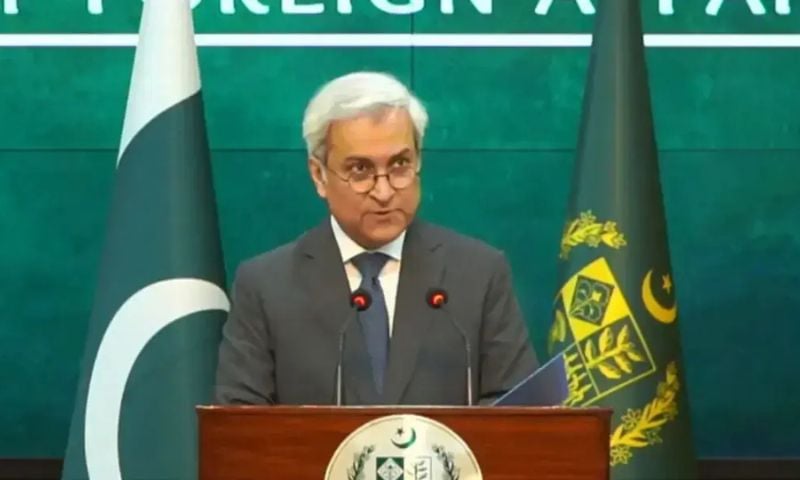
The Spokesperson of the Ministry of Foreign Affairs, Tahir Andrabi emphasised that Pakistan’s strategic capabilities are exclusively defensive in nature, aimed at safeguarding national sovereignty and maintaining peace and stability in South Asia.
“Its missile programme, which remains well below intercontinental range, is firmly rooted in the doctrine of credible minimum deterrence vis-à-vis India,” he said.
🔊PR No.7️⃣3️⃣/2️⃣0️⃣2️⃣6️⃣
Statement by the Spokesperson regarding statement made by the United States Director of National Intelligence on Pakistan’s missile capabilities pic.twitter.com/2DILEJKn9D
— Ministry of Foreign Affairs – Pakistan (@ForeignOfficePk) March 19, 2026
The diplomat added in contrast, India’s development of missile capabilities exceeding 12,000 kilometres reflects a trajectory that extends beyond regional security considerations and is certainly a cause of concern for the neighbourhood and beyond.
“Pakistan remains committed to constructive engagement with the United States, anchored in mutual respect, non-discrimination, and factual accuracy. We urge a more measured and considered approach that aligns with South Asia’s strategic imperatives and advances peace, security, and stability across the region,” Tahir Andrabi said.
Syed Muhammad Ali, an Islamabad based strategic affairs expert described Tulsi Gabbard’s allegations as divorced from technical realities and based on a misunderstanding of the purpose of Pakistan’s nuclear and missile programme.
He said that Pakistan’s deterrence posture remains India-centric and driven by its national security compulsions within South Asia rather than global strategic ambitions.
Responding to the claims, Islamabad-based expert Syed Muhammad Ali said Pakistan strategic capabilities, missile ranges and force posture, are aimed at deterring India, not to project power beyond the region.
Even Pakistan’s longest-range missiles are designed to ensure credibility of its deterrence with minimum resources, deny India strategic depth and ensure survivability of its strategic forces, he added.
“Pakistan’s nuclear doctrine is based on credible minimum deterrence, to maintain strategic stability in South Asia,” he said.
Several US administrations have repeatedly appreciated Pakistan’s strategic responsibility and restraint, expressed confidence in Pakistan’s nuclear safety and security architecture as an enduring commitment towards regional strategic stability.