


KEY POINTS
- Indus Water Commissioner seeks technical details from India
- Pakistan supports Yemen’s unity, Saudi security, and regional stability
- Condemns Israel’s recognition of Somaliland, supports Somalia’s sovereignty
- Pakistan-China strategic dialogue scheduled for January 4, 2026
- Repatriation of Pakistani nationals from Afghanistan ongoing
ISLAMABAD: Pakistan highlighted on Thursday India’s reported plans for the Dulhasti Stage-II hydropower project on the Chenab River, describing it as a major concern under the Indus Waters Treaty (IWT).
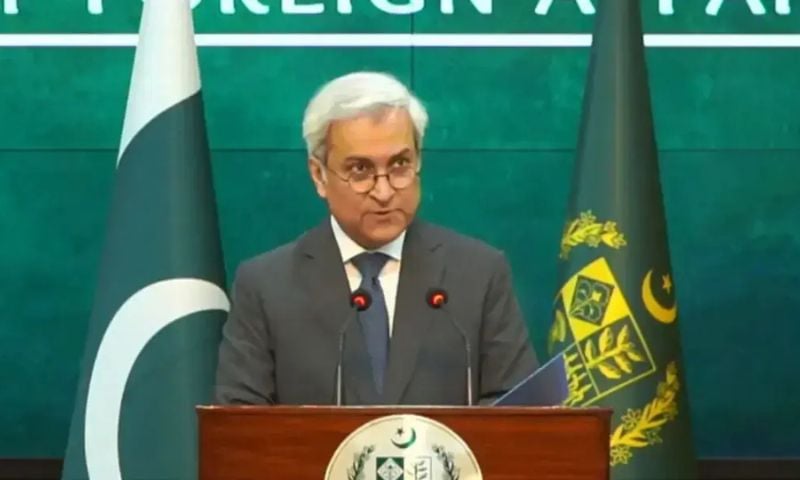
Foreign Office Spokesperson Ambassador Tahir Hussain Andrabi said that Pakistan’s Indus Water Commissioner has formally requested detailed technical information from India on the project, including whether it is a new run-of-the-river plant or modifications to an existing facility.
Andrabi stressed that India cannot unilaterally misuse its restricted allowance under the IWT, which governs the use of western rivers.
“And under the Indus Waters Treaty, India cannot misuse its restricted allowance to unilaterally build hydropower projects on the western rivers,” Andrabi said, calling upon New Delhi to urgently return to full treaty compliance.
He reiterated that the treaty remains a binding international agreement and that Pakistan remains committed to peaceful dispute resolution while protecting the existential water rights of its citizens.
The briefing also covered Pakistan’s regional and international engagements. Andrabi reaffirmed support for Yemen’s unity and territorial integrity, opposition to unilateral escalatory actions, and solidarity with the Kingdom of Saudi Arabia.
The Prime Minister’s recent conversation with Saudi Crown Prince Mohammed bin Salman emphasised regional peace, cooperation, and unity among Muslim nations.
Highlighting ties with the UAE, the Foreign Office noted the recent official visit of President Sheikh Mohammed bin Zayed Al Nahyan to Islamabad and Rahim Yar Khan, focusing on trade, energy, investment, and regional stability, reflecting a year of intensive bilateral engagement.
Speaker of the National Assembly Sardar Ayaz Sadiq attended the state funeral of former Bangladeshi Prime Minister Begum Khaleda Zia in Dhaka, conveying condolences and recognising her contributions to strengthening bilateral relations. He also met with key Bangladeshi officials during the visit.
Pakistan condemned Israel’s recognition of the so-called Somaliland region, reaffirming support for Somalia’s sovereignty and joining OIC-member nations in a joint statement upholding international law principles. The country also reiterated its unwavering support for Palestinian self-determination, advocating for a sovereign, independent Palestinian state with Al-Quds Al-Sharif as its capital.
Andrabi highlighted upcoming diplomatic engagements, including the seventh round of the Pakistan–China Foreign Ministers’ Strategic Dialogue in Beijing on January 4, 2026, emphasising it as a key platform to review bilateral cooperation and regional developments.
Finally, the spokesperson provided an update on the repatriation of Pakistani nationals from Afghanistan, reporting that 15 students and 291 other individuals have safely returned, with embassy coordination ongoing for the remaining citizens seeking assistance.