


ISLAMABAD: Police in Pakistan’s northwestern Khyber Pakhtunkhwa province are confronting a new dimension of militancy as armed groups, including the Tehreek-e-Taliban Pakistan (TTP), increasingly use commercially available drones modified to drop explosives.
Officials say the surge in drone attacks reflects growing access to sophisticated equipment following the US military withdrawal from Afghanistan, according to Arab News..
This trend mirrors a wider global pattern, with non-state actors repurposing low-cost drones for attacks in regions from the Middle East to Eastern Europe, creating unique challenges for policing and counterinsurgency operations, Arab News reported, quoting analysts.
Militant violence has surged across Pakistan, with Islamabad-based Pakistan Institute for Conflict and Security Studies reporting a 73 percent increase in combat-related deaths in 2025, reaching 3,387 from 1,950 the previous year.
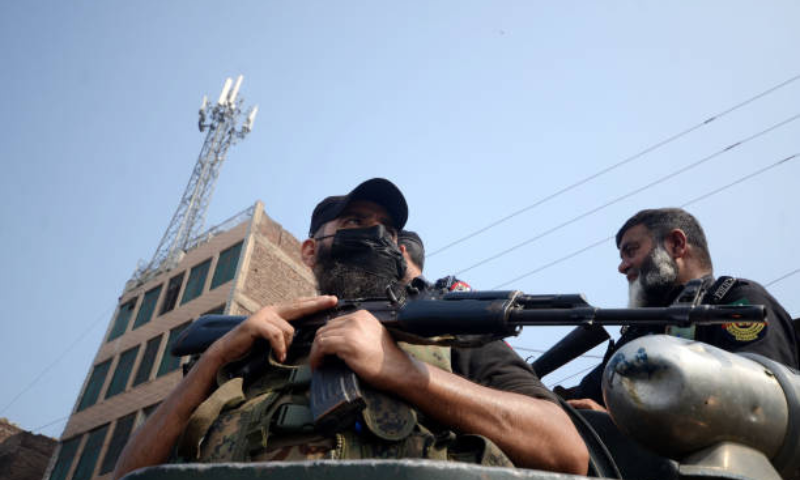
Militants have shifted operations from northern tribal areas to southern KP districts such as Bannu, Lakki Marwat, and Dera Ismail Khan.
Constable Hazrat Ali of Bannu recalls one July morning when a drone dropped an improvised explosive device near his police station. Ali, who was wounded in a later drone strike, said, “Now should we look ahead or look up?” — highlighting the new aerial dimension of the conflict.
Bannu police recorded 134 attacks on stations, checkpoints, and personnel in 2025 alone, resulting in 27 officer fatalities and 53 militant deaths. Many attacks were coordinated, multi-pronged operations.
Drones have evolved from reconnaissance tools to weaponized platforms. According to Jamshed Khan, head of the regional bomb disposal unit, militants now use devices including modified bottles, pipes, and pistol hand grenades packed with nails and metal fragments.
“When dropped from above, the charge ignites on impact,” he explained.
Deputy Superintendent Raza Khan described some devices as having shuttlecock-like stabilizers to maintain their trajectory toward targets. Civilians have also been affected, with nine killed in drone attacks this year.
Police say militants’ rapid adoption of drones is fueled by informal markets, while law enforcement procurement remains slow. The deployment of electronic anti-drone systems in mid-2025 has helped repel or disrupt more than 300 attempted attacks.
Bannu’s location as a gateway between Pakistan and Afghanistan makes it a historical security flashpoint, but the addition of aerial threats has intensified pressure on local forces. For officers like Hazrat Ali, resolve remains central.
“They have modern weapons and large drones. When we fight them, we fight with our courage and determination,” he said.