


Key Points
- Pakistan to return to the global bond market after four years
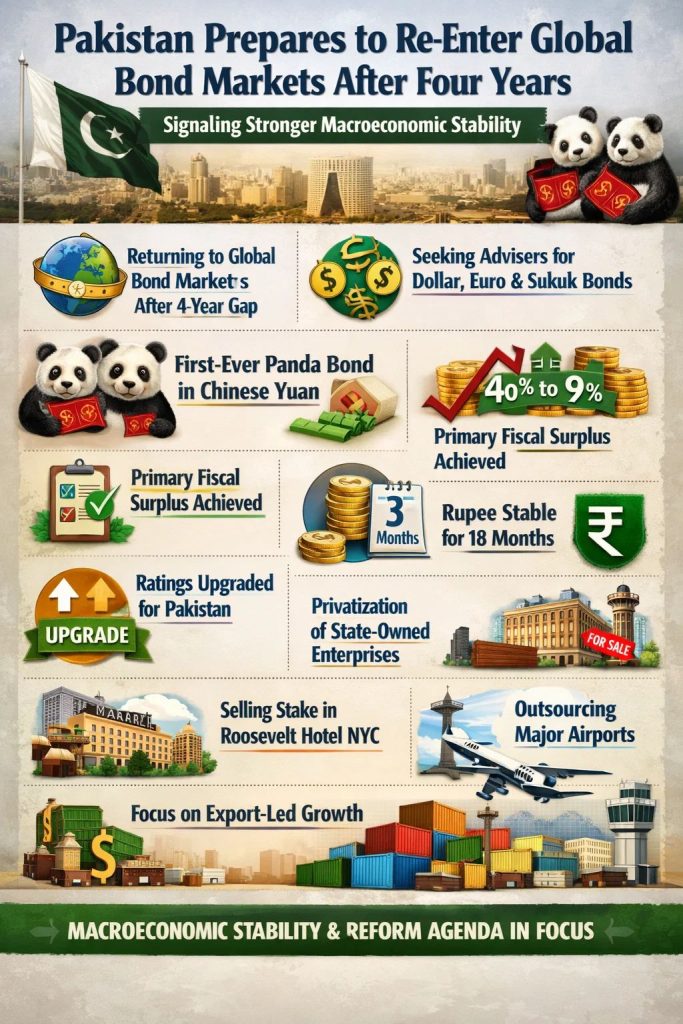
- Government assessing dollar, euro, sukuk, and panda bond options
- Focus on investment opportunities in minerals, agriculture, and technology
ISLAMABAD: Pakistan is set to re-enter the global bond market after a four-year moratorium, showcasing the country’s progress in stabilising its economy following the recent averting of default.
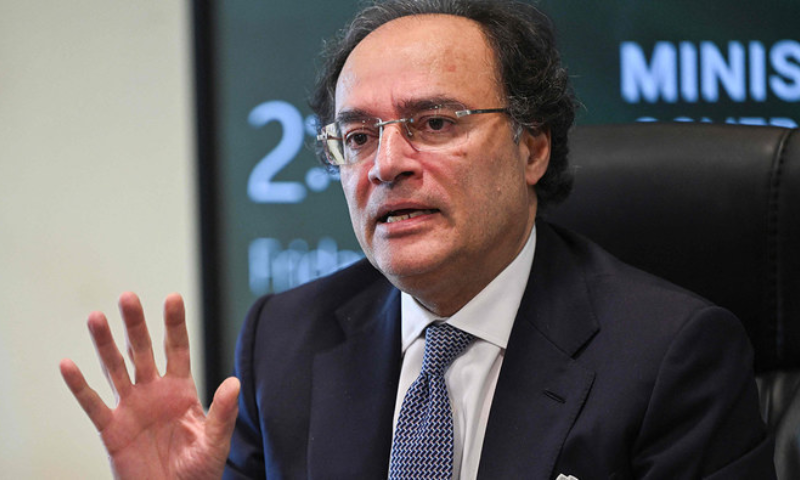
Finance Minister Muhammad Aurangzeb said that the government plans to issue a proposal for advisers in the coming weeks and is considering options including dollar, euro, sukuk, and the country’s first-ever panda bond.
In an interview with Bloomberg on the sidelines of the World Economic Forum in Davos, Aurangzeb said Pakistan’s delegation, led by Prime Minister Shehbaz Sharif, is presenting the country as ready for investment, particularly in minerals, agriculture, and technology.
“We have consolidated our gains in terms of macroeconomic stability,” he said, noting improvements in inflation, interest rates, fiscal position, and the current account.
Pakistan had been effectively shut out of the bond market since 2022, but has since implemented fiscally prudent measures under IMF-supported programs.
Inflation, which had peaked at roughly 40%, has fallen to single digits, the country has posted a primary fiscal surplus, and credit rating agencies have upgraded Pakistan.
Aurangzeb said foreign-exchange reserves are expected to reach three months of import cover by June, meeting a key global benchmark.
The rupee has remained stable for nearly 18 months, supported by strong remittance inflows, growth in services exports, and a healthier balance of payments.
Structural reforms accompany macroeconomic stabilisation, including the sale of state-owned enterprises and expansion of the tax base.
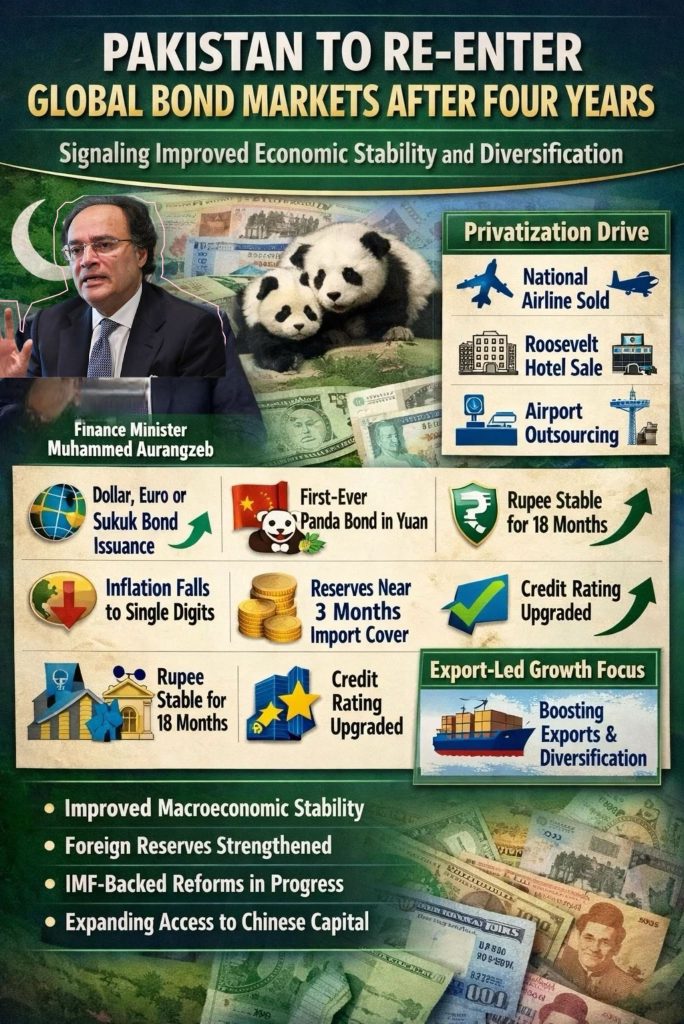
The government recently privatised the national flag carrier and is planning to divest a stake in the Roosevelt Hotel in New York, outsource management of major airports, and divest nearly two dozen other companies.
Aurangzeb emphasised that the government’s priority is to shift toward export-led growth to reduce import-driven balance-of-payments pressures.
“We have to stay the course on reforms,” he said, adding, “that’s the only way to move toward sustainable growth.”