



KEY POINTS
- Pakistan opens its first modern ferry terminal at Karachi Port
- Ferry service to Iran’s Chabahar Port scheduled to begin later this month
- Terminal will promote coastal tourism, regional trade, and private investment
- Initiative strengthens Pakistan’s role in South Asian maritime networks
ISLAMABAD: Pakistan has inaugurated a modern ferry terminal at Karachi Port, marking a milestone in the country’s efforts to expand maritime passenger transport and strengthen regional connectivity.
The new facility is designed to serve both domestic and international ferry operations, providing safer, faster, and more structured access for travellers.
Federal Minister for Maritime Affairs Muhammad Junaid Anwar Chaudhry, who inaugurated the service at a ceremony, described the terminal as “a historic step for Pakistan’s maritime sector, bringing modern, safe, and sustainable ferry travel to our country.”
He added, “This service will not only benefit passengers but also strengthen regional trade, tourism, and economic cooperation with our neighbours.”
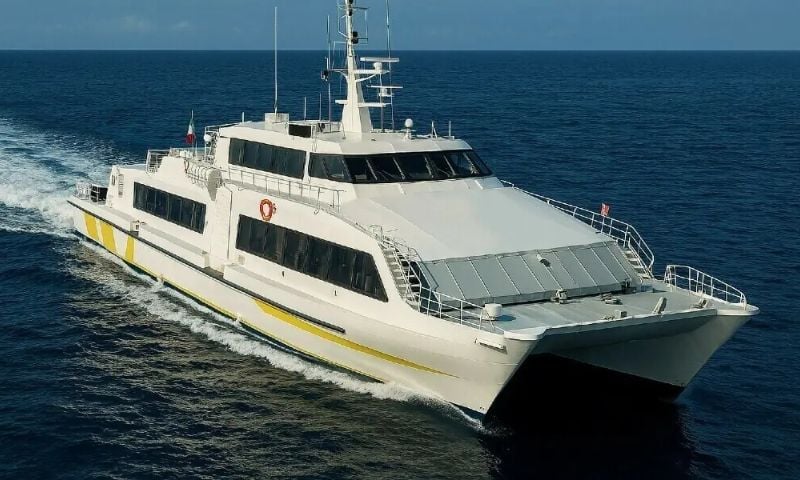
The terminal will host a ferry service linking Karachi with Iran’s Chabahar Port, set to commence later this month.
The route will operate three round-trips weekly, carrying up to 240 passengers per journey, with travel times of approximately 12 to 14 hours.
The minister noted that “this initiative opens new avenues for private investment in maritime infrastructure, hospitality, and allied services, supporting job creation and economic growth along our coastline.”
Historically, Karachi Port has been Pakistan’s largest commercial hub, primarily handling cargo for international trade.
The establishment of a modern passenger terminal represents a strategic effort to diversify maritime activities and harness the country’s coastline for tourism and economic development.
Analysts believe that structured ferry services have successfully boosted coastal economies in Southeast Asia and the Gulf, enhancing mobility, tourism, and cross-border trade.
The new terminal is a step toward replicating such success, with potential future links to other ports in South Asia and the Gulf.
Globally, ferry networks play a growing role in connecting regional markets.
In countries such as Thailand, the Philippines, and the United Arab Emirates, modern passenger ferries have become key transport corridors, reducing travel times, stimulating tourism, and supporting regional commerce.
Pakistan’s new terminal positions the country to explore further similar opportunities, strengthening its role as a hub for regional maritime connectivity and the blue economy.
By integrating passenger ferry services into national maritime infrastructure, Pakistan aims to expand coastal tourism, promote regional trade, and strengthen its standing in South Asia’s maritime network.