
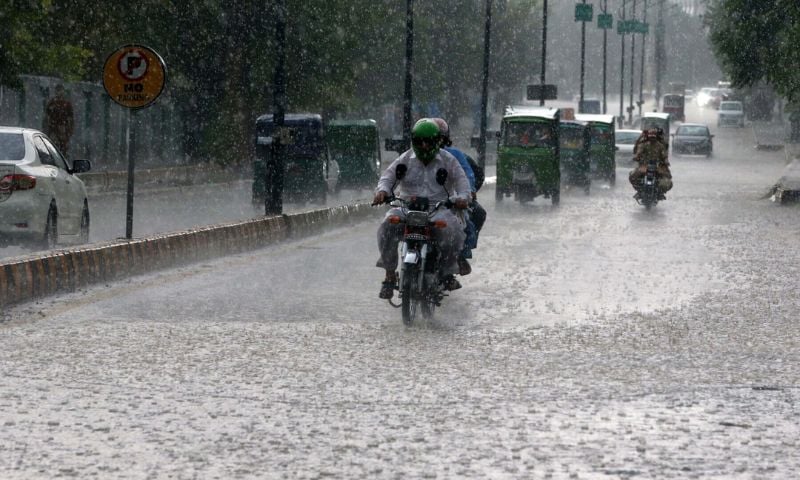
ISLAMABAD: Pakistan is bracing for a week of severe weather as the National Disaster Management Authority (NDMA) has issued nationwide alerts for flash floods, urban flooding, and landslides from July 18 to 23, urging citizens across the country to remain vigilant and avoid unnecessary travel.
The advisory, issued by the NDMA’s National Emergencies Operation Centre (NEOC), warns that several regions, including Gilgit-Baltistan, Khyber Pakhtunkhwa, Azad Jammu and Kashmir, Punjab, Islamabad, and northeastern Balochistan, are at significant risk of weather-related disasters in the coming days.
🔴The Pakistan Meteorological Department (PMD) has forecast widespread monsoon rains across Pakistan from July 18–25, warning of possible flash floods, landslides, and urban flooding. pic.twitter.com/Wflo9tFkzn
— International Relations (@Intl_Relations0) July 18, 2026
Heavy rainfall threatens rivers, streams and mountainous regions
The NEOC confirmed that prevailing weather conditions align with earlier forecasts, and the authority is continuously monitoring potential hazards while ensuring timely dissemination of information to all relevant authorities.
Heavy rainfall may trigger flash floods in local streams, seasonal waterways, and mountainous regions across the country. Medium to high-level flooding is expected in rivers and streams across Gilgit-Baltistan, posing a serious threat to communities living near water bodies.
In Khyber Pakhtunkhwa, upper and central districts face the risk of flash floods and surging flows in hill torrents and seasonal streams, raising concerns for both residents and travelers.
🏔️ Tourist Weather Alert 18 July 2026.
Heavy rain, thunderstorms & strong winds are expected across Murree, Naran, Swat, Gilgit, Hunza, Skardu & other northern tourist spots from Sunday to Thursday.
⚠️ Landslide & flash flood risk.#TouristWeather #PakistanTourism #Monsoon2026 pic.twitter.com/KJGla5v3HK— Pak Met Department محکمہ موسمیات (@pmdgov) July 18, 2026
Landslide alert issued for Azad Jammu and Kashmir
The NDMA has also issued a specific landslide alert for Azad Jammu and Kashmir from July 19 to 24. Continuous rainfall may trigger landslides in Neelum, Haveli, Poonch, Muzaffarabad, and Bagh districts, with moderate risks also present in the hilly areas of Kotli, Sudhnoti, Mirpur, and Bhimber.
Authorities have warned that roads in Muzaffarabad, Bagh, Kahuta, and Bhimber may be affected by falling debris and landslides, potentially disrupting traffic movement and cutting off communities.
Water levels are expected to rise significantly in the Neelum, Jhelum, and Poonch rivers and their tributaries, adding to the growing concern.
Punjab and Balochistan brace for flash floods
Separately, the NDMA has issued flood alerts for Punjab and northeastern Balochistan from July 17 to 23. Heavy rains may cause flash floods in seasonal streams and hill torrents across both regions.
Glacier Lake Monitoring Update: Air Temperatures Observed Across Glaciated Valleys on July 18, 2026 at 2000PST.#PMD #GLOFMonitoring #GlacierLakeMonitoring #PakistanWeather #AirTemperatureUpdate #GlaciatedValleys #GilgitBaltistan #KhyberPakhtunkhwa #NorthernPakistan #GlacierMelt pic.twitter.com/riaQg7TvJl
— Pak Met Department محکمہ موسمیات (@pmdgov) July 18, 2026
Seasonal waterways in Sialkot, Narowal, Gujrat, Dera Ghazi Khan, Rajanpur, Murree, and Galliyat are likely to experience high flows. In Balochistan, districts including Zhob, Sherani, Musakhel, Loralai, Harnai, Sibi, Kohlu, and Jaffarabad may also be affected.
The NDMA warned of rising water levels in the Chenab and Ravi rivers and their tributaries, advising residents living in low-lying areas to remain on high alert.
Urban flood alerts for major cities
With heavy rainfall forecast, urban flood alerts have been issued for July 18 to 23 in Rawalpindi, Islamabad, Lahore, Faisalabad, Gujranwala, Gujrat, Sialkot, Narowal, Hafizabad, and Sheikhupura. Low-lying areas in Peshawar, Nowshera, Mardan, and Charsadda may also face inundation, raising concerns about urban infrastructure and public safety.
A weather system is developing over Kashmir and adjoining hilly areas.#PMD #PakistanWeather #WeatherUpdate #RainAlert #ThunderstormAlert #GustyWinds #KashmirWeather #WeatherAdvisory pic.twitter.com/2zAwlqEKxn
— Pak Met Department محکمہ موسمیات (@pmdgov) July 18, 2026
Authorities on high alert
The NDMA has directed all relevant authorities to keep emergency machinery and rescue teams on high alert and ensure preparedness for any emergency situation. Citizens have been advised to avoid unnecessary travel, stay away from rivers, seasonal streams, flooded roads, and vulnerable mountain slopes.
Tourists are urged to exercise extreme caution when travelling through landslide-prone areas, as road conditions may deteriorate rapidly.
Read Also: Pakistan Braces for Near-Normal Monsoon Rain Amid Glacial Lake Outburst Floods Warnings
Public urged to use disaster alert App
The NDMA has urged the public to download and use the Pak NDMA Disaster Alert App for timely weather updates and safety advisories. The authority emphasised that staying informed and prepared could save lives during this period of severe weather.