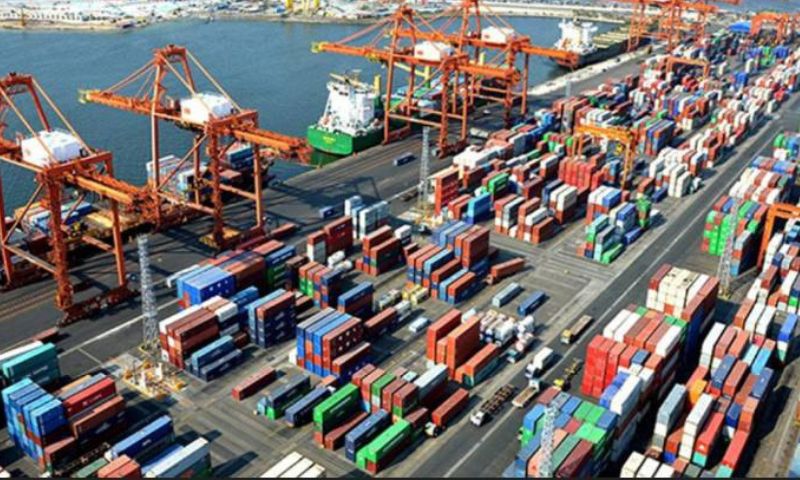



KARACHI: Pakistan has offered its Karachi seaport for uninterrupted global cargo transshipments as escalating tensions in the Middle East threaten maritime trade, the country’s largest port operator said.
Iran has been rocked by joint US and Israeli strikes since Feb. 28 that killed Supreme Leader Ayatollah Ali Khamenei. Tehran retaliated with missile and drone attacks on US, Israeli and allied targets across the Gulf, plunging the region into conflict and uncertainty.
The escalation has disrupted air travel, increased military activity and affected shipping through the Strait of Hormuz, a vital route that carries roughly 20 percent of global oil shipments.
The Karachi Port Trust (KPT) said in a statement it was ready to assist international shipping lines by offering transshipment services to regional ports, helping ensure the “continuity and stability” of global maritime trade.
Press Release
Karachi – 6 March 2026
The Chairman of Karachi Port Trust has reaffirmed the Port’s commitment to supporting uninterrupted regional and global trade amid the evolving geopolitical situation in the Middle East.
In this context, the Port of Karachi stands ready to… pic.twitter.com/l8DJskX1Do— Karachi Port Trust Official (@official_kpt) March 6, 2026
“Karachi Port Trust remains fully prepared to support the international maritime community and to provide reliable, efficient and secure port services in the interest of sustaining regional trade connectivity,” KPT Chairman Shahid Ahmed said in the statement, posted on X.
The port authority said the facility could help stabilize maritime trade by providing transshipment services for cargo destined for ports across the region.
As an example of its operational capacity, the statement said international vessels MV TS Tacoma and MV TS Sydney recently arrived in Karachi carrying large numbers of containers designated for transshipment.
“The containers will subsequently be transshipped from Karachi to Jebel Ali in the Middle East,” the statement added.
Former Vice Chief of Naval Staff Vice Admiral Ahmed Saeed told WE News on Saturday that Pakistan’s ports could provide important support to international shipping affected by the conflict involving Iran.
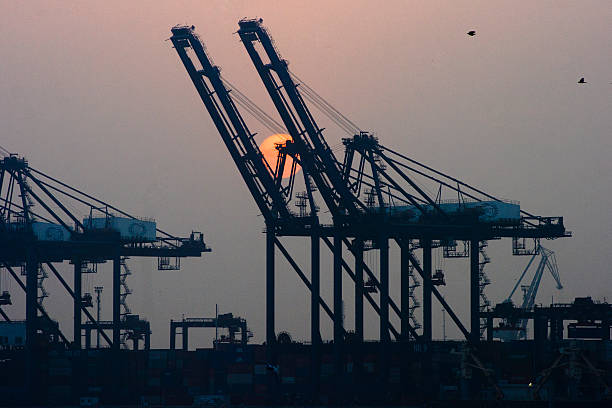
“We can offload cargo here and offer our ports as transshipment or storage facilities,” he said.
Saeed said both Port Qasim and Karachi Port have the capacity to handle containers that are unable to reach their destinations because of the disruption caused by the conflict.
He added that if the conflict continues for several days, shipping companies and countries could temporarily offload their cargo in Pakistan.
“We can provide transshipment and storage facilities, and they can collect their shipments once the war ends and routes reopen,” he said.
Saeed noted that Pakistan would also benefit economically by offering storage services.
“We will receive rent for providing storage facilities,” he said.
He explained that Port Qasim is particularly suited for handling bulk cargo.
“Port Qasim is designed mainly for cargo such as coal and iron because it was originally built to serve the Pakistan Steel Mills,” he said.
Meanwhile, Karachi Port, which is significantly larger, can accommodate a wide range of commercial vessels.
“Karachi Port is much larger, and some ships have already started offloading there,” he added.
Pakistan’s Maritime Affairs Minister Junaid Anwar Chaudhry also highlighted the importance of Gwadar’s potential role in regional transshipment operations as major shipping routes face disruption due to the ongoing conflict.
The developments come as the Strait of Hormuz — a strategic waterway between Iran and Oman and one of the world’s most critical oil transit routes — has been blocked by Iran, which has warned that ships attempting to pass through the area could be targeted.
The tensions have contributed to a sharp rise in energy prices and significant disruption to tanker traffic through the strategic waterway.
Pakistan has long viewed its seaports as strategic economic assets capable of expanding trade with Central Asia and the Gulf region while generating valuable foreign exchange for the country.