


KEY POINTS
- PM-appointed panel seeks urgent ease-of-doing-business reforms
- Tariff and energy price overhaul proposed to lift exports beyond $60bn
- Policy unpredictability cited as major drag on investor confidence
- Structural barriers identified across 20 priority export products
ISLAMABAD: Pakistan’s government has called for urgent structural reforms to improve the business environment, rationalise tariffs, and boost exports. A high-level committee warned that failure to act could force the country back into another International Monetary Fund (IMF) programme after its current $8.4 billion arrangement ends in 2027.
A high-level body constituted by the prime minister and led by Planning Minister Ahsan Iqbal, was tasked with devising a strategy to avoid future IMF borrowing at a time when Pakistan faces persistent economic stress, weak export growth and mounting external financing needs.
According to synopses compiled after a week-long consultation with public and private sector stakeholders held from January 5 to 9, the panel concluded that the existing economic framework was incapable of supporting sustained growth for a population of around 250 million.
It found that cross-cutting constraints were affecting all 20 priority export products and six key export drivers identified under the government’s planning framework.
The report noted that most of the bottlenecks facing exporters were well known. However, repeated policy interventions, including through the Special Investment Facilitation Council, had failed to create a predictable, fair and transparent business environment.
As a result, the economy had remained stuck in a stabilisation cycle under restrictive IMF programmes rather than shifting to durable growth.
A central recommendation was the restructuring of electricity and gas tariffs through debt refinancing and rationalisation of price build-ups.
The panel observed that export competitiveness continued to be eroded by high and volatile energy costs, with power and gas tariffs remaining above regional benchmarks and subject to frequent revisions.
It warned that energy price volatility was inflating production costs across manufacturing, agro-processing, minerals, fisheries and services.
This was shrinking margins and diverting export orders to competing countries with more stable cost structures.
The Planning Commission also highlighted that the cost of doing business in Pakistan remained structurally high because of fragmented and distortionary taxation.
It cited inverted input tariffs, advance income tax deductions, delayed sales tax refunds and persistent working capital lockups as systemic problems.
These issues were found to disproportionately affect exporters, especially small and medium enterprises operating across manufacturing and agriculture-based value chains.
Policy unpredictability emerged as another major concern. The panel stated that frequent changes in tax policy, energy pricing, tariff structures, export incentives and regulatory regimes were undermining investor and buyer confidence.
Many of these changes were announced late in the business cycle, constraining forward planning, capacity expansion and scaling, particularly during annual export order booking periods.
Institutional fragmentation and regulatory burdens were also flagged. The synopses highlight inconsistent definitions of Small and Medium Enterprises (SMEs) across the State Bank of Pakistan, the Small and Medium Enterprises Development Authority (SMEDA), the Federal Board of Revenue and provincial authorities.
These inconsistencies were restricting access to finance, incentives and support schemes.
Overlapping mandates, discretionary enforcement, excessive audits and weak coordination among agencies were raising compliance costs and uncertainty for exporters, the panel said.
Poor domestic quality, testing and compliance infrastructure was another constraint.
Exporters often depend on overseas laboratories for certification testing, which increases costs, prolongs lead times, and raises the risk of rejection in regulated markets.
This was limiting Pakistan’s ability to move into higher-value products and destinations.
Limited access to affordable finance was also identified as a barrier to upgrading and value addition.
The panel stated that the export credit, insurance, guarantees and long-term financing instruments remained underdeveloped.
High interest rates, strict collateral requirements and liquidity constraints were discouraging SME investment in technology, compliance and scale.
The committee also questioned the effectiveness of existing export facilitation and input schemes, including the Export Facilitation Scheme.
It noted that procedural delays, higher input costs and working-capital pressures were limiting the exporters’ ability to source raw materials and intermediate inputs efficiently.
The panel’s findings also underlined logistics and trade facilitation bottlenecks.
These included high inland freight costs, underutilised rail networks, port congestion, slow customs clearance, inadequate cold-chain facilities and weak courier and postal systems for SMEs.
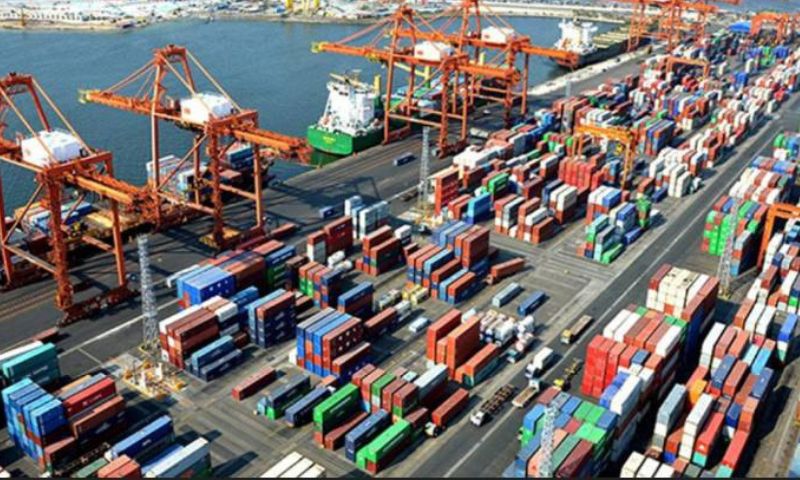
At Port Qasim, the absence of dedicated export terminals, limited handling infrastructure, inadequate covered storage and constrained evacuation arrangements were increasing dwell time, handling costs and shipment uncertainty, the panel said.
Skills gaps, low levels of value addition and weak branding were also cited as barriers preventing exporters from moving into higher-value market segments.
Based on the consultations, the Planning Commission is now gathering additional data through a private-sector survey.
The aim is to develop a sector-specific, data-driven technical roadmap to boost exports under the Uraan Pakistan strategic plan.
Pakistan’s development, economic sovereignty and even national security now hinge on how fast the country can grow its exports and shift to an export-led growth model, Mr Iqbal said at the conclusion of the consultations.
He said the only way to break free from repeated IMF dependence was to rapidly increase exports and build strong foreign exchange reserves.
The 20 export products covered during the engagements included copper, gems and jewellery, software and IT services, fish and fish preparations, rice, fruits and vegetables, meat and meat preparations, guar gum and its products, handicrafts, textiles and apparel, sports goods, leather and leather products, surgical instruments, chemicals and pharmaceuticals, cement, carpets and rugs, engineering goods, footwear, plastic materials and cutlery.
Pakistan currently exports approximately $30 billion to $35 billion worth of goods annually, in contrast to the Planning Commission estimates of untapped export potential exceeding $60 billion.
The findings and recommendations will be consolidated into product-wise diagnostics and a targeted facilitation framework for submission to the prime minister.
Their implementation would require alignment with the conditions attached to Pakistan’s IMF programme.