


KEY POINTS
- Interior Minister says India is tripling payments to terrorists, funding Daesh operatives now paid $1500, up from $500.
- He claims the recent Imambargah bombing was planned in Afghanistan and executed by the India-funded Daesh affiliate, ISKP.
- Security forces arrested Afghan mastermind and three facilitators in overnight KP raids after the Islamabad attack.
- Naqvi urged public vigilance, stating Pakistan is in a “state of war” and claimed security forces foil 99 plots for every one that succeeds.
ISLAMABAD: Pakistan’s Interior Minister Mohsin Naqvi on Saturday announced the arrest of four individuals in Khyber Pakhtunkhwa province believed to have facilitated the recent suicide bombing at an Islamabad Imambargah, one of whom is identified as the attack’s primary mastermind.
The interior minister said that India has substantially increased financial support to terrorist groups operating against Pakistan, including the Islamic State (Daesh).
Addressing a press conference, Naqvi claimed that India had tripled its clandestine budget aimed at sponsoring terrorism within Pakistan. He provided specific figures, alleging that payments to individual operatives had surged from $500 to $1,500.
“Daesh is receiving funding from India. The terrorist who was receiving US $500 is now receiving US $1,500,” the minister stated.
He directly linked this escalation to a recent bilateral confrontation, asserting, “Following a defeat against Pakistan in May, India has increased its defence budget threefold for this purpose.”
Naqvi further asserted that recent terror attacks, including the latest Imambargah bombing in Islamabad, were orchestrated from across the border with training provided in Afghanistan. ”
The planning and training for these attacks was done by Daesh Afghanistan,” he said, reinforcing Pakistan’s long-standing stance that terrorist sanctuaries in Afghanistan pose a direct threat.
Naqvi confirmed that “security forces, in overnight raids across Khyber Pakhtunkhwa, apprehended an Afghan national described as the primary planner alongside three accomplices,” he said, attributing the Islamabad suicide attack to the Daesh affiliate, Islamic State Khorasan Province (ISKP), operating from Afghanistan.
Rapid response and arrests
The minister detailed that joint operations by the Counter-Terrorism Department (CTD) and Khyber Pakhtunkhwa police were launched immediately after Friday’s blast. Raids in Peshawar and Nowshera districts led to the arrests by early Saturday morning. The operation came at a cost, with an Assistant Sub-Inspector martyred and three other security personnel injured during the exchange of fire.
“All those people linked to this, and the mastermind, all of them were apprehended,” Naqvi stated, praising the agencies for passing what he called a “test case.”
Foreign funding and planning
Minister Naqvi presented a grave accusation, directly linking the financing and strategic planning of the attack to India. He claimed terrorist groups, including Daesh and the Tehreek-i-Taliban Pakistan (TTP), are collaborating with support from across the border.
“Someone was funding them and giving them targets,” Naqvi said. “I say again with clarity that all of their funding comes from India. India is giving them all the targets; they are planning each and everything behind the scenes.”
He cited an increase in payments to operatives as evidence, stating, “They would get $500 but now they’re getting $1,500. Someone’s increasing their budget.”
Call for public vigilance and context of foiled plots
The Interior Minister appealed for public cooperation, emphasising community intelligence as critical in the ongoing “state of war” against terrorism. He urged citizens to report suspicious individuals in their neighborhoods.
In response to public questions about security failures, Naqvi defended the agencies, revealing that numerous potential attacks are thwarted. “If one blast happens, 99 others are being foiled,” he claimed, adding that he had instructed agencies to consider publicizing details of foiled plots to demonstrate their efforts.
Regional security concerns
Naqvi reiterated Pakistan’s longstanding stance that militant sanctuaries in Afghanistan pose a direct threat. “At this time, 21 terrorist bodies’ setups, name any terrorist body, it is operating from Afghanistan,” he asserted, clarifying that the planning and training for this specific attack were conducted in the neighbouring country.
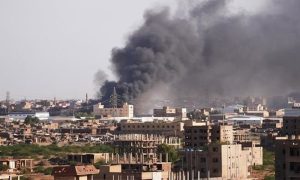
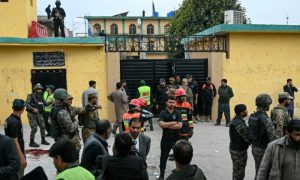
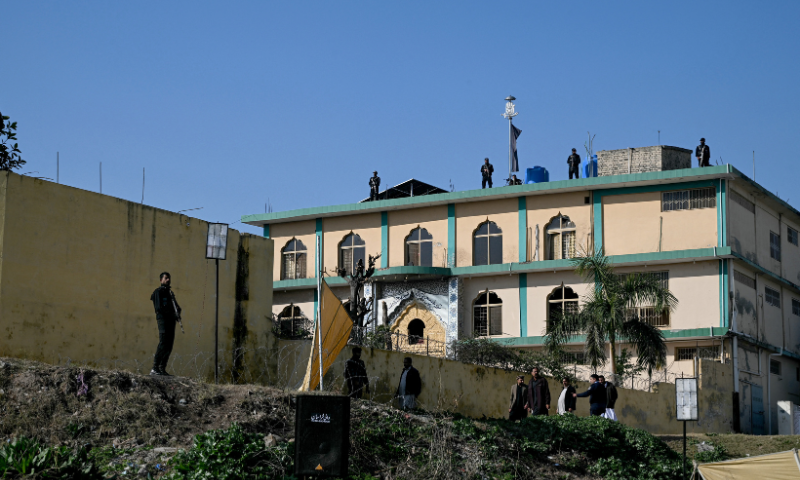
The suicide bomber struck during Friday prayers at Imambargah Khadijah-tul-Kubra in the Tarlai area of Islamabad, killing 33 worshippers and injuring 169 others, according to police and district authorities.
Friday’s attack marks the deadliest incident in the capital since a 2008 hotel bombing, underscoring heightened security challenges. The government’s announcements point to a concerted effort to demonstrate decisive action against perpetrators.