




ISLAMABAD: Rain and snowfall continued across large parts of Pakistan for a second consecutive day on Thursday, lowering temperatures and disrupting travel in northern and upper regions, as the Pakistan Meteorological Department warned that the wet spell is likely to persist over the next 48 hours.
The Pakistan Meteorological Department (PMD) has issued a weather advisory for the northern and upper parts of the country, warning that snowfall, dense fog, and the risk of landslides could disrupt daily life over the next two days as a westerly weather system persists.
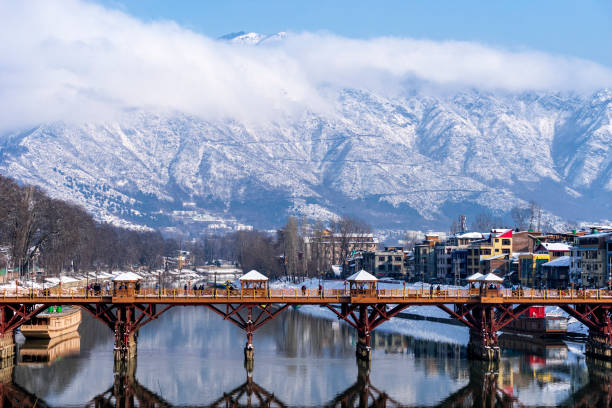
Despite the ongoing wet spell, the PMD said weather in most parts of the country is expected to remain cold and dry during the next 12 hours. However, rain accompanied by thunderstorms and snowfall over hills is likely at isolated locations in upper Khyber Pakhtunkhwa, Gilgit-Baltistan, Azad Kashmir, the Pothohar region, northeast Punja,b and Islamabad.
In Islamabad, intermittent rain persisted on Thursday, intensifying the cold. Cold and dry conditions are expected on Friday, with minimum temperatures forecast between 4°C and 7°C over the next two days.
In Azad Kashmir, rain and snowfall continued for a third straight day. Snowfall was reported in Neelum and Leepa valleys, while Muzaffarabad received intermittent rain since late Wednesday night. Several link roads in upper areas have begun closing due to snow accumulation, with multiple routes in Neelum and Leepa valleys already blocked.
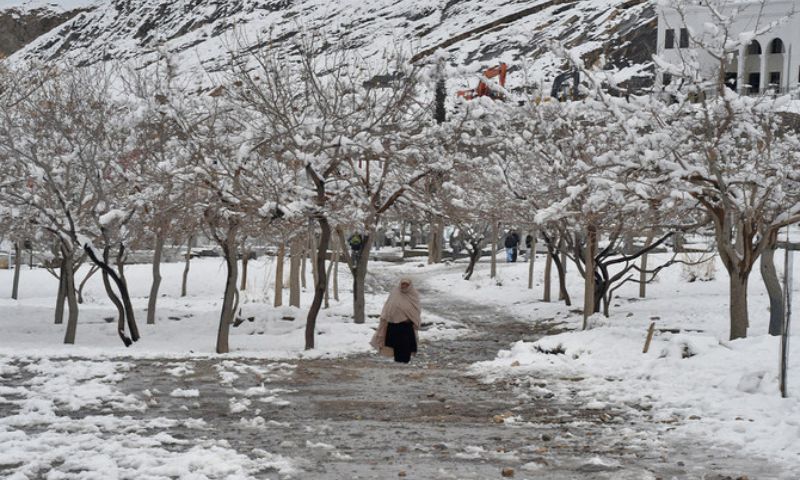
Snowfall also continued in the Galiyat region of Abbottabad on the first day of the new year, disrupting power supply along the Abbottabad–Murree Road due to slippery conditions. In Mansehra district, more than five inches of snow was recorded in Shogran, while Kaghan received over two inches.
Authorities have advised tourists visiting snow-hit areas to take precautionary measures, including using iron chains on vehicle tyres, as cold conditions intensify across northern regions.
The PMD warned that moderate to heavy snowfall could trigger road closures and hazardous travel conditions in mountainous and hilly areas, including Naran, Kaghan, Dir, Swat, Kohistan, Mansehra, Abbottabad, Shangla, Astore, Hunza, Skardu, Murree, Galiyat, Neelum Valley, Bagh, Poonch, and Haveli.
There is also a risk of landslides and avalanches in upper Khyber Pakhtunkhwa, Gilgit-Baltistan, and Kashmir, prompting authorities to urge residents and tourists to avoid unnecessary travel in vulnerable areas.
Dense fog is expected to prevail over most plain areas of the country, particularly during morning and night hours, reducing visibility in parts of Punjab, Khyber Pakhtunkhwa, and upper Sindh.
According to the PMD, a westerly wave is currently affecting the western and upper parts of Pakistan and is likely to persist in upper regions over the next 12 hours.
During the past 24 hours, rain, wind, thunderstorms, and snowfall were reported across Sindh, Punjab, Khyber Pakhtunkhwa, Balochistan, Gilgit-Baltistan, and Kashmir. Significant rainfall was recorded in parts of Sindh, upper Khyber Pakhtunkhwa, Punjab, Balochistan, and Kashmir, while snowfall ranged from 14 inches in Malam Jabba to two inches in Ziarat.
The coldest temperatures recorded included Leh at -7°C, Kalat at -5° C, and Malam Jabba at -3°C.
The PMD has urged citizens, travellers, and tourists to remain cautious, particularly in snowbound and fog-prone areas, and to stay updated with official weather advisories as conditions evolve.