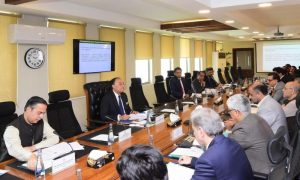
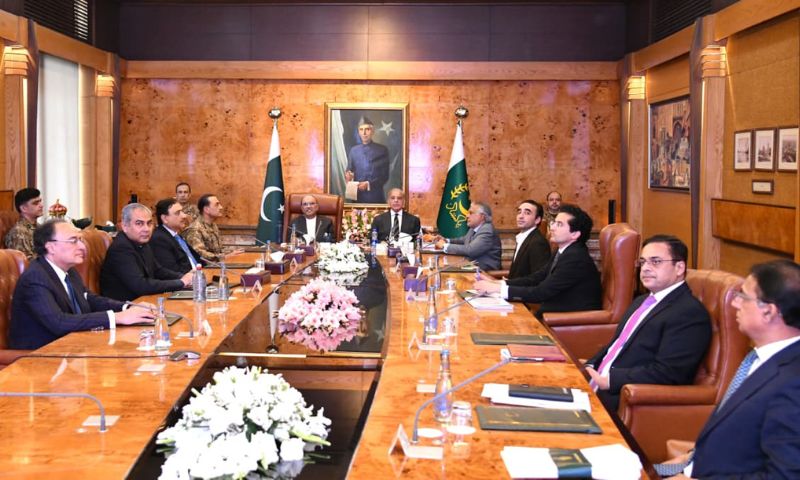



ISLAMABAD: Pakistan’s President Asif Ali Zardari on Wednesday chaired a high-level consultative meeting to review the country’s evolving economic and energy situation amid the ongoing conflict in the Middle East.
Pakistan and civil and military leadership were present in the meeting to review the situation in the backdrop of global oil supply constraints, rising petroleum prices and emerging regional security developments.
Prime Minister Muhammad Shehbaz Sharif and Chief of Army Staff and Chief of Defence Forces Field Marshal Syed Asim Munir also attended the meeting, underscoring the civil-military coordination on key national issues.
President Zardari chaired a high-level meeting with PM @CMShehbaz, Field Marshal Asim Munir and senior ministers to review economic, energy and regional situation amid oil and gas supply concerns, focusing on coordination, austerity, fuel conservation and public relief. pic.twitter.com/RjcuNrZ9gK
— The President of Pakistan (@PresOfPakistan) March 26, 2026
The meeting brought together senior members of the federal cabinet and leadership from coalition partners, including Deputy Prime Minister and Foreign Minister Ishaq Dar, and PPP Chairman and former foreign minister Bilawal Bhutto Zardari.
Officials briefed the participants on the impact of volatility in global oil and gas markets on Pakistan’s domestic economy, with particular focus on inflationary pressures, energy security and fiscal management challenges arising from external price fluctuations.
The Finance and Petroleum ministries presented updates on ongoing measures aimed at stabilising petroleum prices, managing the spillover effects of rising fuel costs on transport and industry, and maintaining fiscal discipline through austerity-driven expenditure control.
The meeting also reviewed the broader regional situation and its potential implications for Pakistan’s security environment, economic outlook and food security conditions.
Participants were informed about the need to closely monitor external developments amid heightened instability in parts of the wider region.
A consensus emerged during the meeting on the need for a coordinated national response to the emerging situation, with emphasis placed on ensuring that economic management, energy planning and security considerations.
It was further agreed that institutional coordination must be strengthened to respond effectively to emerging challenges, particularly those linked to external shocks in energy markets and regional tensions.
The meeting also discussed public awareness measures aimed at reducing fuel consumption, encouraging greater use of public transport and promoting shared mobility options to ease pressure on imported fuel demand.
Officials said the overall approach would focus on balancing economic stability with energy security while safeguarding public interest amid a challenging external environment.