
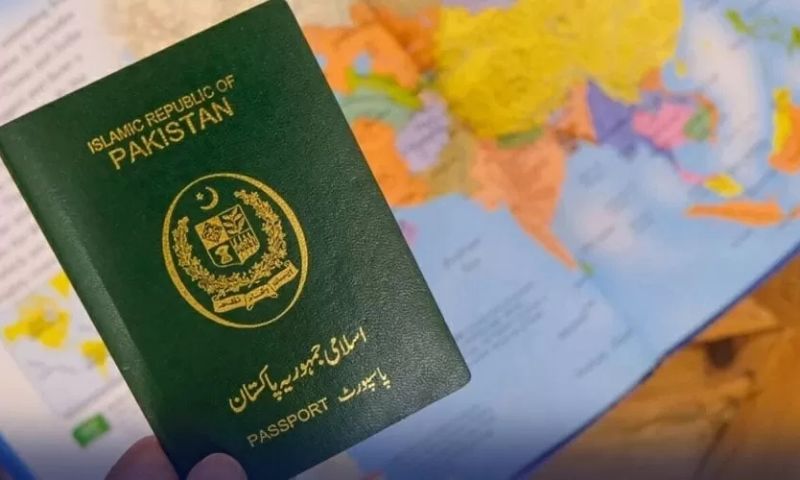



ISLAMABAD: Pakistan has launched an advanced, real-time monitoring system for passport issuance and delivery, marking a significant step in the country’s push to modernise public services and strengthen travel document security.
The system, known as SHUKRA — Secure Hybrid Intelligence for Knowledge-Based Response Analytics — has been introduced by the Directorate General of Immigration and Passports to track passport applications, printing, and delivery across the country and at overseas missions. It allows authorities to monitor each stage of the process in real time, from submission to final dispatch.
The initiative was inaugurated on Monday by Interior Minister Mohsin Naqvi, who described it as a move to bring Pakistan’s passport services in line with international best practices. A dedicated 24/7 monitoring room and public call centre have also been established at the directorate to improve oversight and citizen support.
Officials said SHUKRA integrates data from passport offices nationwide into a central digital dashboard, enabling daily operational oversight, performance evaluation of staff, and early identification of delays or bottlenecks. The system can automatically detect overcrowding at passport offices, track application backlogs, and monitor the operational status of production machinery through a network management system.
Alongside SHUKRA, the government has fully digitised the Emergency Travel Document (ETD) system, a step intended to speed up urgent travel processing for Pakistani citizens abroad and reduce reliance on manual procedures.
Naqvi said the reforms were aimed at improving transparency, accountability, and service delivery. “Every stage — from application to delivery — will now be monitored,” he said, adding that the objective was to provide faster, more secure, and internationally credible services to citizens.
From a global perspective, the overhaul is also significant for travel security. Officials said the security features of Pakistani passports have been upgraded in line with standards set by the International Civil Aviation Organization (ICAO). The installation of automated passport production machines sourced from Germany has increased printing capacity and eliminated human intervention in the production process, reducing the risk of error or fraud.
During his visit, the interior minister toured the e-monitoring room, call centre, forensic laboratory, and modernised production unit. Senior officials briefed him on how digital integration would improve institutional efficiency and help restore public confidence in passport services.
Senior government and law enforcement officials, including heads of immigration, internal securit,y and the Islamabad administration, attended the inauguration.
For international observers, the launch reflects Pakistan’s broader effort to digitise governance, improve compliance with global travel and security norms, and facilitate cross-border mobility for its citizens at a time of increasing scrutiny over document integrity worldwide.