


ISLAMABAD: Pakistan has launched its first-ever Pakistan Skills Impact Bond (PSIB), marking a significant shift in how the country finances skills development by moving from traditional public spending to outcome-based, private-capital-funded social investment.
The inaugural Rs1 billion pilot tranche, guaranteed by the Ministry of Finance, will fund a three-year Technical Skills Development Programme focused on measurable results, including certification, job placement and a minimum of six months’ job retention for trainees.
The PSIB is designed as a scalable instrument, with future tranches expected to reduce reliance on government guarantees and attract institutional and capital market investors.
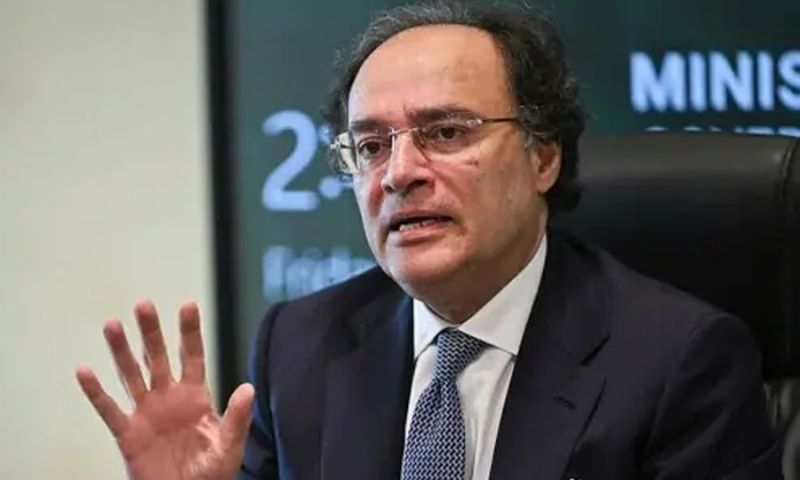
Speaking at the launch ceremony, Federal Minister for Finance and Revenue Senator Muhammad Aurangzeb described the initiative as a transformational step in Pakistan’s economic reform and human capital strategy.
He said the country’s demographic dividend could only be realized through large-scale upskilling and reskilling of youth, adding that the new model represents a decisive move away from input-based budgeting toward accountability and measurable outcomes.
Aurangzeb highlighted the role of the National Vocational and Technical Training Commission (NAVTTC) in aligning skills training with market demand, particularly in high-value digital sectors such as blockchain and advanced IT. He noted that Pakistan is already home to the world’s third-largest freelancer community, underscoring the earning potential of globally certified skills.
Under the PSIB structure, repayment in later phases will be linked to a nominal portion of trainee salaries, embedding long-term sustainability and enabling the monetization of skilled talent both domestically and internationally.
The finance minister emphasized that the government’s Rs1 billion guarantee is catalytic and non-structural, intended strictly as a proof of concept to crowd in private capital.
Gender inclusion has been built into the programme, with 40% of trainees to be women, following recommendations led by the British Asian Trust. Aurangzeb said women’s participation in the workforce would be critical to Pakistan’s future economic trajectory.
Earlier, NAVTTC Executive Director Muhammad Amir Jan described the PSIB as a defining moment in Pakistan’s skills ecosystem, citing reforms in governance, financial transparency and industry linkages that have repositioned skills training as a strategic investment in human capital.
Federal Minister for Education and Professional Training Dr Khalid Maqbool Siddiqui called the initiative a major step toward a stronger future for Pakistan, while speakers from the Bank of Punjab, British Asian Trust and the UK’s Foreign, Commonwealth and Development Office (FCDO) outlined their respective roles in supporting the programme.
The launch ceremony also included the signing of investor and issuer agreements, formally operationalizing the PSIB and setting the stage for Pakistan’s entry into social impact financing.