


KEY POINTS
- Pakistan urges dialogue and diplomacy to de-escalate Middle East tensions.
- Ishaq Dar held talks with EU foreign policy chief Kaja Kallas.
- Both leaders expressed deep concern over escalating Iran-Israel-US conflict.
- Pakistan briefed EU on rising Pakistan-Afghanistan border tensions.
- Prime Minister Shehbaz Sharif spoke with Oman, Jordan, Bahrain leaders.
- Pakistan maintains close contact with Iraq, EU, and regional capitals.
- Dar calls situation “very worrisome,” emphasizes UN law compliance.
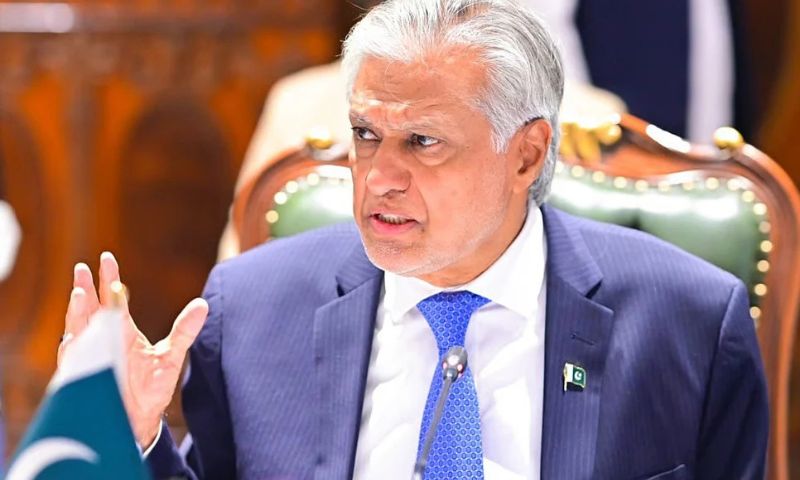
ISLAMABAD: Pakistan has intensified diplomatic outreach amid rapidly escalating tensions in the Middle East, with Deputy Prime Minister and Foreign Minister Ishaq Dar holding high-level consultations with European and regional counterparts to push for restraint, dialogue and adherence to international law.
According to a statement issued by the Ministry of Foreign Affairs on Monday, Ishaq Dar held a telephonic conversation with Kaja Kallas, the European Union’s High Representative for Foreign Affairs and Security Policy and Vice President of the European Commission.
The two leaders expressed deep concern over the rapidly deteriorating security situation following military escalation involving Iran, Israel and the United States, warning that the conflict risked engulfing the wider Middle East.
During the call, Dar underscored Pakistan’s consistent position that dialogue, diplomacy and de-escalation remain the only viable path to regional stability.
He also briefed the EU official on growing Pakistan-Afghanistan tensions and appreciated the European Union’s constructive engagement in regional peace efforts.
Both sides agreed to remain in close contact as developments continue to unfold.
Deputy Prime Minister / Foreign Minister Senator Mohammad Ishaq Dar @MIshaqDar50 today spoke with EU High Representative/Vice President Kaja Kallas @KajaKallas.
The two expressed deep concern on the recent regional developments in Iran and the wider Middle East. DPM/FM… pic.twitter.com/6raCtgn9Fe
— Ministry of Foreign Affairs – Pakistan (@ForeignOfficePk) March 2, 2026
‘Very, very worrisome’
Earlier, briefing the Islamabad-based diplomatic corps, Ishaq Dar described the developments of the past 72 hours as “very, very worrisome”, warning that the situation had sharply intensified an already fragile regional environment.
“This recent escalation has significantly heightened tensions in an already volatile and fragile environment,” he said, stressing that Pakistan was making “full diplomatic efforts” to help defuse the crisis.
Dar noted that the military actions came at a time when diplomatic initiatives were still under way, including indirect talks between Washington and Tehran facilitated by Oman.
“Obviously, these serious developments have taken place at a time when diplomatic efforts were under way to reach a peaceful and negotiated solution,” he said, questioning the timing and necessity of the strikes.
He also referred to recent discussions between Pakistani officials and the International Atomic Energy Agency in Austria, adding to Islamabad’s concerns over the abrupt escalation.
Condemnation of attacks
Dar said he spoke with Iranian Foreign Minister Abbas Araghchi on February 28 to convey Pakistan’s condemnation of the attacks on Iran and to urge restraint.
While Tehran responded positively to calls for dialogue, Dar cautioned that the situation on the ground remained volatile, with retaliatory actions further complicating regional stability.
He stressed that Pakistan had been in constant contact with regional capitals and foreign ministers, noting that there was broad agreement that diplomacy was the only way forward.
“All states must abide by the principles of the UN Charter, respect sovereignty and territorial integrity, and comply with international humanitarian law,” he said.
Solidarity with Gulf
Reaffirming Pakistan’s solidarity with “brotherly countries”, Dar expressed deep regret over attacks that affected Saudi Arabia, Bahrain, Jordan, Kuwait, Qatar, the United Arab Emirates and Oman.
“We cannot have double standards. Pakistan was among the first countries to condemn attacks on Iran, but made clear that retaliatory actions impacting Gulf states were unacceptable and deeply concerning.”
He confirmed that a Pakistani national had been killed in a retaliatory strike in Abu Dhabi, adding that Pakistan’s diplomatic missions were actively coordinating with local authorities to assist the diaspora.
Dar also highlighted the disruption caused by regional airspace closures, saying even official travel had been severely affected.
PM’s regional outreach
Pakistan’s Prime Minister Shehbaz Sharif has also stepped up diplomatic engagement, holding telephone conversations with regional leaders to prevent further escalation.
ALSO READ: Pakistan PM, Omani Sultan Discuss Regional Tensions
The prime minister spoke with Haitham bin Tariq, appreciating Oman’s longstanding efforts to promote dialogue and reduce tensions, particularly its role in facilitating US-Iran contacts.
“We agreed on the urgent need to prevent further escalation and restore the path of diplomacy for lasting peace and stability in our region,” the prime minister said in a post on X.
He also held separate calls with Abdullah II and Hamad bin Isa Al Khalifa, reaffirming Pakistan’s solidarity with Jordan and Bahrain and stressing restraint, respect for international law and coordinated regional responses.
Continued coordination
In another diplomatic engagement, Ishaq Dar spoke with Iraqi Foreign Minister Fuad Hussein, with both sides agreeing to intensify efforts to contain tensions and remain in close contact.
Pakistan’s leadership, including President Asif Ali Zardari, has extended condolences to the Iranian people over recent casualties, while reiterating that violations of international law, including the targeting of state leadership, risk setting dangerous precedents.