ISLAMABAD: Pakistan has inaugurated the Shah Allah Ditta Buddha Caves Preservation Project in Islamabad, marking a significant step towards protecting the country’s ancient Buddhist heritage, promoting religious harmony and transforming a historic archaeological site into an attractive tourism destination.
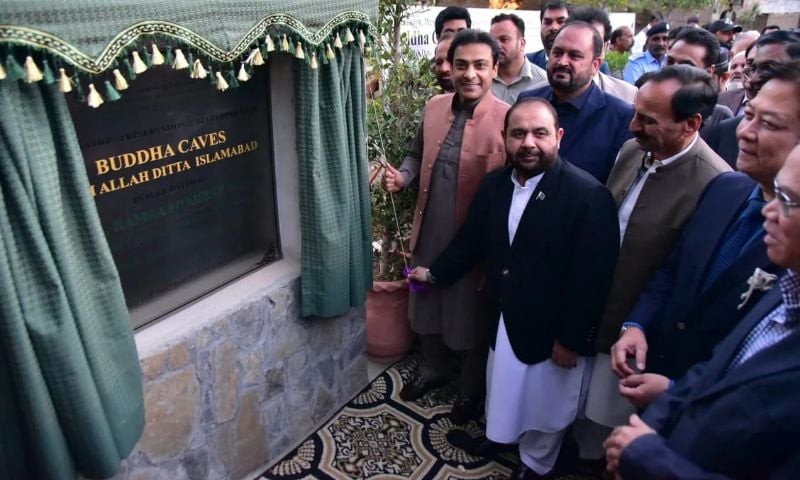
Former Punjab chief minister and senior Pakistan Muslim League-Nawaz (PML-N) leader Hamza Shahbaz Sharif inaugurated the project on Wednesday in the presence of federal ministers, diplomats from Buddhist countries, senior government officials and other distinguished guests.
Following the inauguration, Hamza Shahbaz visited the historic caves, where Secretary of the National Heritage and Culture Division Asad Rehman Gillani briefed him on the preservation work, its key features and overall cost.
A documentary highlighting the archaeological and historical significance of the caves and their association with Buddhist worship was also screened during the ceremony.
Religious harmony and cultural diplomacy
Addressing the ceremony, Hamza Shahbaz appreciated the Ministry of National Heritage and Culture for its efforts to preserve and restore the historic site. Describing the location as a beautiful heritage destination surrounded by lush green trees and mountains, he said the initiative would help safeguard an important part of Pakistan’s shared cultural history.
Read Also: Japanese Monk Calls for Global Buddhist Prayer at Pakistan’s Ancient Stupa to Heal a Divided World
He emphasised that Islam teaches respect for other religions, protection of minority rights and preservation of their places of worship.
He said the project would help project Pakistan’s positive and soft image internationally while enabling domestic and foreign visitors to explore the country’s diverse cultural heritage.
Hamza Shahbaz also called for better road connectivity to the caves, asking Federal Minister Aurangzeb Khan Khichi to take up the matter with the relevant authorities and pursue construction of a shorter and more accessible route.
Read Also: UNESCO to Include Two Heritage Sites of Pakistan in World Heritage List
He said improved access would encourage tourism, facilitate visitors and create employment and business opportunities for people living in the surrounding communities. He also welcomed the area’s growing commercial activity, saying families should have recreational spaces where they could enjoy the country’s natural and historical attractions.
The former Punjab chief minister invited diplomats and visitors, particularly those from Buddhist countries, to visit the caves with their families, expressing hope that the site would become a symbol of mutual respect, religious harmony and shared heritage.
Federal Minister for National Heritage and Culture Aurangzeb Khan Khichi thanked Hamza Shahbaz for inaugurating the project and reiterated the government’s commitment to protecting Pakistan’s Buddhist heritage.
He urged the Pakistan Tourism Development Corporation (PTDC) and media organisations to raise awareness about the historical and religious significance of the caves and promote them among domestic and international tourists, particularly visitors from Buddhist countries.
The minister said the government, under Prime Minister Shehbaz Sharif, was committed to preserving Buddhist heritage sites across Pakistan, adding that such initiatives could strengthen cultural diplomacy, promote interfaith harmony and enhance the country’s international image.
The ceremony was attended by Federal Minister Rana Mubashir, MNA Anjam Aqeel Khan, former Islamabad deputy mayor Syed Zeeshan Shah, Special Assistants to the Prime Minister Aon Chaudhary and Talha Barki, senior officials and diplomats from Buddhist countries. At the conclusion, Syed Zeeshan Shah presented a souvenir to Hamza Shahbaz.
Shah Allah Ditta caves in #Islamabad are the ancient #Buddhist caves. Make a trip here or keep them in your “to see list”. #Pakistan 🇵🇰 https://t.co/CpkXoHNE6A
— The Witness (@Islamabadies) April 25, 2018
A heritage landscape spanning several eras
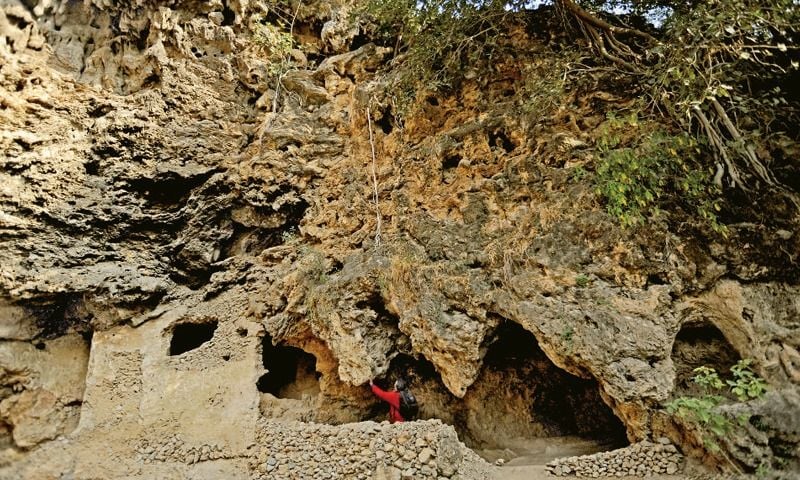
The Shah Allah Ditta caves lie on the southern slopes of the Margalla Hills, around 14 kilometres north-west of Islamabad. The Department of Archaeology and Museums describes them as two natural rock shelters located on either side of a spring, with remains of a paved water channel and a stone-built water tank in front.
وفاقی دارالخلافہ اسلام آباد کے ناقابل یقین قدرتی حسن کا نظارہ کرنا تازگی اور سکون بھرا ایک تجربہ ہے۔ کیا آپ نے اس جگہ کا دورہ کیا ہے؟ اپنے تاثرات شیئر کریں! https://t.co/DTtIrZabaT
— Ina Lepel (@GermanyinPAK) October 17, 2024
The caves, believed to be around 2,400 years old, feature Buddhist-era murals and were successively used by Buddhist monks, Hindu sadhus and Muslim ascetics during the Mughal period. The village is named after a Mughal-era dervish.
The wider area is also associated with Sadhu ka Bagh, or the Garden of Sadhus, known for its old banyan trees, spring and traditions of religious meditation. Historical accounts describe it as a place used by Hindu and Buddhist ascetics. Local stories also associate an old mango tree in the garden with Mughal emperor Humayun, although this attribution is based on local tradition.
Read Also: Pakistan Opens 1,000-Year-Old Gakhar Heritage Sites for Tourists Near Islamabad
Another notable landmark in the surrounding hills is Losar Baoli, a historic stepwell commonly associated with the period of Sher Shah Suri.
Located along an old route connecting the Taxila region with the Punjab plains, the well provided drinking water to travellers and their animals. Its present structure is generally attributed to the Suri period, although historians have suggested that a water source may have existed there much earlier.
Together, the caves, Sadhu ka Bagh, the spring and Losar Baoli reflect the area’s layered Buddhist, Hindu and Muslim heritage, as well as its importance as a historic route through the Margalla Hills.