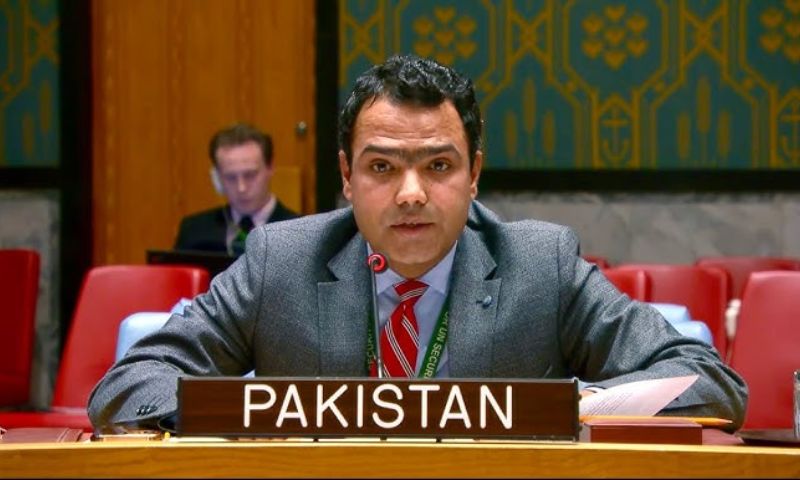



Addressing terrorism allegations, Sarwani rejected India’s claims and instead accused New Delhi of sponsoring cross-border terrorism, citing what he described as state-backed violence in Jammu and Kashmir and targeted killings abroad, including in North America. He said credible evidence linked India to militant groups such as the TTP, BLA, Fitna Alkhwarij and Fitna Hindustan.
On regional security, Sarwani said India had repeatedly carried out acts of aggression against Pakistan, while Islamabad had shown restraint. Referring to events in May 2025, he dismissed India’s claims over the Pahalgam incident as unfounded, noting that Pakistan had offered an independent investigation that India declined. He said Pakistan’s response to Indian attacks resulted in the downing of multiple Indian aircraft.
Turning to water disputes, Sarwani said India’s assertions regarding the suspension or modification of the Indus Waters Treaty were false and in breach of the treaty itself. He pointed to the 2025 Court of Arbitration ruling, which reaffirmed the treaty’s validity, and said Pakistan had formally raised the matter at the Security Council.
Sarwani also challenged India’s democratic credentials, citing restrictions on civil liberties, the treatment of minorities and the rise of extremism linked to Hindutva ideology. He said Pakistan’s constitutional and legislative processes were legitimate and conducted by elected representatives, adding that India had no moral or legal basis to question them.
In closing, Pakistan urged India to comply with international law, implement relevant UN Security Council resolutions on Kashmir, end what it described as state-sponsored violence, and engage in dialogue based on mutual respect and good neighbourly relations.