


Key Points
- Government denies politicising the health of jailed ex-prime minister Imran Khan
- An independent team of government and private doctors examined him in prison
- Opposition leaders and party-nominated doctors briefed on medical findings
- Minister links ongoing protests and road blockades to political motives
ISLAMABAD: Pakistan’s interior minister has rejected opposition accusations that the government is mishandling or politicising the health of jailed former prime minister Imran Khan, saying medical care has been provided in accordance with the law and under the supervision of senior doctors.
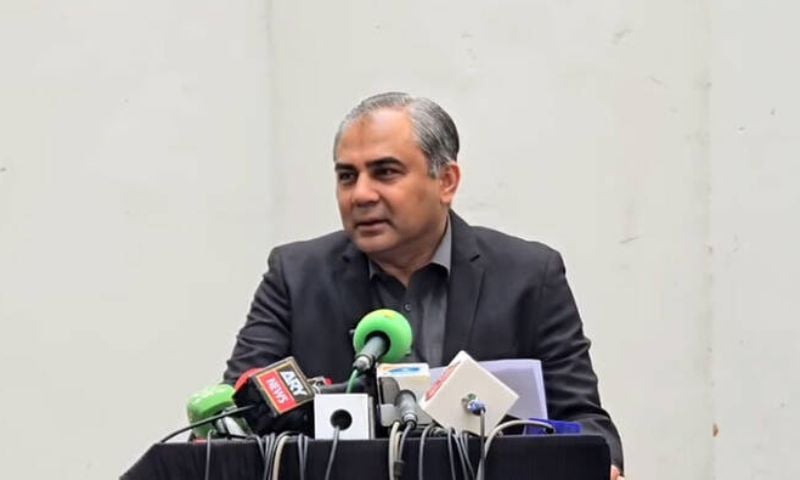
Interior Minister Mohsin Naqvi told reporters that the government had “no intention to politicise” Khan’s medical condition, following concerns raised by his party and family over an eye ailment disclosed in late January.
Khan, the founder of the opposition party Pakistan Tehreek-e-Insaf, has been in custody in Rawalpindi’s Adiala Jail after being convicted in multiple cases.
His detention has remained politically sensitive, with his supporters alleging unfair treatment and the government insisting that legal due process is being followed.
Naqvi said a team comprising senior government and private-sector doctors examined the former premier at the prison over the weekend.
He added that opposition representatives were invited to witness the medical check-up but declined to attend.
According to the minister, the doctors later briefed opposition figures at the Pakistan Institute of Medical Sciences, commonly known as PIMS, a major public hospital in Islamabad.
He said physicians nominated by Khan’s party were also consulted by phone and questioned the examining doctors in detail.
“The report is clear,” Naqvi said, adding that if hospital admission were medically recommended, authorities would facilitate it.
However, he maintained that admission could not be ordered solely on mere political demands without clinical justification.
For international readers, it is not uncommon in Pakistan for high-profile political detainees to receive medical treatment either in prison facilities or at public hospitals under security arrangements.
Disputes over medical access have frequently become flashpoints in the country’s polarised political environment.
Naqvi also criticised road blockades staged by Khan’s supporters in parts of Khyber Pakhtunkhwa province, where his party remains influential.
He stated that the federal government would ensure implementation of a recent order by the Peshawar High Court directing local authorities to reopen key highways.
Khan’s party and family members, including his sister Aleema Khan, have alleged delays and sought a longer hospital stay for treatment.
The minister countered that certain political actors were exploiting the issue for leverage.
Imran Khan, who served as prime minister from 2018 until his removal through a parliamentary vote of no confidence in 2022, remains one of Pakistan’s most popular and polarising political figures.
His arrest and subsequent convictions have deepened political tensions between the government and the opposition.
Naqvi reiterated that all prisoners are entitled to medical care under Pakistan’s constitution and prison rules.
“Khan was being provided facilities in line with the legal provisions for a convicted person,” he maintained.
The dispute over his health comes amid broader political friction and periodic protests by his supporters, underscoring the fragile state of political dialogue in the country.