



Key Points
- Pakistan considers tokenising $2 billion of domestic debt in the first phase
- Government says its role is to enable innovation, not control it
- Digital assets discussed amid global interest in crypto markets
- Authorities are studying international models, including those of the United Arab Emirates
ISLAMABAD: Pakistan is examining the use of digital assets and sovereign tokenisation as part of its evolving financial strategy, with the government signalling a cautious but forward-looking approach to emerging technologies, a senior finance ministry adviser said on Sunday.
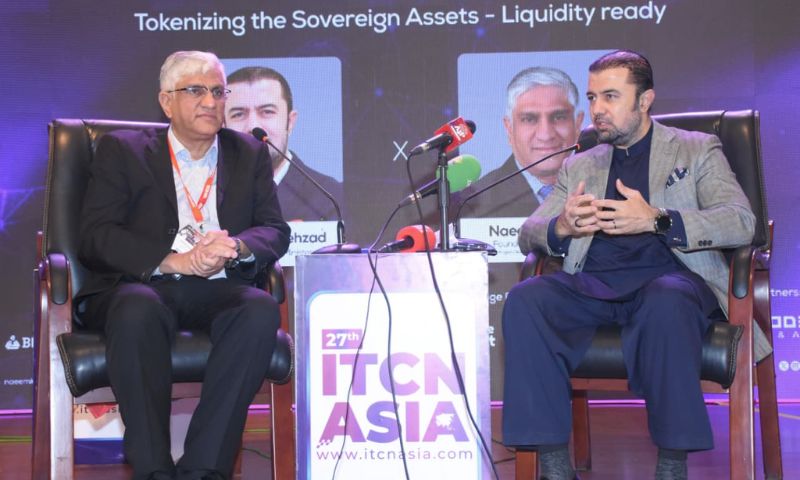
Khurram Schehzad, Adviser to the Federal Finance Minister, said that the government’s primary responsibility in the digital economy is to facilitate innovation and provide an enabling policy environment, rather than obstruct technological progress.
He was speaking at a fireside discussion on tokenising sovereign assets at the 27th Information Technology and Telecom Network (ITCN) Asia, a major information technology and telecom exhibition, held at the Expo Centre in Lahore, according to a statement issued by the Press Information Department.
Schehzad said Pakistan is working on policies aimed at empowering young people by creating opportunities in modern financial and digital sectors. He noted that global interest in digital assets has grown rapidly, driven by developments such as Bitcoin, which has a fixed global supply of nearly 21 million units, making it a recurring subject in international financial debates.
Referring to domestic trends, he said reports indicate that crypto and Bitcoin mining activities are already underway in Pakistan, reflecting increasing local engagement with digital and blockchain-related technologies despite the absence of a comprehensive regulatory framework.
Schehzad also disclosed that the Ministry of Finance plans to tokenise a portion of Pakistan’s domestic debt, valued at about $2 billion, during an initial phase. He said the proposed move is primarily aimed at retail investors and could help broaden participation in government securities by using digital platforms to improve access and liquidity.
Tokenisation involves converting real-world assets, such as government debt, into digital tokens recorded on a blockchain. Supporters argue that the process can increase transparency, reduce transaction costs and attract a wider pool of investors, though it also raises regulatory and risk management challenges.
On regulation, Schehzad said the government is considering the creation of a dedicated framework or authority to oversee crypto assets, stressing that Pakistan remains at an early stage in understanding and regulating the sector.
He pointed to the United Arab Emirates as an example of a country that has already developed structured mechanisms for supervising virtual assets, adding that Pakistan is studying international best practices and proceeding carefully.
He said balanced policymaking will be critical to ensure that innovation does not outpace regulation, and that safeguards are needed to manage financial, legal and technological risks. The government, he added, aims to learn from global experience and adopt approaches suited to Pakistan’s economic and institutional context.
The discussion concluded with an emphasis on innovation-friendly regulation, gradual adoption and alignment with global standards, as Pakistan explores the potential of digital assets and sovereign tokenisation in its broader economic reform agenda.