


Key Points:
- Balanced foreign policy strengthens ties with both China and the United States.
- China praises Pakistan’s economic growth and influential regional role.
- Pakistan maintains unified stance on national issues, boosting international credibility.
- Strategic partnership with China progresses positively across economic, political, security sectors.
- China supports Pakistan for UN Security Council and SCO leadership roles.
- Pakistan emphasises sovereignty, independence, and territorial integrity in foreign policy.
- Beijing urges Kashmir resolution per UNSC resolutions.
ISLAMABAD: Pakistan has emerged as a key diplomatic focal point in the region due to its effective, balanced and consistent foreign policy, with the international current-affairs magazine The Diplomat highlighting the country’s growing global credibility and influence.
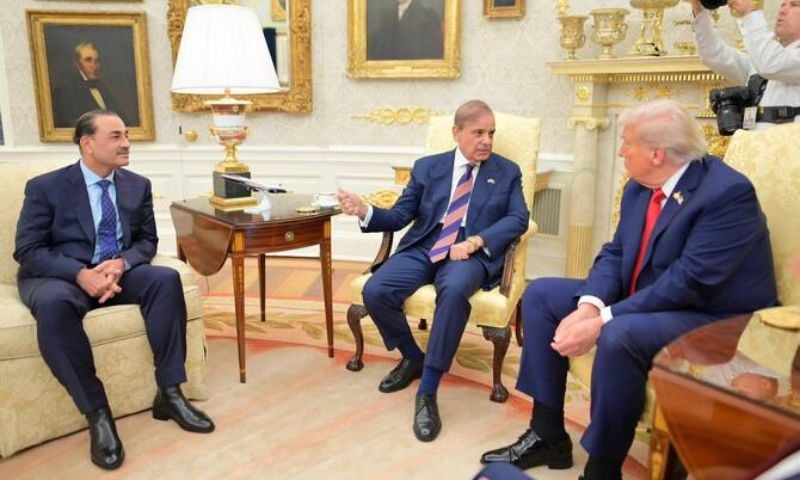
According to the report, Pakistan’s ability to simultaneously maintain constructive relations with the United States while strengthening its long-standing strategic partnership with China has positioned it as a responsible and mature actor on the international stage. This balanced diplomacy, the journal notes, has made Pakistan a centre of regional and global attention.
China’s strong endorsement
China has openly acknowledged and praised Pakistan’s growing regional influence and effective diplomatic approach. The Diplomat reports that Beijing views Pakistan as an economically strengthening country that is also capable of playing an influential role beyond its borders. The report adds that Pakistan’s government, state institutions and public have maintained a unified and firm stance on national issues, a factor that has significantly enhanced the country’s credibility internationally.
Strategic partnership advance
While Pakistan continues to engage the United States through constructive ties, its strategic partnership with China is progressing in a stable and positive direction across multiple sectors. The journal notes that China supports Pakistan’s important role in both global and regional affairs and considers Islamabad a strong and suitable candidate for leadership positions, including membership of the United Nations Security Council and the presidency of the Shanghai Cooperation Organisation (SCO).
Pakistan, in turn, places high importance on expanding its strategic cooperation with China in economic, political and security-related domains. The report further states that China has once again reaffirmed its unwavering support for Pakistan’s sovereignty, independence and territorial integrity.
On regional issues, Beijing reiterated its position that the Kashmir dispute should be resolved in accordance with relevant United Nations Security Council resolutions. China has also urged the Afghan interim government to adopt moderation and maintain positive relations with neighbouring countries, underlining its broader vision for regional stability.
Growing global confidence
According to The Diplomat, China continues to strongly support Pakistan’s current regional and global policies, viewing them as constructive and stabilising. Experts quoted in the report say that sustained international backing of Pakistan’s diplomatic stance reflects growing global confidence in the country’s foreign policy direction and validates Islamabad’s approach to regional and international engagement.
Expanding multilateral
Pakistan’s enhanced diplomatic standing is rooted in a recalibration of its foreign policy over recent years that places strong emphasis on geo-economics, regional connectivity and multilateral engagement. A key pillar of this shift has been economic diplomacy, particularly through the China–Pakistan Economic Corridor (CPEC), which has attracted billions of dollars in infrastructure and energy investment and positioned Pakistan as a regional connectivity hub linking South Asia, Central Asia and the Middle East.
At the multilateral level, Pakistan has maintained an active diplomatic footprint beyond its leadership aspirations, including regular participation in Shanghai Cooperation Organisation ministerial, security and economic forums, and engagement with UN bodies on peacekeeping, climate finance, Islamophobia and development-related agendas. Pakistan remains among the largest troop-contributing countries to UN peacekeeping missions, reinforcing its profile as a contributor to international peace and security.
Pakistan’s diplomatic approach also drew international attention during the heightened Pakistan–India tensions in May 2025. During the crisis, Islamabad pursued sustained diplomatic outreach to major capitals and international organisations, emphasising restraint, transparency and adherence to international law.
Pakistani officials briefed foreign governments, UN officials and international media, while calling for dialogue and de-escalation — posture that contrasted with escalation narratives and helped prevent diplomatic isolation.
Regionally, Islamabad has focused on practical engagement aimed at stability and economic integration. This has included sustained diplomatic and humanitarian engagement with Afghanistan, coordination on border management, and advocacy for regional trade and transit frameworks. Pakistan has also expanded ties with Gulf Cooperation Council states through labour export agreements, defence cooperation and investment pledges, while advancing economic outreach to Central Asian republics through transit trade initiatives and energy connectivity projects such as Central Asia-South Asia (CASA)-1000.
Diplomatic observers note that Pakistan’s increased emphasis on economic priorities, multilateral diplomacy and regional connectivity — rather than crisis-driven engagement — has contributed to a gradual improvement in its international standing and policy credibility over recent years.