


Key Points
- Arab journalist says “active attempts” underway for Iran-related talks in Pakistan
- Islamabad viewed as trusted interlocutor due to strong regional ties
ISLAMABAD: Pakistan is being considered as a possible venue for Iran-US talks, with a senior Arab journalist suggesting that active diplomatic efforts are underway to facilitate negotiations in Islamabad.
Speaking to CNN London, Faisal J Abbas said, “The reports that I’ve read and everything I’ve heard do point to the fact that there are active attempts by the Pakistanis to hold talks in Pakistan with the Iranians.”
— Rao Zishan (@raozeeshan543) March 26, 2026
He added that such a development “makes a lot of sense” given Pakistan’s geographic and diplomatic positioning.
“As you know, Pakistan is a neighbouring country of Iran, and it enjoys the trust of Saudi Arabia and the United States,” he said.
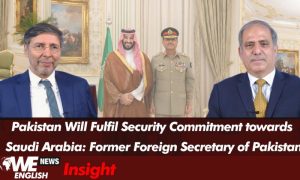
Faisal J Abbas further noted what he described as unusually strong bilateral ties, stating, “I don’t think there has ever been a better time in terms of bilateral relationships between Saudi Arabia and Pakistan.”
He also referred to Pakistan’s leadership and external relations, saying, “This particular Prime Minister, Shehbaz Sharif, seems to be one of the few leaders as well in the world who enjoys close relationships with President Trump.”
Pakistan’s military leadership “commands wide respect in Pakistan, Saudi Arabia and the United States,” he added.
He concluded that, “I wouldn’t be surprised if Pakistan plays a major role in such negotiations.”
The remarks come against the backdrop of an escalating regional conflict that began on February 28, when coordinated US and Israeli strikes targeted Iranian civil and military leadership.
They also strikes also targetted nuclear-associated sites, marking a sharp escalation in long-standing tensions, as Iran retaliated swiftly.
Iran responded without delay with missile and drone strikes across multiple targets linked to the US and Israel. That intensified the confrontation, expanding the geographic scope of hostilities.
Subsequent exchanges in early March saw continued strikes and counter-strikes, with Iran increasingly relying on one-way attack drones as a central element of its military response.
By mid-March, the conflict had widened further, with repeated waves of attacks and rising concerns over maritime security and energy supply routes.
Diplomatic engagement remained limited as regional and global actors urged restraint without establishing a sustained negotiation framework.
Against this backdrop, the suggestion of Islamabad as a potential venue for dialogue reflects growing interest in third-party mediation options, particularly by states seen as maintaining workable relations with multiple sides of the conflict.
The evolving diplomatic landscape also underscores what observers describe as one of the strongest phases in Pakistan’s bilateral ties with Saudi Arabia.
A traditional, cordial, and strategic relationship between the two enhances Islamabad’s credibility as a neutral and reliable interlocutor.
The leadership of Prime Minister Shehbaz Sharif, whose engagement with global leaders, including US President Donald Trump, is seen as an added advantage in facilitating dialogue.
Pakistan’s military leadership is also regarded as enjoying broad respect across multiple capitals, a factor that could help build confidence among parties seeking a negotiated path forward.
The renewed diplomatic focus comes against the backdrop of a rapidly escalating conflict in the Middle East, which has unfolded in a series of developments since late February.
The current phase of tensions began on February 28, when the United States and Israel launched coordinated strikes on Iranian-linked military and nuclear-associated facilities.
Hostilities and retaliations led to a sharp escalation after months of shadow confrontation. Iran responded within days with missile and drone attacks targeting US-linked positions and strategic sites across the region.
In early March, the conflict widened as Iran intensified the use of one-way attack drones and ballistic missiles, signalling a shift towards sustained, multi-front pressure.
The exchanges triggered heightened alert levels across the Gulf, with several countries reinforcing air defences and reviewing security around critical infrastructure.
By mid-March, the situation had further deteriorated with repeated waves of strikes and counter-strikes, alongside reported disruptions near key maritime corridors.
Such escalations have already raised concerns over global energy supplies and shipping routes. Diplomatic efforts remained limited, with major powers issuing warnings but stopping short of direct intervention.
In the following days, intelligence reports pointed to increasing external involvement, including military and logistical support flows, suggesting the conflict was acquiring broader geopolitical dimensions beyond a bilateral confrontation.
The cumulative effect of these developments has heightened fears of a prolonged regional conflict, with the risk of miscalculation growing as multiple actors remain engaged either directly or indirectly.
Observers say that in such a volatile environment, Pakistan’s ability to maintain working relationships with competing powers places it in a favourable position to support de-escalation efforts.
With diplomatic channels gaining renewed attention, Islamabad’s potential role in hosting or facilitating talks is being seen as a constructive step towards easing tensions and encouraging dialogue in the region.