


KEY POINTS
- Naqvi accuses ICC of “double standards” in replacing Bangladesh with Scotland.
- Pakistan criticised Indian cricket board’s influence in ICC decisions.
LAHORE, Pakistan: Pakistan has said the federal government will take the final decision on the national team’s participation in the ICC Men’s T20 World Cup 2026, after the International Cricket Council replaced Bangladesh with Scotland, a move the Pakistan Cricket Board described as unfair.
Earlier today, ICC formally replaced Bangladesh with Scotland after the Bangladesh Cricket Board (BCB) refused to travel to India, citing security concerns following the ouster of pacer Mustafizur Rahman from the Indian Premier League (IPL).
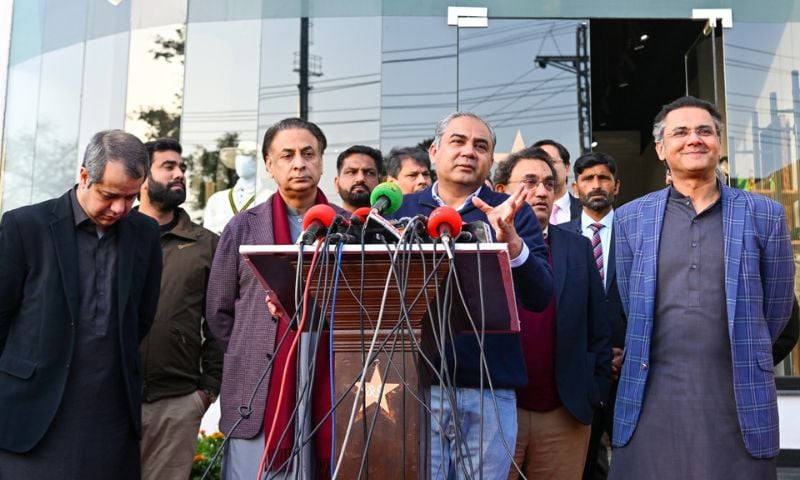
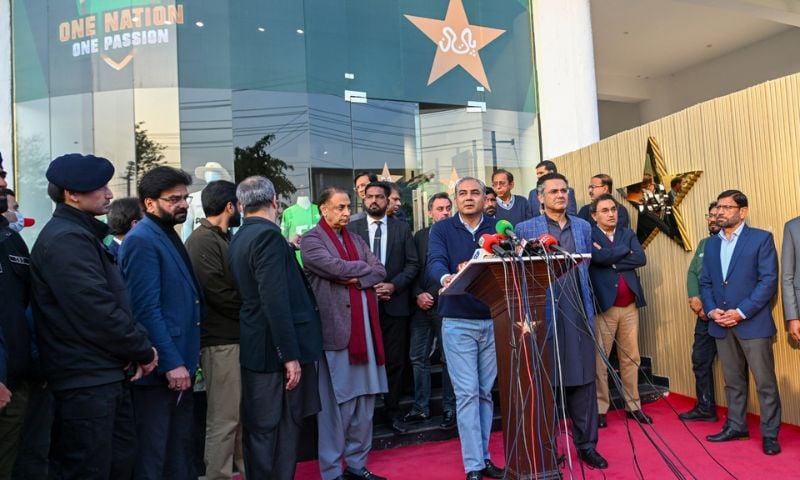
PCB Chairman Mohsin Naqvi’s media talk at Gaddafi Stadium, Lahore.#PakistanCricket | #PCB pic.twitter.com/WYvLGbqeEq
— Pakistan Cricket (@TheRealPCB) January 24, 2026
Government will decide T20 World Cup
Addressing a press conference, Pakistan Cricket Board (PCB) Chairman Mohsin Naqvi stated that the PCB would act in accordance with directives from Islamabad.
“Prime minister [Shehbaz Sharif] is currently not in the country. We will announce the final decision after he returns,” Naqvi said, confirming that Pakistan’s stance is now a matter of state policy rather than a purely cricketing decision.
His remarks amplify speculation that the 2009 champions are considering a boycott of the 20-team mega event, set to begin in less than a month.
PCB Chairman slams ICC and BCCI for T20 World Cup
Naqvi accused the ICC of unfair treatment and “double standards” in its handling of the Bangladesh issue.
“Bangladesh has been treated unfairly. I said the same in the board meeting of the ICC,” Naqvi stated.
“You cannot have double standards, where one country can make whatever decision whenever and do the total opposite for another country.”
ALSO READ : ICC Replaces Bangladesh with Scotland in T20 World Cup 2026 After Venue Row
He framed the issue as one of principle and equity among member nations.
“Our stance is that if you have done this favour with Pakistan and India, then you should do the same with Bangladesh. They are a major stakeholder, and this injustice should not be done.”
Naqvi went further, directly criticising the influence of the Board of Control for Cricket in India (BCCI) in global cricket governance.
“The main reason for this is that one country cannot dictate to another. And if this dictation is attempted, then Pakistan definitely has its own stance,” he warned, positioning Pakistan’s potential boycott as a response to perceived geopolitical influence in the sport.