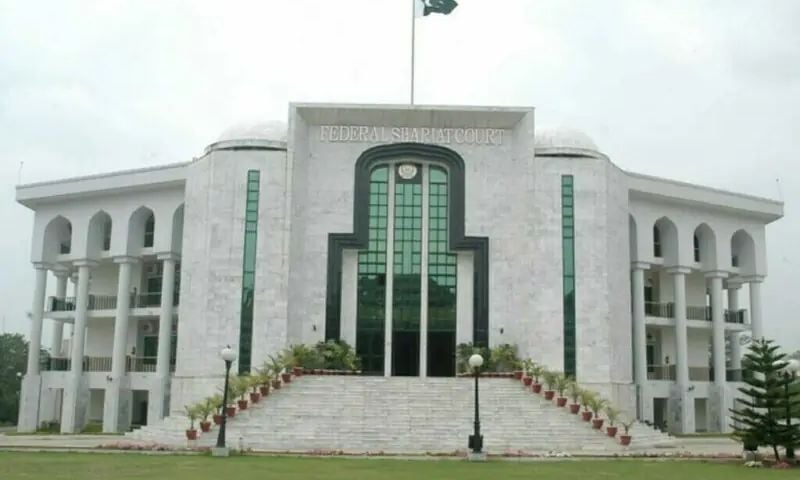



ISLAMABAD: Pakistan’s Federal Constitutional Court has raised concerns over a wide gap between revenue collected through the country’s so-called “super tax” and actual spending on the rehabilitation of internally displaced persons, spotlighting broader questions about fiscal transparency, accountability, and the use of earmarked social welfare funds in the country.
The super tax was introduced in 2015 through a Money Bill by the Pakistan Muslim League-Nawaz (PML-N) government to finance the rehabilitation of areas affected by the Zarb-i-Azb military operation against militancy.
The levy applied to high-income individuals, associations of persons and companies earning more than Rs500 million, with a tax rate of 4 percent for banking companies and 3 percent for other sectors.
Justice Syed Hassan Azhar Rizvi, part of the three-judge bench headed by Chief Justice Aminuddin Khan, observed that while Rs144 billion had been collected under the super tax between 2015 and 2020, only Rs37 billion was reportedly spent on rehabilitating displaced communities.
“Such a disparity frustrates the very purpose of imposing this levy under Section 4B of the Income Tax Ordinance,” he remarked during hearings.
Additional Attorney General Chaudhry Aamir Rehman defended the government’s position, telling the court that 50 percent of super tax collections were transferred to the provinces and that overall tax revenues reflected broader federal social welfare priorities. He cited the Benazir Income Support Programme as an example, under which the federal government spends around Rs400 billion annually on public welfare.
The hearing also delved into technical legal questions, including whether the super tax could be treated as a general levy rather than one specifically earmarked for the rehabilitation of internally displaced persons.
Senior counsel Makhdoom Ali Khan challenged the authority of the Inland Revenue Commissioner to approach the Federal Constitutional Court, noting that neither the federal government nor the Federal Board of Revenue had appealed earlier high court rulings. He likened the situation to “the tail wagging the dog,” arguing that the commissioner lacked the mandate to file such appeals independently.
Representing the FBR, Advocate Hafiz Ehsaan Ahmad Khokhar countered that taxation policy fell within the legislature’s domain and lay beyond judicial discretion. He urged the court to uphold the constitutionality of Section 4C of the Income Tax Ordinance, arguing that the levy was lawful, consistent with Article 25 of the Constitution, aligned with international fiscal practices, and non-discriminatory in nature.
Observers say the FCC’s questioning reflects ongoing concerns about transparency and fiscal accountability in Pakistan, particularly regarding earmarked funds for social welfare and disaster recovery.
The case has broader implications for parliamentary authority, judicial oversight, and public trust in tax-funded rehabilitation programs.
The FCC has yet to deliver a final verdict, but the hearing highlights the delicate balance between fiscal policy, provincial allocations, and judicial review in Pakistan’s evolving legal and economic framework.