


Key Points
- Pakistan outlines export-led growth and a responsible debt strategy at WEF Davos
- Inaugural green Panda bond to expand access to Chinese capital markets
- Fiscal reforms reduce the debt-to-GDP ratio and inflation while boosting economic resilience
- Emphasis on digital services, IT exports, and climate-resilient public-private projects
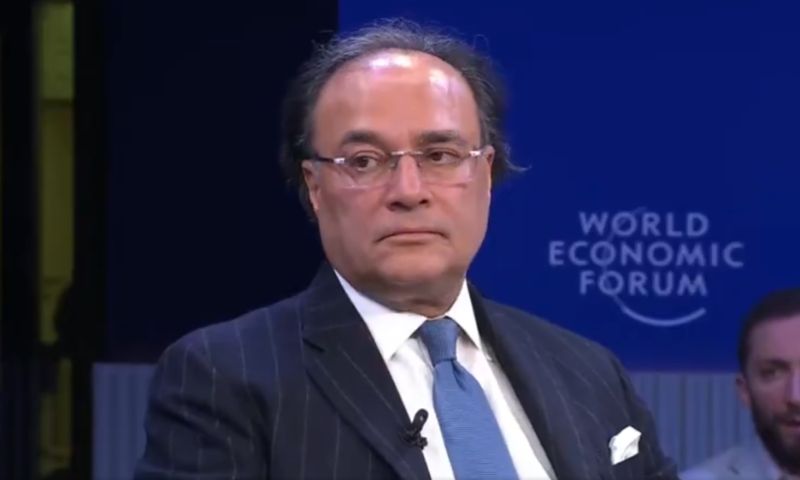
ISLAMABAD: Pakistan has outlined a bold economic roadmap focused on export-led growth, responsible debt management, and climate-resilient financing, Finance Minister Muhammad Aurangzeb told global leaders at the World Economic Forum in Davos
Speaking at a high-level panel on “How Can We Unlock New Sources of Growth? Weight of Global Debt,” Aurangzeb highlighted the strategic deployment of debt for productive investment.
He also briefed the forum on reforms strengthening fiscal discipline and initiatives to expand Pakistan’s export base.
He also introduced the plans, including the inaugural green Panda bond in the Chinese capital market.
Aurangzeb emphasised that while debt can be a tool for growth, it must finance investments that generate exportable surplus rather than consumption, ensuring sustainable repayment and long-term economic resilience.
He cited Pakistan’s progress in reducing its debt-to-GDP ratio from 75 per cent to 70 per cent, achieving a primary surplus, and sharply lowering inflation, while lowering the policy rate from 22 per cent to 10.5 per cent.
Federal Minister for Finance and Revenue, Senator Muhammad Aurangzeb, participated in a high-level panel discussion on “How Can We Unlock New Sources of Growth? – Weight of Global Debt” at the World Economic Forum in Davos.
Speaking from an emerging markets perspective, the… pic.twitter.com/HFfCqZcJPL— Ministry of Finance, Government of Pakistan (@Financegovpk) January 21, 2026
The Minister also highlighted Pakistan’s climate resilience strategy, noting that fiscal buffers allowed effective domestic responses to recent floods without relying on emergency international assistance.
He underscored the role of public-private partnerships, citing a $3.6 billion syndicated financing for a major copper project estimated to generate $2.8 billion in annual exports from 2028.
Aurangzeb further drew investor attention to Pakistan’s potential in digital services, IT exports, and emerging technology sectors.
The success depends on capacity building, prioritisation, and execution, the minister added.