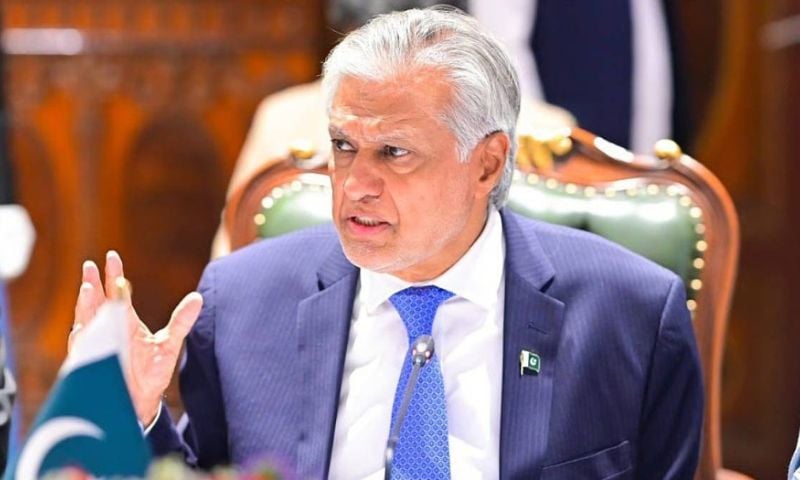



ISLAMABAD: Pakistan’s Deputy Prime Minister Ishaq Dar has emphasised that Islamabad’s foreign policy is firmly anchored in safeguarding the security of its citizens while promoting peace, dialogue, and sustained economic cooperation with the international community.
Addressing a ceremony in Islamabad on Wednesday, the Deputy PM underlined that Pakistan remains unwaveringly committed to the peaceful resolution of disputes and the promotion of stability in the region.
Dar reiterated that enduring peace and stability in South Asia are intrinsically linked to a just and equitable settlement of the Jammu and Kashmir dispute, in line with relevant United Nations Security Council resolutions and the legitimate aspirations of the Kashmiri people.
He also called for the reversal of India’s unilateral actions of 5 August 2019 in Indian Illegally Occupied Jammu and Kashmir, noting that these steps undermine regional stability.
While reaffirming Pakistan’s robust defence capability, Dar stated that the country possesses both the will and capacity to respond decisively to any act of aggression.
At the same time, he emphasised that diplomacy remains the primary instrument of Pakistan’s statecraft, reflecting a balanced approach to security and international engagement.
Highlighting Pakistan’s key strategic partnerships, he noted that the nation’s all-weather cooperative relationship with China continues to deepen, while ties with the United States are expanding beyond traditional security cooperation into areas of trade, technology, and investment.
Dar also emphasised Pakistan’s strengthened relations with regional countries, including Bangladesh, Central Asian states, and Gulf nations, through high-level engagements, joint economic initiatives, and trade collaboration.
ALSO READ: Pakistan Deputy PM to Attend OIC Ministerial Meeting in Saudi Arabia
The Deputy Prime Minister underscored that economic diplomacy is a central pillar of Pakistan’s foreign policy, focusing on attracting investment and fostering growth across critical sectors such as information technology, minerals, energy, and manufacturing to promote national development and prosperity.
Referring to Pakistan’s recent election as a non-permanent member of the United Nations Security Council for 2025–26, he described it as a reflection of the global community’s confidence in Pakistan’s principled and constructive diplomacy.
He concluded that Pakistan remains steadfast in pursuing a foreign policy that balances national security, regional stability, and economic advancement, reinforcing its role as a responsible member of the international community.