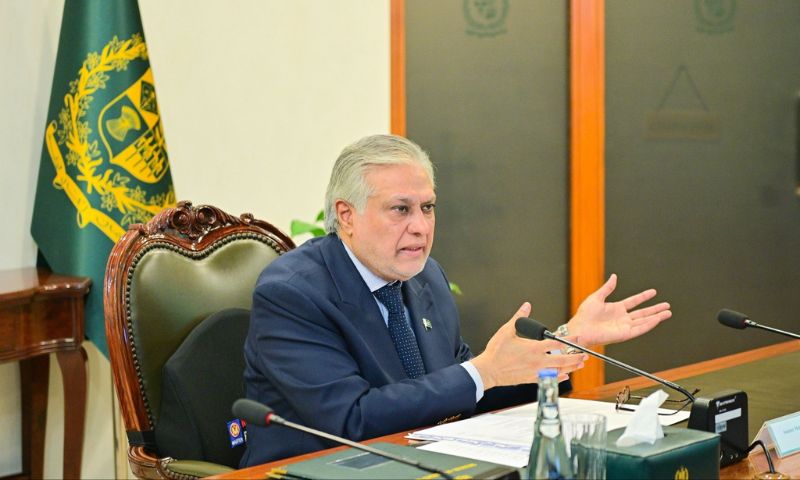



ISLAMABAD: Pakistan’s Deputy Prime Minister and Foreign Minister Mohammad Ishaq Dar held a telephonic conversation with Azerbaijan’s Foreign Minister Jeyhun Bayramov on Tuesday to review the latest regional developments.
“Both leaders emphasised the importance of peace and stability in the Middle East and agreed to stay closely engaged on the evolving developments,” said a Foreign Office press release.
Deputy Prime Minister / Foreign Minister, Senator Mohammad Ishaq Dar @MIshaqDar50, spoke today with Azerbaijan’s Foreign Minister, Jeyhun Bayramov @Bayramov_Jeyhun to discuss current regional developments.
Both leaders emphasized the importance of peace and stability in the… pic.twitter.com/8XNgyG7iVq
— Ministry of Foreign Affairs – Pakistan (@ForeignOfficePk) March 3, 2026
Earlier on Sunday, a meeting chaired by Prime Minister Shehbaz Sharif was informed that Pakistan has initiated efforts to evacuate its citizens stranded in Iran via Azerbaijan.
Pakistan and Azerbaijan share deep-rooted fraternal ties grounded in common faith, history, culture, and mutual trust.
The two nations also cooperate closely in various regional and international organisations such as the Organisation of Islamic Cooperation (OIC), the Economic Cooperation Organisation (ECO), and the United Nations (UN).
Earlier today, while speaking in the Parliament, Dar said Pakistan is playing a critical diplomatic role between Saudi Arabia and Iran to de-escalate conflict, adding that both countries have appreciated Islamabad’s role.
“I held a meeting with US Secretary of State Marco Rubio and disclosed that Iran had agreed not to build nuclear weapons, but the US wanted Iran’s entire nuclear programme to be completely dismantled,” Ishaq Dar said while briefing the Senate.
Dar said Pakistan had launched extensive diplomatic efforts to help defuse tensions.
He added that Islamabad had also pursued back-channel engagement aimed at promoting dialogue, and that Iran’s leadership was fully aware of these initiatives.
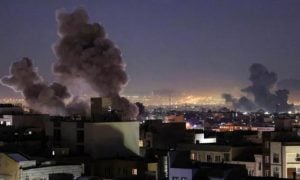
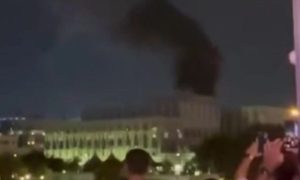
He said the conflict had widened to include strikes in Gulf states and Iranian attacks on US bases, with airports reportedly hit in some areas.
Tensions across the Gulf surged on Saturday after coordinated strikes by the United States and Israel on Iran, which also killed Supreme Leader Ayatollah Ali Khamenei.
In response, Iran launched attacks on American military installations in several Gulf countries, including the United Arab Emirates, Bahrain, Qatar, Kuwait and Jordan, drawing swift condemnation from their governments.
Saudi Arabia also reported strikes in Riyadh and the Eastern Province, stating that its air defences successfully intercepted the incoming attacks.
All flight operations to Middle Eastern destinations have been temporarily suspended, with the exception of Oman, as authorities continue to review the evolving regional security situation.