


Key Points
- Bangladesh reaffirmed its willingness to play the T20 World Cup, only on credible safety guarantees
- Pakistan publicly backed Dhaka’s stance, calling for equal treatment of all ICC full members
- The meeting highlighted unease over ICC decision-making perceived as tilted towards India
- Regional coordination emerged as Bangladesh sought fair accommodation rather than exclusion
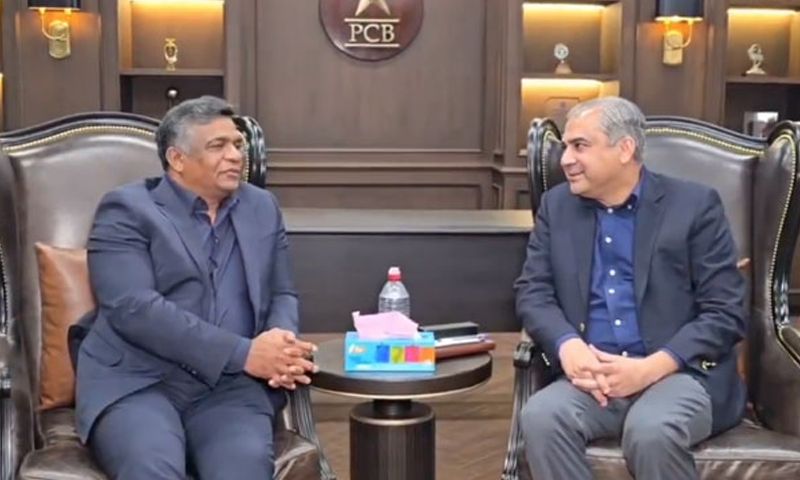
ISLAMABAD: Bangladesh Cricket Board (BCB) President Aminul Islam Bulbul held high-level talks with Pakistan Cricket Board (PCB) Chairman Mohsin Naqvi in Lahore on Sunday, as BCB’s grievance over being expelled from the World Cup after raising security concerns is gaining attention.
The meeting was held in the backdrop of Dhaka and Islamabad, seeking to coordinate their response to what they see as an increasingly one-sided handling of the T20 World Cup 2026 controversy by the International Cricket Council (ICC).
The meeting, which also took place against the backdrop of parallel consultations involving senior ICC officials, underscored growing unease among several member boards over the way Bangladesh’s security concerns have been framed and, in Dhaka’s view, marginalised in the global narrative dominated by India and the ICC.
Bangladesh’s position has remained consistent: it wishes to participate in the T20 World Cup, but it is unwilling to play its matches in India due to safety and political concerns surrounding players and support staff.
لاہور۔ چئیرمین پاکستان کرکٹ بورڈ محسن نقوی سے صدر بنگلہ دیش کرکٹ بورڈ امین السلام کی ملاقات
قذافی سٹیڈیم آمد پر چئیرمین پی سی بی محسن نقوی نے بنگلہ دیش کرکٹ بورڈ کے صدر امین السلام کا خیر مقدم کیا
ملاقات میں حالیہ جاری بحران پر تبادلہ خیال
بنگلہ دیش کرکٹ بورڈ کے صدر امین… pic.twitter.com/EBgtC4RrsZ
— PCB Media (@TheRealPCBMedia) February 8, 2026
BCB officials argue that these concerns are being portrayed as obstructionist rather than precautionary, despite precedents in international cricket where neutral venues and alternative arrangements have been accommodated for other teams.
Speaking ahead of the Lahore talks, Aminul Islam reiterated that Bangladesh was not seeking confrontation. “Our only demand is to play the World Cup under conditions that ensure the safety and dignity of our players,” he said.
Dhaka’s stance should not be misconstrued as a boycott of the tournament itself, he stressed.
The PCB has openly backed Bangladesh’s right to raise such concerns. Chairman Mohsin Naqvi, in remarks circulated to local media and echoed on social media, said Bangladesh was being unfairly treated and called on the ICC to apply the same principles of flexibility and neutrality that it has discussed in other politically sensitive cricketing contexts.
“The issue is not about one match or one country,” Naqvi said. “It is about fairness and equal treatment of full member boards. Bangladesh deserves to be heard, not sidelined.”
لاہور_ صدر بنگلہ دیش کرکٹ بورڈ امین السلام کی لاہور آمد
ائر پورٹ پر پی ایس ایل چیف ایگزیکٹو آفیسر سلمان نصیر نے صدر بنگلہ دیش کرکٹ بورڈ کا استقبال کیا
پاکستان آمد پر معزز مہمان کو دل کی اتھاہ گہرائیوں سے خوش آمدید کہتے ہیں۔ سلمان نصیر
صدر بنگلہ دیش کرکٹ بورڈ امین السلام… pic.twitter.com/NInRBYCOIr
— PCB Media (@TheRealPCBMedia) February 8, 2026
The PCB later posted on X that the meeting with the BCB president focused on “regional cooperation, equity in international cricket, and the need for decisions free from political pressure.” The post added that Pakistan believed “player safety and mutual respect between boards must remain paramount.”
The Bangladesh Cricket Board also used X to confirm the Lahore engagement, noting that Bulbul met PCB leadership “to discuss matters of shared concern relating to international fixtures, security considerations, and Bangladesh’s participation in global events.” The board reiterated its commitment to cricketing engagement but said that it expected the ICC to acknowledge legitimate apprehensions rather than framing them as defiance.
The Lahore discussions come amid reports that the ICC has been pressing for strict adherence to the original tournament schedule, warning that selective participation could undermine the competition. Critics in Dhaka, however, argue that such statements overlook the structural imbalance in how decisions are influenced, particularly when India’s preferences are involved.
For Bangladesh, the stakes are high. Officials privately fear that accepting the current arrangement without safeguards could set a precedent where security concerns raised by smaller or less influential boards are brushed aside, and the complainant is rather punished with expulsion. Public sentiment in Bangladesh has also hardened, with former players and commentators urging the board not to yield under pressure.
Pakistan’s show of solidarity has added a regional dimension to the dispute, challenging the perception that Bangladesh was isolated, and rather India dominated the ICC is getting under scrutiny. No formal joint declaration was issued after the meeting, sources familiar with the talks said both boards agreed to continue close coordination and to press the ICC for a solution that respects Bangladesh’s position.
As ICC mediation efforts continue, the Lahore meeting has made one point clear: Bangladesh is no longer content to have its concerns filtered through an India-centric or ICC-centric lens, and it is finding allies willing to say so openly.