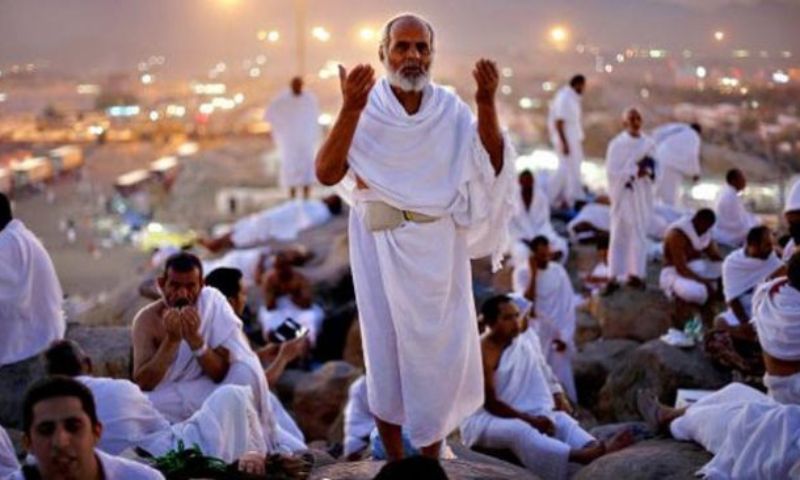



ISLAMABAD: Pakistan’s Minister for Religious Affairs and Interfaith Harmony, Sardar Muhammad Yousaf, has said that the government has approved its Hajj Policy for 2026, setting the country’s pilgrimage quota at 179,210 pilgrims in line with allocations granted by the Kingdom of Saudi Arabia.
The minister told the state-run Radio Pakistan that approximately 120,000 pilgrims will perform Hajj under the government scheme, while 60,000 will do so through private operators.
Pakistan approved the Hajj Policy 2026 in July, under which the country has been allocated a quota of 179,210 pilgrims.
Of this total, approximately 120,000 seats have been reserved under the government Hajj scheme, while the remaining quota has been allocated to private tour operators.
Under the policy, the government has ensured the digitisation of Hajj services, introduced electronic monitoring and complaint redressal systems, and offered both long- and short-duration Hajj packages.
The policy also prioritizes applicants who were unable to perform Hajj under the private scheme last year.
Sardar Muhammad Yousaf added that preparations for Hajj 2026 are currently underway across the country, with mandatory training sessions being conducted in various districts.
Yousaf said that approximately 38,000 intending pilgrims will travel from Islamabad under the “Road to Makkah” initiative.
At present, the facility is available only at Islamabad and Karachi airports; however, efforts are underway to extend the service to Lahore as well.
Highlighting the Ministry of Religious Affairs’ efforts to promote interfaith harmony, he said the ministry provides a platform for all religious minorities in Pakistan to help foster unity and social cohesion.
He emphasised that the Constitution guarantees equal rights to all minority communities.
The minister further noted that the government offers scholarships to children from minority communities, allocates funds for the rehabilitation of their places of worship, and provides financial assistance to deserving individuals.
He added that minority groups also benefit from dedicated job quotas and representation in parliament.
Placing the issue in a regional context, the minister remarked that religious communities in India are facing hardships.
Yousaf said the Ministry of Religious Affairs has introduced a new centralised system to organise pilgrimages to holy sites in Iran and Iraq.