


Key Points
- FO reiterates Islamabad’s preference for diplomacy, dialogue, and de-escalation
- Pakistan expects Kabul to act against militant groups threatening regional peace
- Authorities reaffirm vigilance to protect Pakistani territory and citizens
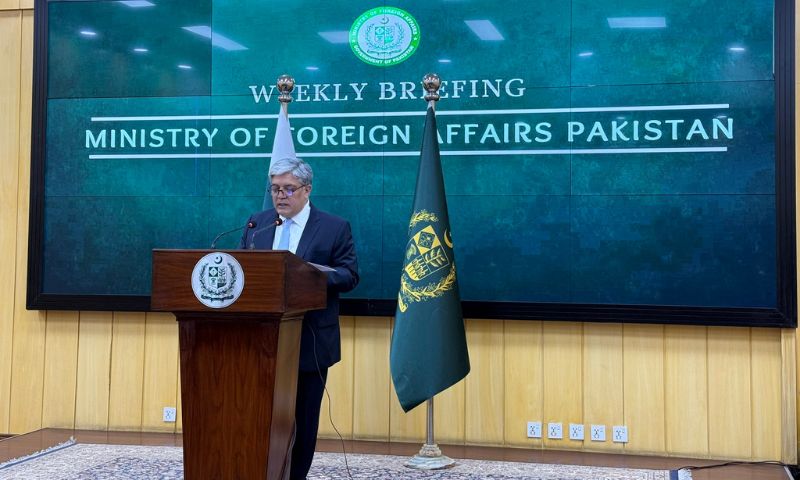
ISLAMABAD: Pakistan’s Foreign Ministry stated on Friday that Islamabad and Kabul were sincerely working towards resolving the “complex but solvable” issue of border clashes amid a temporary ceasefire.
During a weekly press briefing at the FO, spokesperson Shafqat Ali Khan highlighted that during the 48-hour ceasefire, both sides were making “sincere efforts to find a positive resolution to this complex but solvable issue through constructive dialogue”.
“Pakistan greatly values dialogue and diplomacy and a mutually beneficial relationship with Afghanistan,” he said. “At the same time, the Government of Pakistan continues to closely monitor the situation and would take all possible measures to safeguard its territory and the lives of its people.”
Khan added that Pakistan wants a “peaceful, stable, friendly, inclusive, regionally connected, and prosperous Afghanistan” but highlighted that Kabul needs to fulfil its obligations and promises under the Doha Process. He also reiterated Pakistan’s requests to the Afghan Taliban to prohibit the use of their soil for terrorism.
“Pakistan has repeatedly shared its concerns related to the presence of Fitna al Khawarij and Fitna al Hindustan operating from Afghan soil,” Khan said.
“Pakistan expects concrete and verifiable actions against these terrorist elements by the Taliban regime.”
Acknowledgment of Saudi stance on regional stability
Khan also praised Saudi Arabia’s balanced position, which called for restraint and regional stability amid the border hostilities.
“Pakistan and the Kingdom of Saudi Arabia are longtime close allies and partners who are committed to each other’s sovereignty and territorial integrity,” he said. “In this context, we are fully confident of each other’s position.”
He referred to the recently concluded Strategic Mutual Defence Agreement (SMDA), signed in Riyadh on September 18, as “a manifestation of this mutual understanding,” adding that “Saudi Arabia’s traditional diplomatic approach emphasises stability and de-escalation in the region.”
Pakistan’s Deputy Prime Minsiter and Foreign Minister Ishaq Dar had received a phone call from his Saudi counterpart Prince Faisal bin Farhan, who appreciated Islamabad’s commitment to peace and regional security, according to a Foreign Office statement.
The Saudi Press Agency (SPA) had earlier reported that Riyadh voiced concern over the rising tensions along the Pakistan-Afghanistan border and urged all parties to “exercise restraint, avoid escalation and adopt dialogue and wisdom to preserve security and stability.”
Diplomatic outreach and regional reaction
The Foreign Office emphasised that Pakistan was working in coordination with regional partners and international interlocutors to ensure that tensions did not escalate. Earlier Diplomatic sources cited by Dawn said Islamabad and Kabul had agreed to extend the ceasefire beyond the initial 48-hour period, with additional confidence-building steps under discussion.
Analysts quoted in local media described the move as a positive signal amid a volatile security climate, noting that both governments appeared intent on avoiding a broader confrontation.
What Ahead
The Foreign Office maintained that Pakistan’s policy of restraint would continue to guide its engagement, while ensuring “zero tolerance for cross-border terrorism.” Meanwhile, officials told the media that future developments would depend on Afghanistan’s cooperation in preventing militant infiltration and honoring bilateral commitments.