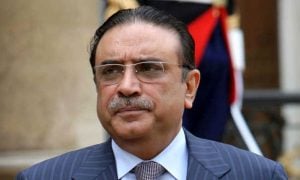
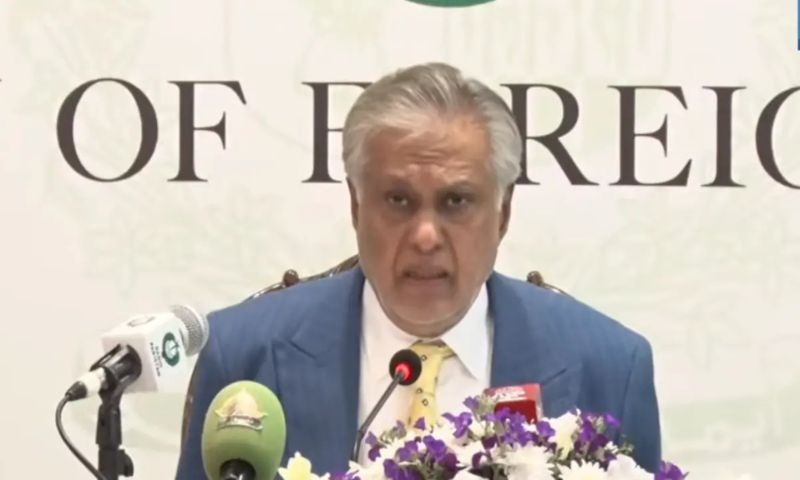



ISLAMABAD: Pakistan’s Deputy Prime Minister and Foreign Minister Ishaq Dar said Islamabad is making “full diplomatic efforts” to help defuse rapidly escalating tensions in the Middle East, as fighting between Iran, Israel and the United States threatens to engulf the wider region.
Briefing the entire Diplomatic Corps based in Islamabad, Deputy PM Dar described developments over the past 72 hours as “very, very worrisome” and said the situation had sharply intensified an already fragile regional environment.
“This recent escalation has significantly heightened tensions in an already volatile and fragile environment,” he said.
“We are doing our full diplomatic efforts and are requesting all parties to de-escalate and refrain from this process.”
Ishaq Dar said the latest military actions came at a time when diplomatic initiatives aimed at achieving a peaceful, negotiated outcome were still under way.
“Obviously, these serious developments have taken place at a time when diplomatic efforts were under way to reach a peaceful and negotiated solution,” he said.
“What triggered all of a sudden this action, which has now engulfed almost all countries?”
He noted that as recently as this week, the Omani foreign minister had expressed satisfaction with ongoing US-Iran talks.
He also referred to discussions held about 10 days ago between Pakistani leaders and officials of the International Atomic Energy Agency in Austria.
“So it is puzzling what necessitated all of a sudden the decision to attack,” Dar said, apparently referring to joint US and Israeli strikes on Iran.
Pakistan calls for restraint
Dar said he had spoken to Iranian Foreign Minister Abbas Araghchi on February 28 to convey Pakistan’s condemnation of the attacks and to call for restraint.
He said his Iranian counterpart responded “positively” to the appeal for dialogue, but added that “on the ground, we are seeing that things are not yet settling or easing out”.
Dar said Pakistan remains in contact with regional countries and has engaged several foreign ministers in recent days.
“I have not talked to anyone who disagrees that dialogue and diplomacy is the only way forward, not only for this region but wherever there is any conflict,” he said.
He stressed that all states must abide by the principles of the UN Charter, respect sovereignty and territorial integrity, and comply with international humanitarian law.
Referring to a meeting chaired by Prime Minister Shehbaz Sharif a day earlier, Dar said Pakistan was deeply concerned about violations of international law and long-standing diplomatic norms, including the targeting of state and government leaders.
“We believe that international law must prevail and the conventions must be respected,” he said. “The door to dialogue and diplomacy must not be closed.”
Solidarity with ‘brotherly countries’
Dar said Pakistan stood in full solidarity with “brotherly countries” in the region and urged maximum restraint.
He acknowledged that Iran described its retaliatory strikes as acts of self-defence but said Islamabad deeply regretted and condemned attacks that affected Saudi Arabia, Bahrain, Jordan, Kuwait, Qatar, the United Arab Emirates and Oman.
“We can’t have double standards,” Dar said, noting that Pakistan had been among the first to condemn attacks on Iran.
However, he said retaliatory actions had “compounded and complicated the situation on the ground”.
He added that a Pakistani national had been killed in a retaliatory attack in Abu Dhabi.
Pakistan’s diplomatic missions in the region were engaged with the diaspora and local authorities to provide assistance, he said.
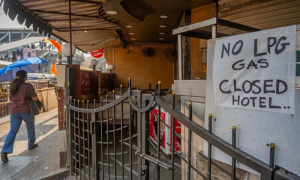
Dar also noted that regional airspace closures had caused significant disruption. “I myself had to find ways to get back to the country and the entire airspace was closed,” he said.
Widening regional conflict
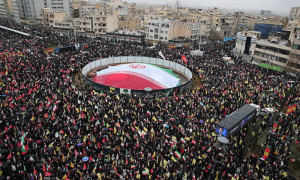
The crisis has widened beyond Iran.
According to the Iranian Red Crescent, 555 people have been killed across 131 cities in Iran since the start of US and Israeli strikes two days ago.
The humanitarian organisation said the casualties resulted from what it described as “Zionist-American terrorist attacks” across various regions of the country.
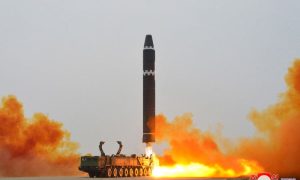
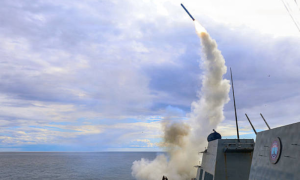
Israel and the United States have struck targets across Iran since Saturday, while Iran has launched missiles across the region.
Reports also said three American warplanes had crashed in Kuwait.
Mediation efforts
Dar said Pakistan was encouraging both Washington and Tehran to pursue a “win-win” resolution.
“Our effort has been to encourage both the US and Iran to get engaged in dialogue, diplomacy, and resolve the issue,” he said. “We are privy to the demands and the responses.”
He added that Pakistan stood ready to extend support towards a peaceful resolution of outstanding issues and urged the use of existing international forums and mechanisms established after the Second World War.
“It seems to be a very turbulent time in the diplomatic world,” Dar said. “We all need to work together to bring it back to the originally agreed principles.”
He reiterated that Pakistan would continue diplomatic outreach at the leadership level and through its foreign ministry, stressing that diplomacy remained the only viable path to restore stability in the Middle East.