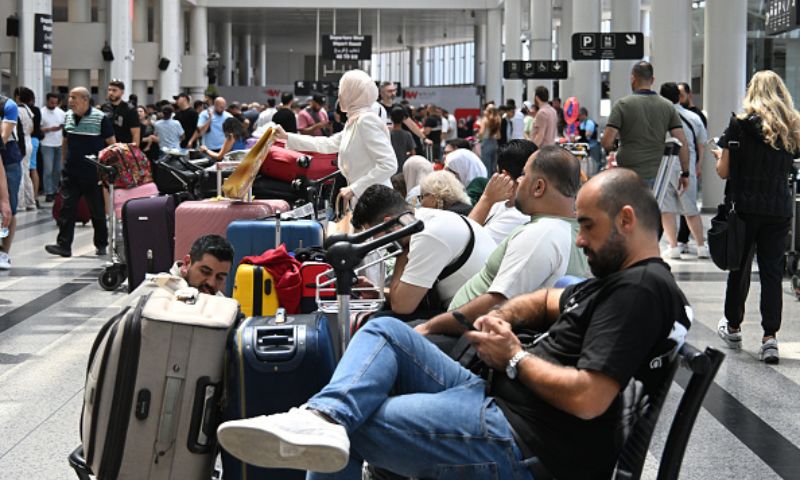



DUBAI: Air travel across the Middle East has been severely disrupted after US and Israeli strikes on Iran prompted widespread airspace closures, cancelling and rerouting thousands of flights and stranding hundreds of thousands of passengers.
The crisis has forced the closure of airspace over at least ten countries, including Iran, Iraq, Israel, Kuwait, Bahrain, Qatar, Syria, the United Arab Emirates, Lebanon, and Jordan.
Key airports in Dubai, Abu Dhabi, and Doha also remain closed.
Airspace shutdowns
A spokesperson for the Pakistan Civil Aviation Authority confirmed that Pakistan’s airspace remains fully open and safe for operations.
However, the disruption across the region is unprecedented. Dubai International Airport, one of the world’s busiest, and Abu Dhabi’s Zayed International Airport remained closed on Sunday.
Maersk suspended all vessel crossings through the Strait of Hormuz for safety reasons.
Qatar Airways also suspended flights into and out of Doha until at least the morning of March 2.
Emirates Airlines said in a statement: “Due to multiple regional airspace closures, Emirates has temporarily suspended all operations to and from Dubai, up until 1500 hrs UAE time on Monday, 2 March.”
Flydubai confirmed it was adjusting operations in coordination with authorities while prioritising passenger welfare.
Saudi carrier Saudia also cancelled several flights due to airspace closures, advising passengers to verify the status of their bookings.
Air Arabia reported similar disruptions, with flights either delayed, rerouted, or cancelled.
Airports hit by strikes
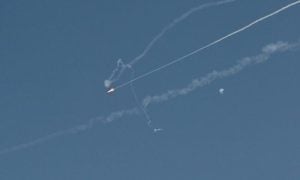
The airspace closures follow Iranian retaliatory attacks after US and Israeli strikes.
Dubai International reported four injuries, while Abu Dhabi’s Zayed Airport said a drone attack killed one person and injured seven others.
Kuwait International Airport also sustained damage.
UK-based aviation analyst John Strickland said the disruptions were a result of “the sheer volume of people and the complexity” of rerouting flights around restricted airspace.
Analysts warn that delays and cancellations could continue for several days, with fuel costs rising due to longer flight paths.
Former FAA head Mike McCormick noted that some countries may partially reopen airspace once military zones and risks are clarified.
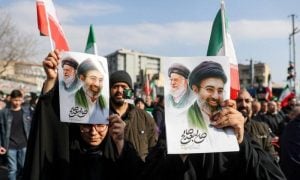
The disruptions follow escalations in the Iran-US-Israel conflict, which began after coordinated US-Israeli strikes killed Iranian Supreme Leader Ali Khamenei.
Iran retaliated with missile strikes on Gulf states and Israeli territory, prompting multiple airspace closures.