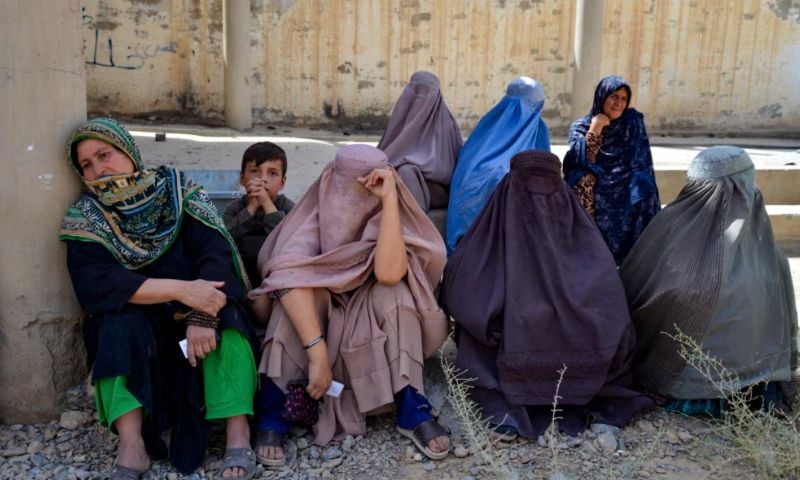
KABUL: More than 13.8 million people across Afghanistan are currently experiencing acute food insecurity as the country’s worsening economic collapse, widespread unemployment, and recurring climate-related disasters continue to intensify the humanitarian crisis, the World Food Programme (WFP) has warned.
The United Nations agency said millions of vulnerable Afghans are struggling to access even the most basic food supplies, while rising regional tensions and increasing food prices are further aggravating already fragile living conditions throughout the country.
According to the WFP, nearly five million children, alongside pregnant and breastfeeding women, are suffering from malnutrition, placing enormous pressure on Afghanistan’s overstretched humanitarian and health systems.
Humanitarian officials warned that aid operations are facing severe challenges as shortages of funding and specialised nutritional supplies threaten to disrupt life-saving programmes aimed at treating malnourished mothers and children.
“The little food we can afford we give to our children, but that is not enough,” said Raqiba Ahmadi, a resident of Faizabad in northeastern Afghanistan, in comments shared by the United Nations.
Ahmadi said her youngest daughter had recently been recovering from malnutrition while her husband remained unemployed, reflecting the growing hardships faced by countless Afghan families struggling to survive amid deteriorating economic conditions.
The WFP said the combination of economic decline, climate shocks and reduced international assistance had significantly weakened humanitarian efforts across the country. Aid agencies are particularly concerned about dwindling stocks of specialised nutritional foods used in emergency feeding programmes.
“Programmes such as nutrition assistance are essential, not optional,” said John Aylieff, WFP Country Director for Afghanistan. He warned that interruptions to humanitarian support were already having devastating consequences for vulnerable communities across the country.
“Unfortunately, this lifeline has already been severed, threatening the lives of hundreds of thousands of mothers and children,” Aylieff added.
Afghanistan’s economy has remained under severe strain since the Taliban returned to power in 2021, a political shift that triggered a sharp reduction in international financial assistance and contributed to rising unemployment and poverty levels nationwide, according to Amu TV.
Humanitarian organisations have repeatedly cautioned that deep cuts to foreign aid, combined with prolonged droughts, climate-related disasters and soaring market prices, are leaving millions unable to secure sufficient food.
Aid agencies also say regional instability and disruptions to trade routes have further increased the cost of essential commodities, making it increasingly difficult for ordinary Afghans to afford daily necessities.
Women and children remain among the hardest-hit groups in the ongoing crisis. Humanitarian organisations note that restrictions imposed on women’s employment and public participation have significantly reduced many households’ ability to generate income, worsening poverty and food insecurity.
The United Nations has repeatedly appealed to the international community to increase humanitarian assistance for Afghanistan, warning that declining global funding could push millions deeper into hunger, deprivation and extreme poverty.
Relief agencies stress that nutrition and food assistance programmes continue to serve as one of the few remaining safety nets for vulnerable Afghan families, particularly in remote rural areas where access to healthcare, employment opportunities and stable food supplies remains severely limited.