


Key Points
- The operation launched after what Islamabad calls unprovoked Afghan aggression
- Name translates roughly as “Wrath for the Sake of Truth”
- Title carries religious, political and strategic messaging
- The move comes amid strained ties with the Taliban-led government in Kabul
ISLAMABAD: Pakistan has unveiled a new military campaign with a name that immediately draws attention: “Operation Ghazab Lil Haq.” Beyond the battlefield implications, the title itself has stirred curiosity at home and abroad, raising questions about symbolism, strategy and the message Islamabad intends to send.
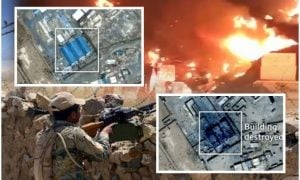
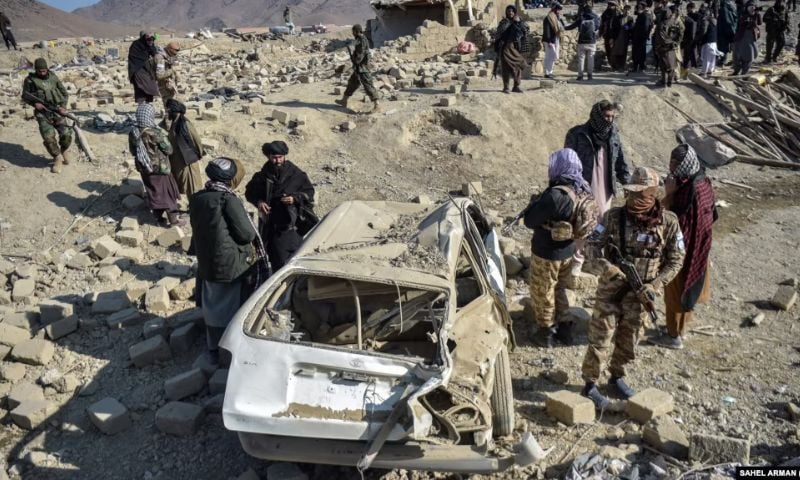
The operation was launched after cross-border clashes that Pakistani authorities describe as unprovoked aggression from the Afghan side. Officials say the decision reflects both an immediate security response and a broader recalibration of policy towards a volatile western frontier.
But for many international observers, the first question is linguistic: what does “Ghazab Lil Haq” mean?
The phrase is rooted in Arabic. “Ghazab” translates as wrath or intense anger, often connoting righteous indignation. “Lil Haq” means “for the truth” or “for the sake of justice.” Taken together, the title can be understood as “Wrath for the Sake of Truth” — a formulation that frames the campaign as morally justified rather than merely strategic.
In contemporary global political language, it roughly corresponds to the sentiment often captured in the phrase “enough is enough,” conveying the idea of a threshold crossed and a decisive response deemed unavoidable.
Military operations are frequently given symbolic names worldover, yet in Pakistan’s context, such titles often carry layered meaning.
By invoking concepts associated with justice and moral legitimacy, authorities appear to be positioning the campaign as a defensive response to unprovoked aggression and in the protection of sovereignty, territorial integrity and national security.
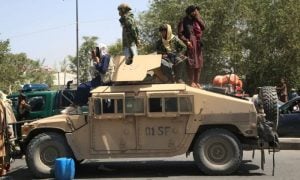
The timing adds another dimension. Relations between Islamabad and the Taliban-led administration in Kabul have grown increasingly tense.
Pakistan has long argued that militant factions targeting its territory operate with ideological affinity and operational space linked to Afghanistan. Afghan officials deny permitting their soil to be used against neighbours.
ALSO READ: Pakistan Retaliates With Cross-Border Strikes, 133 Taliban Fighters Killed, 27 Posts Destroyed
Operation Ghazab Lil Haq emerges against that backdrop. For Islamabad, the challenge is no longer an insurgency confined to remote mountainous terrain. It is a complex equation involving cross-border dynamics, shifting alliances and the reality that the Afghan Taliban are now a governing authority rather than a rebel movement.
For a global audience, this marks a significant shift. Pakistan spent two decades aligned with international counter-terrorism efforts after 2001, battling extremist violence that claimed thousands of civilian and security force lives.
Today, it finds itself confronting security threats in a region where former non-state actors have assumed state power across the border. And they are openly backed by Pakistan’s hostile neighbour, India.
Analysts say the choice of name may serve several audiences at once. Domestically, it reinforces the narrative that the state is acting with moral and constitutional authority. Regionally, it demonstrates resolve. Internationally, it backs Pakistan’s claim that its actions are reactive rather than expansionist.
The scale, duration and objectives of Operation Ghazab Lil Haq remain closely watched. Officials describe goals that include deterring further cross-border incidents, disrupting militant networks and reinforcing border management.
What is clear is that the operation is more than a military manoeuvre. It is also a statement — about sovereignty, about justice as defined by the state, and about the evolving security landscape of South Asia.
As tensions linger along the frontier, the name itself invites scrutiny. In a region where words carry weight and history shapes perception, Operation Ghazab Lil Haq suggests that Pakistan sees the present confrontation not as an isolated clash, but as part of a deeper contest over legitimacy, security and truth.