



Key points
- Trump bans Anthropic over security dispute
- Anthropic vows legal challenge against ban
- Deal bars mass surveillance, autonomous weapons
WASHINGTON, United States: OpenAI announced on Friday that it has reached an agreement allowing the Pentagon to deploy its AI models within the US defense agency’s classified network, incorporating specific “safeguards,” shortly after President Donald Trump barred federal use of rival firm Anthropic.
Trump ordered all government agencies to halt the use of Anthropic’s technology, describing the company as a national security risk after it declined to permit unrestricted military application of its Claude models, reports AFP.
Anthropic responded by pledging legal action over what it called “intimidation,” marking a rare public clash between a leading technology company and the US government. The firm maintained that its systems should not be employed for mass domestic surveillance or fully autonomous weapons.
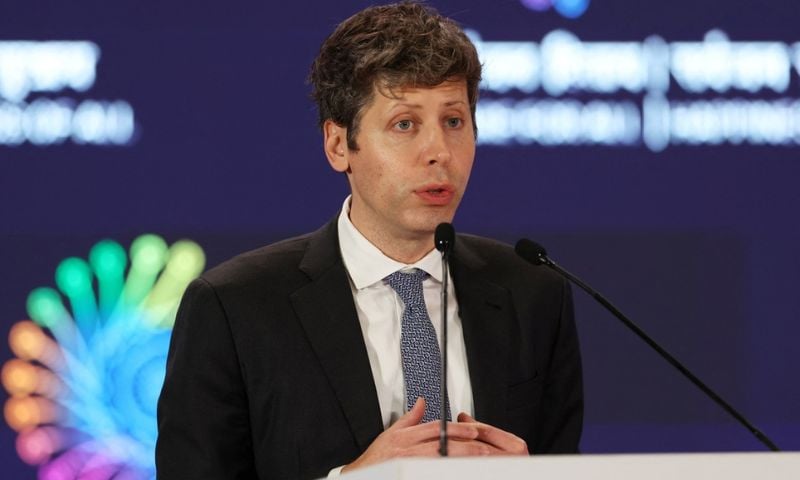
Within hours of Trump’s directive, OpenAI chief executive Sam Altman revealed that his company had finalised a deal with the Pentagon under comparable conditions, including “technical safeguards” accepted by the Department of Defense.
“Two of our most important safety principles are prohibitions on domestic mass surveillance and human responsibility for the use of force, including for autonomous weapon systems,” Altman wrote on X, adding that those principles went “into our agreement.”
The Department of Defense did not immediately respond to media queries regarding the arrangement.
Washington had criticised Anthropic for raising ethical objections, asserting that the Pentagon operates within legal boundaries and that contractors cannot dictate how their products are used.
“I am directing EVERY Federal Agency in the United States Government to IMMEDIATELY CEASE all use of Anthropic’s technology. We don’t need it, we don’t want it, and will not do business with them again!” Trump said in a post on his Truth Social platform.
“Anthropic better get their act together, and be helpful during this phase out period, or I will use the Full Power of the Presidency to make them comply, with major civil and criminal consequences to follow,” Trump added.
Court challenge
Altman had informed OpenAI staff on Thursday that he was pursuing an understanding with the Pentagon incorporating safeguards similar to those sought by Anthropic, and that he hoped to help ease tensions.
“Humans should remain in the loop for high-stakes automated decisions,” he wrote in a memo to employees, according to US media reports.
Anthropic reiterated its position earlier on Friday, stating that no pressure from Washington would “change our position on mass domestic surveillance or fully autonomous weapons.”
The company added that it remains “ready to continue our work to support the national security of the United States.”
The Pentagon had warned Anthropic it must comply with its demands by 5:01 pm (22:01 GMT) on Friday or face action under the Defense Production Act.
This Cold War-era legislation, previously invoked during the Covid-19 pandemic, grants the federal government broad authority to direct private industry in matters of national security.
Officials also threatened to classify Anthropic as a supply chain risk — a designation usually applied to firms linked to adversarial countries.
Anthropic, however, said it would contest any such action.
“We will challenge any supply chain risk designation in court,” the San Francisco-based startup said in a detailed statement outlining what it viewed as the dangers posed by the Pentagon’s requirements.
‘Dangerous precedent’
US Defense Secretary Pete Hegseth confirmed earlier that he had instructed the Pentagon to proceed with restrictions, stating that “effective immediately, no contractor, supplier, or partner that does business with the United States military may conduct any commercial activity with Anthropic.”
“Anthropic delivered a master class in arrogance and betrayal as well as a textbook case of how not to do business with the United States Government or the Pentagon,” Hegseth wrote on X.
House Democratic leader Hakeem Jeffries sharply criticised Hegseth, describing him as “the least qualified Secretary of Defense in our nation’s history,” while commending Anthropic for resisting what he characterised as an overreach.
“Mass surveillance of American citizens is unacceptable,” Jeffries said in a statement late Friday.
The dispute also prompted a show of unity within the technology sector. Hundreds of employees from Google DeepMind and OpenAI signed an open letter titled “We Will Not Be Divided,” expressing support for Anthropic.
“We hope our leaders will put aside their differences and stand together to continue to refuse the Department of War’s current demands for permission to use our models for domestic mass surveillance and autonomously killing people without human oversight,” the letter stated.
“They’re trying to divide each company with fear that the other will give in. That strategy only works if none of us know where the others stand,” it added.