


LONDON: Global oil prices climbed above $100 a barrel again on Tuesday, as renewed fighting between Israel and Iran and conflicting signals over potential US-Iran talks fuelled volatility in energy markets.
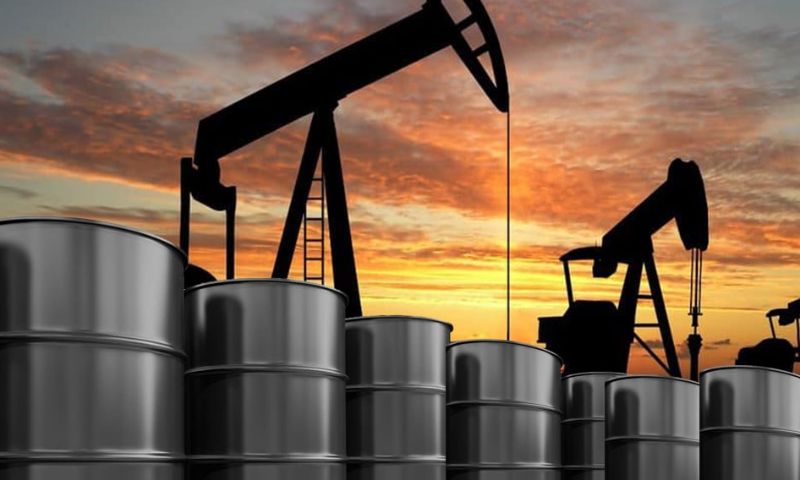
Brent crude, the international benchmark, rose as much as 4 percent to $104 a barrel before easing to around $102. US West Texas Intermediate (WTI) also advanced, gaining about 2.8 percent to $90.6 a barrel.
The rebound followed a sharp sell-off a day earlier, when prices had dropped more than 10 percent.
Markets swung sharply after US President Donald Trump said on Monday that Washington had held “very good and productive conversations” with Tehran and would delay threatened strikes on Iranian energy infrastructure.
The announcement briefly eased fears of escalation, sending oil prices lower and lifting global equities.
Brent settled at $99.94 on Monday after earlier surging above $114 amid concerns of a wider conflict.
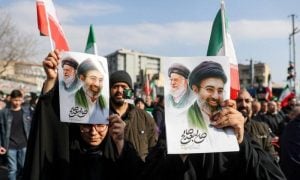
However, Iranian authorities rejected the claims of dialogue, calling them “fake news” and accusing Washington of attempting to manipulate energy markets. The denial dampened optimism and helped push oil prices higher again on Tuesday.
According to analysts, investor sentiment remains highly sensitive to political signals.
Jim Reid, head of global macroeconomic research at Deutsche Bank, said financial markets viewed the prospect of talks as a “huge positive”, though much depended on whether rhetoric translated into concrete action.
Disruption to global energy flows
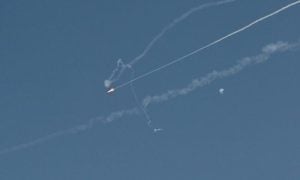
Despite talk of possible diplomacy, hostilities continued overnight. Israeli forces carried out strikes on more than 50 targets in Iran, while Iranian missiles hit several locations in Israel, including Tel Aviv, prompting emergency response operations.
The conflict, now in its fourth week, has significantly disrupted global energy flows.
Iran has effectively blocked the Strait of Hormuz since the war began on February 28, a critical shipping route through which about 20 percent of the world’s oil and liquefied natural gas normally passes.
Earlier, Trump had warned that the United States would “obliterate” Iranian power plants if the strait was not reopened within 48 hours, a threat that initially drove Brent prices as high as $113 a barrel.
Market volatility spreads to equities
Global stock markets showed mixed reactions on Tuesday as traders weighed hopes of de-escalation against continued fighting.
Asian markets recovered some losses, with Japan’s Nikkei 225 rising 0.8 percent, Hong Kong’s Hang Seng gaining 1.6 percent and South Korea’s Kospi climbing 2.2 percent.
European markets, however, were weaker in early trading. Britain’s FTSE 100 slipped 0.3 percent, while Germany’s DAX fell 0.9 percent. US futures also pointed to a softer opening.
Neil Wilson, a strategist at Saxo, said the “peak optimism” seen after Trump’s remarks had not been sustained, reflecting persistent uncertainty.
Moves to cushion impact
Governments and policymakers have taken steps to mitigate the impact of rising energy costs.
The United States has temporarily waived sanctions on Russian and Iranian oil already at sea to ease supply shortages.
China has also scaled back planned fuel price increases in an effort to reduce the burden on consumers, as energy costs surge due to the conflict.
Unusual trading activity
Meanwhile, market data reviewed by the BBC showed a sharp spike in oil trading volumes shortly before Trump’s announcement on Monday.
On the New York Mercantile Exchange, the number of WTI crude contracts traded jumped from 733 to more than 2,000 within a minute, equivalent to about $170 million.
A similar surge was recorded in Brent crude contracts, raising questions among analysts about possible prior knowledge of the decision.
“This appears abnormal,” said Mukesh Sahdev, chief oil analyst at XAnalysts, noting there had been no clear indication of imminent talks at the time.
Rachel Winter, a partner at Killik & Co, said the timing had prompted speculation about insider trading, though no evidence has been confirmed.
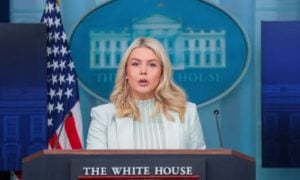
The White House said it does not tolerate any illegal profiteering based on insider information.