


ISLAMABAD: Oil prices surged sharply on Monday as shipping through the strategically critical Strait of Hormuz faced disruptions caused by Iranian counterattacks.
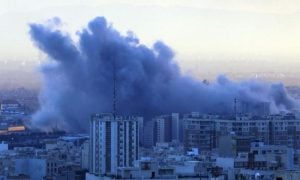
These retaliatory strikes followed earlier US-Israeli airstrikes that killed Iran’s Supreme Leader, Ayatollah Ali Khamenei.
Brent crude reached an intraday high of $82.37 per barrel—the highest since January 2025—before settling at $78.28, up $5.41 or 7.4%. Similarly, US West Texas Intermediate crude peaked at $75.33, rising over 12%, and later stood at $71.76, up $4.74 or 7.1%.
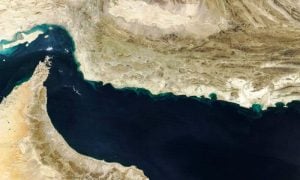
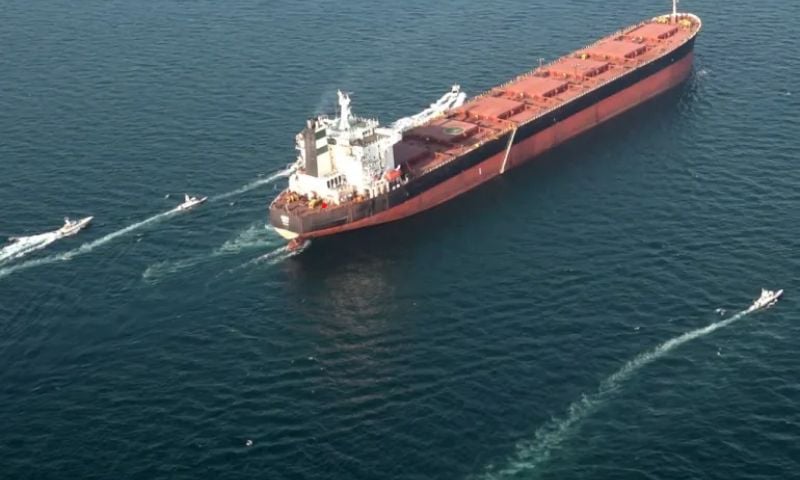
The exchange of attacks in the Gulf damaged multiple tankers and significantly disrupted oil shipments through the Strait, which connects Iran and Oman and serves as a major route to the Arabian Sea.
Normally, about 20% of global oil demand from Saudi Arabia, the UAE, Iraq, Iran, and Kuwait passes through this narrow waterway, along with refined fuels heading to major Asian markets such as China and India.
“While markets recognize the gravity of the situation, for now this is a geopolitical shock rather than a systemic crisis,” said Priyanka Sachdeva, senior analyst at Phillip Nova. Analysts warn that a prolonged shutdown of the Strait could push prices even higher and create shortages for top importers.
Over 200 ships, including crude and liquefied gas tankers, have anchored outside the Strait, according to shipping data. Sunday’s attacks left three tankers damaged and one seafarer dead.
Asian nations are evaluating stockpiles and alternate routes to mitigate supply risks. South Korea has indicated it could release petroleum reserves for local industries, while India explores other shipping options.
Early trading saw prices jump sharply before easing somewhat, reflecting a risk premium already priced in by buyers. Brent had gained more than 19% this year through Friday, and WTI had risen about 17%.
OPEC+ announced a small output increase of 206,000 barrels per day for April, with nearly all members producing at maximum capacity except Saudi Arabia, noted RBC Capital analyst Helima Croft. The International Energy Agency is also coordinating with Middle Eastern producers to potentially release strategic reserves if necessary.
Global visible oil stocks currently stand at 7.827 million barrels, sufficient for around 74 days of demand, near the historical median, according to Goldman Sachs. Citi analysts expect Brent to trade between $80 and $90 per barrel this week as the conflict continues.
Citi’s Max Layton added that the baseline expectation is either a rapid de-escalation of the conflict due to Iranian leadership changes or a US decision to step back after weakening Iran’s missile and nuclear capabilities.
In the US, gasoline futures spiked as much as 9.1% to $2.496 per gallon—the highest since July 2024—before settling at $2.381, up 4.2%. Rising retail fuel costs could pose political risks for President Donald Trump and the Republican Party ahead of the midterm elections.