



Key Points
* Brent crude slips toward the low $60s as traders price in potential Venezuelan supply
* Prospects of sanctions easing revive debate on Venezuela’s export capacity
* Analysts flag weak demand growth and rising inventories
* Forecasts point to a global oil surplus extending into 2026
ISLAMABAD: Oil prices fell on Tuesday as traders factored in the possibility of higher Venezuelan crude production amid an already well-supplied global market. Brent crude slipped to around $61.6 a barrel, while US West Texas Intermediate hovered near $58.
Analysts say renewed signals of eased sanctions and increased Venezuelan output, combined with rising inventories and weak demand growth, could keep oil markets oversupplied and prices under pressure through 2026.
Brent crude futures slipped to around $61.6 a barrel, and US West Texas Intermediate (WTI) hovered near $58, according to market data, as investors focused on supply-side developments rather than geopolitical rhetoric. Market participants cited expectations that additional barrels would return to the market if restrictions on Venezuelan exports were eased.
Traders focus on supply signals
Analysts said the market reaction reflected a growing consensus that global supply has been running above demand. Ed Meir of brokerage Marex stated that the possibility of increased Venezuelan production, even if gradual, adds pressure to a market that is already well supplied. He noted that any policy shift allowing more Venezuelan oil to flow would likely be felt first in prices rather than in physical markets.
Recent trader surveys and positioning data indicate that investors are increasingly betting on stable to lower prices through 2026, particularly as economic growth in major consuming regions remains uneven.
Venezuela’s role in the oil market
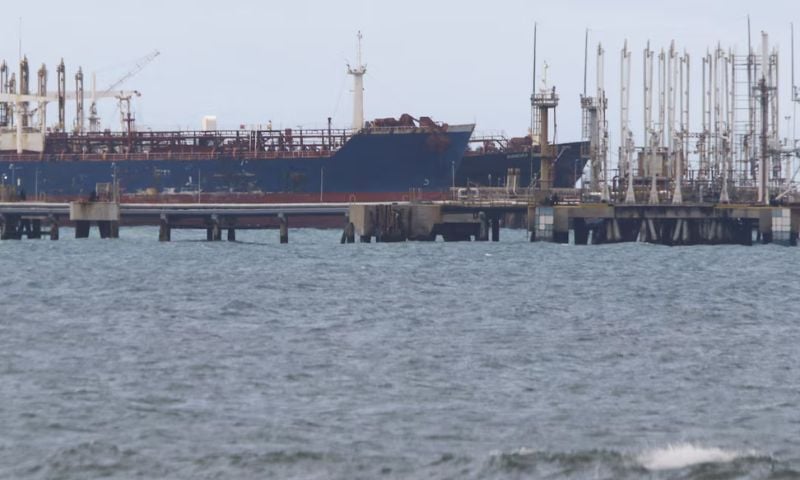
Venezuela holds the world’s largest proven oil reserves, estimated at approximately 303 billion barrels, yet years of sanctions, underinvestment and infrastructure decay have sharply curtailed output. Production currently stands at roughly 900,000 to just over one million barrels per day, far below historical levels, according to industry estimates.
Energy analysts state that Venezuela’s heavy crude is particularly important for global markets because it is well-matched to complex refineries in the US Gulf Coast. Any significant rebound in production would therefore have an outsized effect on specific refining hubs, even if total volumes remain modest by global standards. Market participants warn that increases in production will require time. Large-scale growth depends on new capital, access to technology, and clarity on sanctions policy—factors that are still uncertain despite renewed diplomatic signals.
Beyond Venezuela, supply from major producers continues to weigh on prices. A recent survey of economists by Reuters found that oil markets are likely to remain oversupplied through 2026, with non-OPEC output growth offsetting demand gains. The International Energy Agency has also flagged rising inventories in key consuming regions as a sign of weak underlying demand.
OPEC+ producers have opted to maintain their output steady, a decision that traders interpret as confidence in the market’s ability to absorb current supply levels without further intervention. Analysts say this stance reinforces expectations of a loose market balance over the medium term.
What it means for prices
For consumers, the current dynamics indicate relatively subdued fuel prices compared to recent peaks. For producers, the outlook underscores the challenge of sustaining revenues in a market where additional supply, whether from Venezuela or elsewhere, risks tipping the balance further toward surplus.
Traders say prices will continue to respond primarily to tangible changes in output, inventories and demand indicators. In that environment, Venezuelan oil has re-emerged as a market variable not because it has already returned in force, but because its potential re-entry highlights just how little spare demand exists to absorb new supply.