
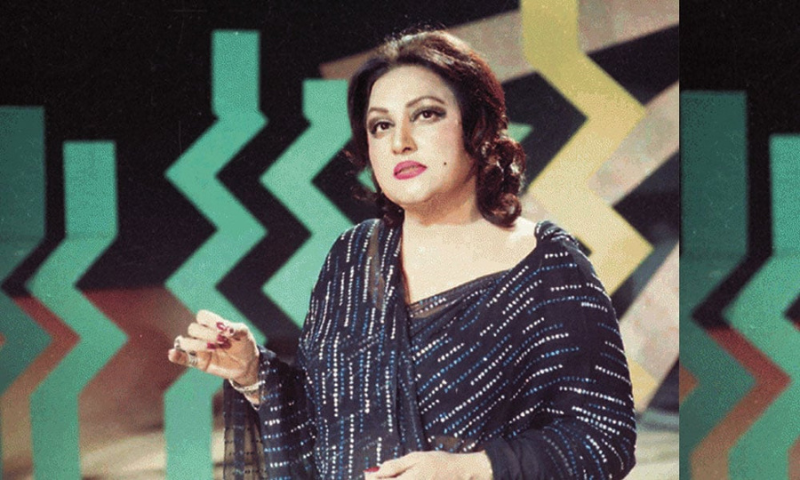



ISLAMABAD: The timeless voice of Madam Noor Jehan, Pakistan’s legendary Queen of Melody and Queen of Hearts, has once again captured the imagination of a new generation— in India.
A song recorded nearly five decades ago, “Sanu Nehr Wale Pul Te Bulake”, has emerged as a viral sensation among Indian teenagers, proving that true artistry knows no borders or generations.
Scroll through Instagram today, and you might suddenly be stopped by a voice filled with pain, sweetness, and an ineffable longing. That voice belongs to Pakistan’s legendary singer, Madam Noor Jehan, performing her classic track “Sanu Nehr Wale Pul Te Bulake.”
Once confined to vinyl records and radio broadcasts, this nearly five-decade-old song has now found its way into the hands of Indian teenagers through smartphones, proving that music transcends borders and generations.
From Vinyl to Smartphones: A Revival in the Digital Age
In an era dominated by algorithms and short-form videos, where relationships are complex and uncertain, Noor Jehan’s haunting voice and evocative lyrics have captured the hearts of young listeners. On Instagram alone, a 43-second clip of the song has inspired over 100,000 reels.
The resurgence began when the group Patiala Mehfil posted a video of the track, amassing millions of views and bringing the timeless masterpiece back to life. Today’s youth connect the song to their modern lives, interpreting its themes through the lens of dating dilemmas, unreturned messages, and fleeting promises.
Lyrics That Speak Across Generations
The song’s lyrics, “Sanu Nehr Wale Pul Te Bulake, Te Khore Mahi Kithe Reh Gaya” (“Calling me to the canal bridge, yet the beloved disappeared”), resonate strongly with today’s Generation Z, reflecting feelings of longing, waiting, and emotional vulnerability. For young listeners, the song is more than music—it is a reflection of silent, enduring emotion, mirroring the incompleteness of modern relationships.
A Cultural Gem of Punjabi Cinema
Originally released on September 14, 1973, the song featured in the Pakistani Punjabi film Dukh Sajna De. Composed by Saleem Iqbal and penned by Rauf Sheikh, it captured the essence of rural Punjab, secret romances, and longing lovers meeting in hidden corners. The canal bridge itself is symbolic—not just a location, but a metaphor for patience, hope, and anticipation.
The track was later included in Noor Jehan’s posthumous album Soni Mera Mahi, keeping the legend alive long after her passing.
Cross-Border Appeal: From Pakistan to India
What makes Noor Jehan’s music truly timeless is its cultural authenticity. The song’s pure Punjabi accent sets it apart from traditional Urdu ghazals, allowing it to resonate equally with audiences on both sides of the India-Pakistan border. The emotional depth of her singing, combined with the rich cultural imagery, has made her music a bridge between generations and nations.
Born Allah Wasai in 1926 in Kasur, Noor Jehan began her musical journey at the age of six. She established herself in Bombay and Kolkata before the partition of India, earning acclaim for her acting and singing. Post-partition, she moved to Pakistan but maintained a lasting connection with India. Her 1982 visit to India saw her celebrated by Indira Gandhi, Dilip Kumar, and Lata Mangeshkar.
Today’s Indian listeners may not know her full biography, but they feel the truth and passion in her voice. “Sanu Nehr Wale Pul Te Bulake” is not just a trend—it is proof that great music transcends time, place, and generations. No matter how algorithms evolve or social media trends shift, masterpieces like this always find a way to return and touch new audiences.