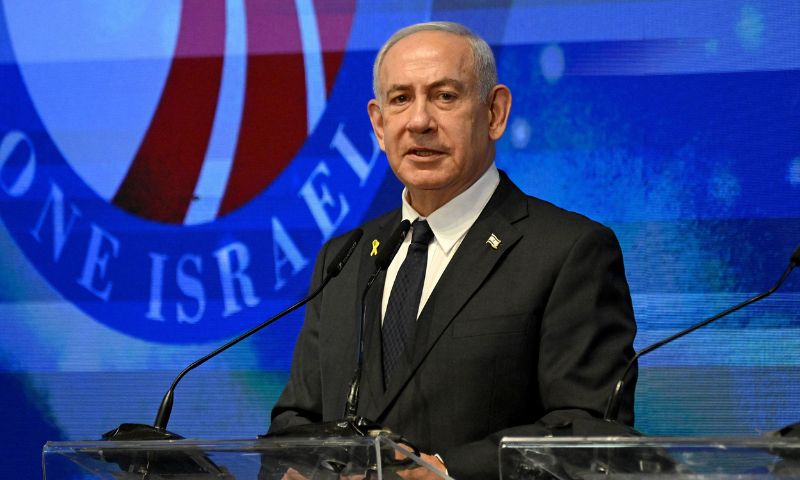



ISLAMABAD: Nearly two years into the Gaza war, Israeli Prime Minister Benjamin Netanyahu has openly acknowledged that Israel is confronting what he called a “kind of isolation” that could last for years, CNN reported Monday. Speaking at a finance ministry conference, he warned the country must prepare for reduced reliance on external trade and foreign arms supplies, describing the shift as an “autarkic” path for Israel’s economy.
Preparing for a Fortress Economy
One of the key industries facing isolation is weapons trade, he said, which may force Israel to avoid reliance on foreign arms imports, according to CNN. “We’ll need to develop our weapons industry – we’re going to be Athens and super Sparta combined. We have no choice, at least for the coming years when we’ll be required to deal with these isolation attempts,” he said.
Netanyahu said Israel would need to adapt to “autarkic characteristics,” strengthening self-sufficiency and expanding its domestic weapons production. While Israel has historically relied on U.S. weapons, it now faces partial or full arms embargoes from several European states, including France, the Netherlands, Spain, and Italy.
Mounting International Backlash
Netanyahu’s statements mark a rare acknowledgement of the massive international backlash Israel faces as it escalates its war in Gaza. He has refused to change course, despite warnings from the United Nations and others that a looming assault on Gaza City will lead to more death and destruction, and amid mounting accusations that Israel is committing genocide in the enclave, which Israel strongly denies.
Israel now faces partial or complete arms embargoes from France, the Netherlands, the UK, Spain, Italy and others due to its conduct in the Gaza war. The majority of its weapons imports however, come from the United States, which hasn’t placed any such restrictions – and has warned others from doing so. A Biden-era delay on a shipment of 2,000-pound bombs was quickly lifted by the Trump administration.
CNN noted that despite public pressure from hostage families and parts of the Israeli military to scale back, Netanyahu has insisted on escalating the campaign.
Domestic Opposition and Global Fallout
The Israeli public, hostage families, and even the military have opposed expanding the war over concerns it could endanger the hostages and worsen the humanitarian toll. But the prime minister has insisted on pressing ahead.
For years, Israel has been considered an economic powerhouse regionally and globally, driven in large part by its vaunted high-tech industry. But the war has had an economic impact and is already the longest and most expensive in the country’s history.
Netanyahu partly attributed the isolation to “an extreme Islamist agenda” which he claimed had a “very negative influence” on European foreign policy. He also said rival states – “among them Qatar” – have shaped global discourse on social media, which “puts us into a kind of isolation.”
“This situation threatens us with the beginnings of economic sanctions and problems importing weapons and weapon parts,” Netanyahu said.
Israeli opposition leader Yair Lapid slammed Netanyahu’s remarks, calling them “crazy” and blaming the government’s policies for isolating the country. Former military chief Gadi Eisenkot also accused Netanyahu of “abandoning the hostages and isolating Israel in the world.” Meanwhile, Netanyahu attempted to reassure investors, boasting that Israel’s stock market remains strong and promising increased investments in weapons production.
At a joint appearance earlier in the day with U.S. Secretary of State Marco Rubio, both leaders criticized moves by France, Canada, and Australia to recognize a Palestinian state ahead of the upcoming UN General Assembly session.